Export Compliance Guide for Kitchen Appliances: What Global Buyers Need to Know in 2026
Every kitchen appliance that crosses a border carries more than a heating element and a motor — it carries a stack of regulatory obligations that differ by destination, by product category, and by the materials that touch food. In 2026, those obligations are tightening on almost every front: the European Union has added cybersecurity testing and a new general product safety regime to its CE framework, North America is harmonizing its appliance safety standards with international ones, and China's customs authority has begun using AI to cross-check export documents. For importers, distributors, and private-label brands, export compliance is no longer a back-office formality. It is the difference between smooth container releases and port holds, between retail listings and delistings, between a profitable program and a recall. This guide walks through the compliance layers that matter most for kitchen appliance imports in 2026 — the EU and North American certification stacks, the food-contact material rules that importers most often overlook, realistic certification budgets, the documents that actually get shipments held, and the fast-moving emerging markets where the rules are changing fastest. The goal is practical: give sourcing teams a checklist they can bring to the next factory audit, not another generic overview. Three forces have turned compliance into a commercial weapon rather than a cost center. First, regulatory enforcement is getting sharper. The EU Rapid Alert System for Food and Feed (RASFF) issued a consumer recall on July 3, 2026, for a Chinese-made kitchenware set distributed across 16 EU member states after testing found aluminum migration at 132 mg/kg — more than 25 times the general limit of 5 mg/kg set under EU Regulation (EC) No 1935/2004. One recall like that can end a brand's European run. Second, the marketplaces enforce harder than governments do. Amazon and other platforms in North America now routinely require ISO 17025-accredited test reports for kitchen appliances (UL 1026 for cooking products, UL 982 for food processors), and a missing certificate is grounds for listing removal — even when the underlying product would pass. Third, buyers themselves are auditing. Large retailers and procurement managers increasingly filter suppliers by certification completeness, using it as a proxy for reliability. Certification portfolios that cover CB plus target-market marks can justify 15–25% price premiums over minimally certified competitors. Compliance is a market-entry decision, not a test-cycle cost. A compliance package built late in the development cycle — or worse, at the port — always costs more and delays more than one designed into the product from the first sample. For the 27 EU member states, CE marking remains the legal passport, and in 2026 it sits on top of an expanding stack. Electrical safety is governed by the Low Voltage Directive (LVD, 2014/35/EU) with EN 60335-1 and the EN 60335-2 product-specific parts; electromagnetic compatibility is covered by the EMC Directive (2014/30/EU). But three 2025–2026 additions matter more for anyone sourcing connected or even simple appliances: For gas-fueled appliances and pressure-cooking products, additional directives apply (Gas Appliances Regulation, Pressure Equipment Directive), and each category carries its own harmonized standard. The practical takeaway: the EU stack is no longer "LVD plus EMC." Budget for environmental registration, the EU-Rep, and — for connected products — cybersecurity testing as permanent line items. This is where appliance imports fail most often, because the CE stack does not cover it. A kitchen appliance is not covered by one generic "food-grade" certificate. Its basket coating, inner pot, jug, seal, water path, and removable accessories each involve different materials, different legal measures, and different test conditions. The EU food-contact framework in brief: In the US, the FDA runs a "positive list" system under 21 CFR — substances must be approved for food-contact use (for example 21 CFR 175.300 for resin and polymer coatings, 177.1520 for polyolefins). California's Proposition 65 adds warning-label obligations for listed chemicals in any product sold in California, including plastics, sealants, and metal coatings. Germany adds its LFGB §30/31 regime, which many German retailers treat as a practical listing requirement above the EU baseline. When a supplier says a product is "food safe," the correct response is to ask for a dated, material-specific test report linked to the current production version — not a generic resin declaration. North America's structure is different from the EU's: safety certification is driven by private standards bodies and enforced by retailers and marketplaces rather than a single CE-style legal mark. The pieces that matter: One common mistake is treating UL as optional because it is not federal law. For retail and e-commerce, it is effectively mandatory — Walmart, Costco, and Amazon all require it. The other common mistake is reusing a certificate across product revisions. Certificates apply to specific models; change the motor, the circuit design, or a food-contact material, and the certification may no longer be valid. Costs vary by product family and laboratory, but 2026 market rates give sourcing teams a realistic planning range. The table below summarizes typical packages for kitchen appliances, based on current testing-market data: Costs are quoted per product family, and additional models typically cost 30–50% less. The CB Scheme — built on the IEC 60335 family and recognized in 54 member countries — deserves attention because it lets one test cycle feed national certifications in multiple markets, cutting cumulative testing costs by an estimated 40–60% versus separate certifications. For household appliances, a CB certificate costs roughly US$4,700 and pays for itself quickly once you sell into two or three regions. Two verification rules: the laboratory must be an IECEE-recognized CBTL, and for CE, any notified body you rely on should be checkable in the EU NANDO database. Certification "mills" that issue certificates buyers do not trust are a real and expensive risk. Even with perfect certifications, shipments get held on documentation. The most common failure point in 2026 is inconsistency — the same product described differently across the commercial invoice, packing list, and bill of materials. That matters more than ever because China's General Administration of Customs announced on July 3, 2026, that RCEP certificates of origin for kitchen electrical appliances under HS code 8516 now move through full AI-based verification, which automatically cross-checks invoices, packing lists, and BOMs. The average review time dropped from 2.1 days to 1.2 days — but the AI surfaces inconsistencies faster, not more forgivingly. The core export file for every appliance shipment: The rule to enforce in your own operation: product name, HS code, quantity, and value must be identical across invoice, packing list, BOM, and certificates. Factories that keep a single source of truth for model descriptions — the same data that feeds production also feeds export documents — are far less likely to trigger holds, returns, or the newly automated cross-checks. The geography of kitchen appliance demand is shifting, and so is the compliance map. China's Q1 2026 commercial kitchen equipment exports rose 22.3% year over year to US$4.27 billion, driven by Mexico (+68.5%), Poland (+53.2%), and Vietnam (+41.9%) — while US and EU growth together slowed to 6.1%. Each of those fast-growing destinations carries its own regime: The pattern across emerging markets is the same one Europe went through a decade ago: certifications are moving earlier into the product development cycle, and documentation discipline is becoming a competitive requirement. Exporters that embed local certification consultants into product development — rather than treating certification as a final logistics step — are the ones clearing these ports without delays. Here is a working checklist to bring to the next factory audit or supplier review, organized from the design phase through shipment: Kangye builds export compliance into the product lifecycle rather than bolting it on at the end. Our factory's quality system runs the standard four-stage inspection flow — IQC on incoming materials, IPQC during production, FQC on finished goods, and OQC before loading — and the compliance evidence package is assembled alongside the product, not after it. For every model, that package covers the layers that actually matter in 2026: electrical safety to IEC 60335-1 and the product-specific parts, EMC testing, RoHS and REACH declarations, food-contact material documentation for parts that touch food or water, and the bilingual labeling and instruction requirements of the destination market. The KYS-303A is a representative example of how a compliance-ready kitchen appliance is engineered: food-contact components are selected and documented for the target markets before mass production, not after. For importers building a steamer or cooking-appliance program, it demonstrates the documentation discipline that keeps shipments moving. If you sell in both the EU and North America, yes — they are separate legal and commercial requirements. CE is mandatory for the EU; UL (or ETL, which tests to the same standards) is effectively required by US retail and e-commerce channels even though it is not federal law. The CB certificate under IEC 60335 gives you a common testing foundation that shortens both paths. Since August 1, 2025, wireless-enabled appliances need mandatory cybersecurity testing under the EN 18031 series before CE certification — covering default-password removal, security update mechanisms, and vulnerability disclosure policies. Since January 2026, the General Product Safety Regulation (GPSR) requires an EU authorized representative and an always-available technical file. Both apply to smart kitchen appliances with Wi-Fi or Bluetooth. On July 3, 2026, RASFF issued a consumer recall for a Chinese kitchenware set distributed to 16 EU member states after testing found aluminum migration at 132 mg/kg — more than 25 times the 5 mg/kg general limit under EU 1935/2004 (1 mg/kg for acidic simulants). It is a reminder that food-contact surfaces in appliances — baskets, pots, jugs, tanks — carry the same exposure and must be tested per material and per intended use. A minimum EU package (CE LVD + EMC + RoHS) runs about US$2,200–3,500; CB + CE about US$5,500–7,000; and a UL/cUL + CE + CB portfolio about US$8,000–12,000 per product family, with additional models typically 30–50% less. Costs are per family, and CB's multi-market coverage is the most cost-effective way to grow geographically. Inconsistency across documents — the same product described differently on the invoice, packing list, BOM, or certificate. China's customs AI now cross-checks these documents automatically for RCEP origin certificates under HS 8516, so mismatched names, quantities, or values surface quickly as holds or returns. Keep one source of truth for model data. No. Both markets require material-specific, dated test evidence: EU 1935/2004 and (EU) 10/2011 migration testing for plastics, FDA 21 CFR positive-list compliance in the US, and Germany's LFGB for German retail. A generic resin declaration does not cover a multi-material appliance — build a component-level contact map and match each material to its applicable rule and test report. Planning your next appliance program and want the compliance file built in from day one? Kangye supports OEM/ODM development with certification-ready documentation, food-contact traceability, and export document discipline across the full product lineup. Contact our team to discuss your target markets, samples, and certification roadmap.Export Compliance: The Quiet Gatekeeper of Global Trade
Why Compliance Became the New Competitive Frontier
The EU Route: CE Marking Under the 2026 Rules
Food-Contact Compliance: The Layer Most Importers Miss
North America: UL, FCC, FDA and Proposition 65
Certification Budgets: What a Real Compliance Package Costs
Business profile
Recommended package
Estimated cost
Market coverage
New exporter, EU focus
CE (LVD + EMC + RoHS)
US$2,200–3,500
EU 27 countries
Established exporter, 3+ markets
CB Scheme + CE
US$5,500–7,000
50+ CB member countries + EU
Premium brand, North America + EU
UL/cUL + CE + CB
US$8,000–12,000
US, Canada, EU, 50+ CB countries
Marketplace seller
CE + platform-specific (UL or regional)
US$3,000–5,000
Platform-dependent
Global ambitions
CB + CE + UL + regional marks (G-Mark, RCM, etc.)
US$15,000–30,000+
Global coverage
The Documents: Where Shipments Actually Get Held
Emerging Markets: Where the Rules Are Changing Fastest
Building a Compliance File: A Practical Checklist
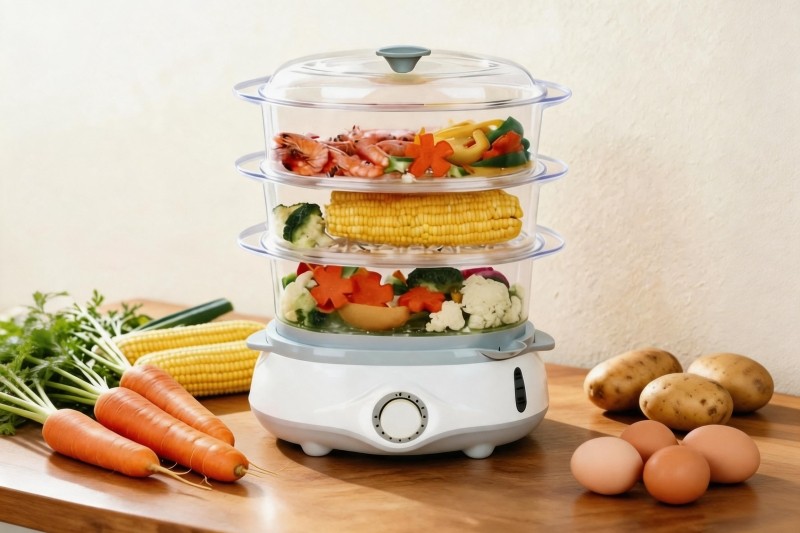
How Kangye Handles Export Compliance
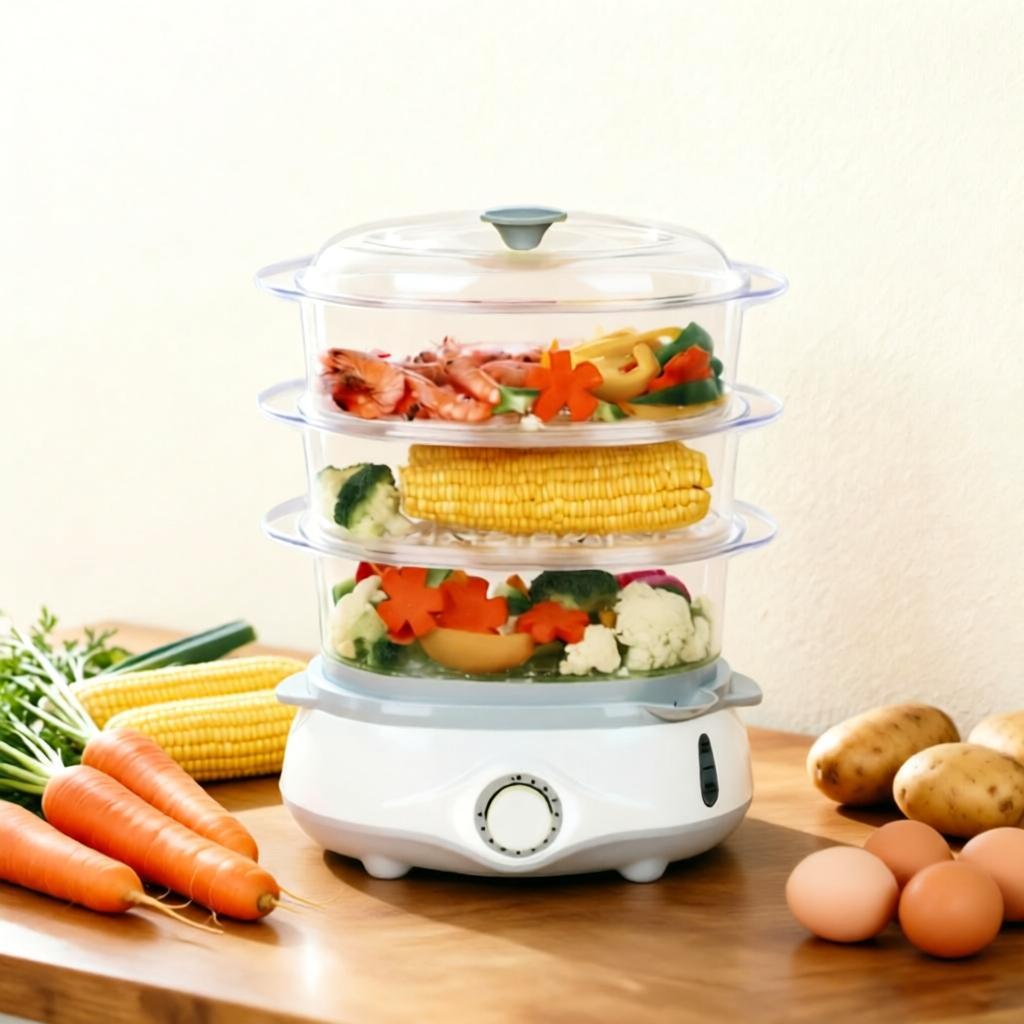
Featured Product: Kangye 3-Tier Electric Food Steamer KYS-303A
Key Takeaways for Global Buyers
Frequently Asked Questions
Do I need both CE and UL for my appliance?
What changed for connected appliances in the EU in 2026?
Why did the EU recall a Chinese kitchenware set in July 2026?
How much does certification actually cost?
What is the single biggest documentation mistake in appliance exports?
Is a "food safe" claim from a supplier enough for the EU or US?