Gas Grill BTU Ratings: What They Really Mean and How to Use Them
Gas Grill BTU Ratings: What They Really Mean and How to Use Them
If you've ever shopped for a gas grill — or sourced them for your product lineup — you've seen BTU ratings plastered across spec sheets and marketing materials. Bigger numbers seem better. A 60,000 BTU grill must cook better than a 40,000 BTU one, right? Not necessarily. BTU (British Thermal Unit) ratings are one of the most misunderstood specifications in the grilling industry. For B2B importers, distributors, and product managers, understanding what BTU actually measures — and what it doesn't — is essential for making informed sourcing decisions and building a competitive product range. This technical guide cuts through the marketing noise and explains BTU ratings from an engineering and commercial perspective.
What Is a BTU? The Definition Behind the Number
A British Thermal Unit (BTU) is a unit of heat energy defined as the amount of energy required to raise the temperature of one pound of water by one degree Fahrenheit. In the context of gas grills, the BTU rating represents the total heat output of all burners operating at maximum capacity per hour. A grill rated at 40,000 BTUs can theoretically produce 40,000 BTUs of heat energy per hour when all burners are on high.
However — and this is the critical point — BTU is a measure of energy input, not cooking performance. It tells you how much gas the grill can consume and convert to heat, but it says nothing about how efficiently that heat reaches your food. Two grills with identical BTU ratings can produce vastly different cooking results depending on burner design, firebox construction, lid insulation, and grate material.
Key takeaway: BTU measures fuel consumption rate, not cooking power. A grill's total BTU number is the starting point, not the conclusion.
BTU Per Square Inch: The Metric That Matters
The most useful way to compare gas grills is BTU per square inch of primary cooking surface. This metric — often called heat flux or BTU density — tells you how concentrated the heat energy is across the cooking area. The formula is simple:
| Metric | Formula | Example |
|---|---|---|
| Total BTU | Sum of all main burner BTUs | 48,000 BTU |
| Cooking Area | Primary grate surface in sq in | 500 sq in |
| BTU per sq in | Total BTU ÷ Cooking Area | 96 BTU/sq in |
Industry benchmarks for BTU per square inch:
- Below 70 BTU/sq in: Underpowered. Slow preheat, poor searing, long recovery time between batches.
- 80 – 100 BTU/sq in: The sweet spot. Adequate for searing, good heat recovery, efficient fuel use.
- Above 100 BTU/sq in: Potentially excessive. May create hot spots and waste fuel unless the grill has exceptional heat distribution engineering.
A compact grill with 30,000 BTU across 300 square inches (100 BTU/sq in) will often sear steaks more effectively than a large grill with 60,000 BTU spread over 800 square inches (75 BTU/sq in). When evaluating supplier spec sheets, always calculate BTU per square inch before comparing models.
Burner Design and Configuration
Raw BTU numbers mean little without understanding how the burners deliver that heat. Burner design directly affects flame distribution, temperature consistency, and fuel efficiency. Gas grills typically use one of three burner types:
| Burner Type | Heat Distribution | Durability | Typical Application |
|---|---|---|---|
| Tubular stainless steel | Even flame across burner length | Excellent | Premium freestanding & built-in grills |
| Bar burners (painted steel) | Moderate, prone to cold spots | Fair | Entry-level and mid-range grills |
| Infrared ceramic plates | Radiant heat, intense searing | Good | High-end and specialty grills |
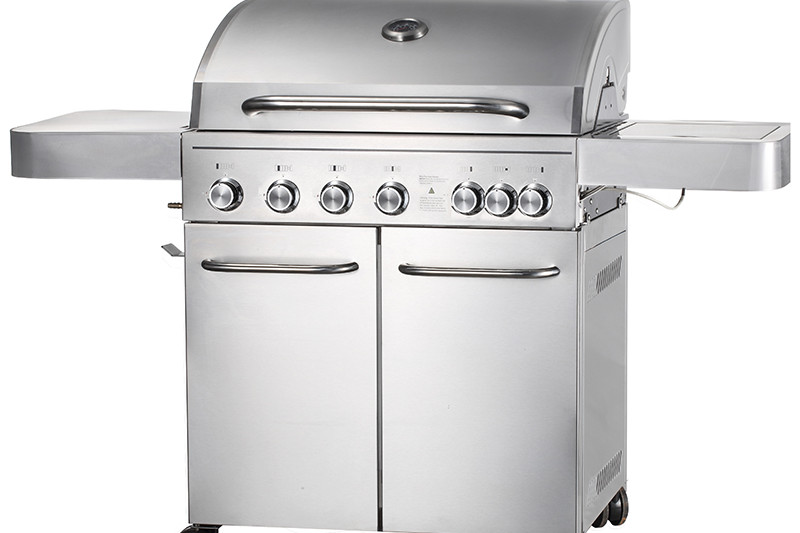
Burner count also matters. Multiple smaller burners allow zone cooking — you can sear on one side while keeping food warm on the other. A grill with four independently controlled burners offers more cooking flexibility than a model with two large burners, even if the total BTU rating is identical. Kangye's gas grill lineup uses precision-engineered stainless steel burners with consistent flame port spacing, ensuring even heat distribution across the entire cooking surface regardless of total BTU output.
Firebox Construction and Heat Retention
The firebox is where heat retention begins. A well-insulated firebox traps heat and radiates it back to the cooking surface, making every BTU count. Poor firebox design, on the other hand, wastes energy through heat loss, regardless of how high the BTU rating is.
Key factors in firebox efficiency:
- Material thickness: Heavier-gauge steel or cast aluminum retains heat better than thin stamped steel.
- Lid seal quality: A tight-fitting lid with a proper gasket prevents heat escape.
- Double-wall vs. single-wall construction: Double-wall lids with an insulating air gap maintain internal temperatures much more effectively.
- Flame tamers / heat deflectors: These distribute heat evenly across the cooking surface and reduce flare-ups from dripping fat.
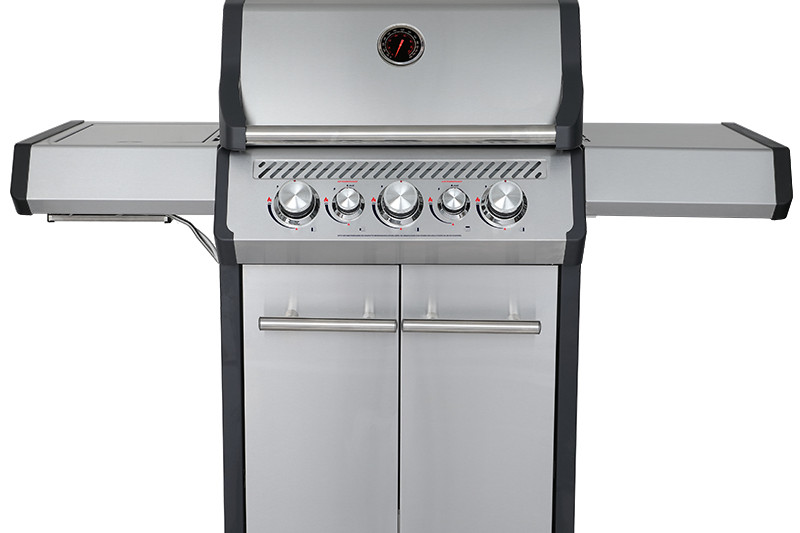
Premium grills with 40,000 BTU and double-wall construction frequently outperform budget grills with 60,000 BTU and single-wall lids. When sourcing, request information about firebox gauge and lid construction — these details reveal more about real-world performance than the BTU number on the box.
Grate Material and Heat Transfer
The cooking grate is the final interface between heat and food. Its material directly affects how efficiently the grill's thermal energy is transferred to what you're cooking. Different materials have different thermal properties:
| Grate Material | Heat Retention | Searing Quality | Maintenance |
|---|---|---|---|
| Cast iron | Excellent | Excellent | Requires seasoning; can rust if neglected |
| Porcelain-coated cast iron | Very good | Very good | Moderate; easier than raw cast iron |
| Stainless steel | Good | Good | Low maintenance; rust-resistant |
| Chrome-plated steel | Fair | Fair | Low, but coating can peel over time |
A grill with 85 BTU/sq in and cast iron grates will produce better sear marks and more consistent cooking than a grill with 100 BTU/sq in and thin chrome-plated grates. When building your product spec sheets, always specify both BTU output and grate material — your customers will thank you.
Infrared vs. Conventional Burners
Infrared burner technology deserves special attention in any discussion of BTU ratings. Unlike conventional tube burners that heat the air inside the grill, infrared burners heat a ceramic or stainless steel plate to very high temperatures (typically 800–1,000°F), which then radiates heat directly to the food. This delivers several advantages:
- Faster preheat: Infrared burners reach cooking temperature in 3–5 minutes, compared to 10–15 minutes for conventional burners.
- Superior searing: The intense radiant heat creates restaurant-quality crust on steaks and chops.
- Fuel efficiency: Because the heat is directed at the food rather than heating the entire firebox volume, infrared burners use less gas for the same cooking effect.
Kangye's premium gas grill models, such as the KYQ-A480RB and KYQ-A380, feature 800°C infrared side burners that deliver exceptional searing performance. When comparing BTU ratings between infrared and conventional burners, note that infrared technology achieves more cooking effect per BTU, making direct BTU comparisons less meaningful across burner types.
Real-World Temperature Performance vs. Lab Ratings
Laboratory BTU ratings don't always translate to real-world cooking temperatures. Independent testing by grill review organizations has documented significant variations between advertised BTU and measured temperature performance. Factors that contribute to this gap include:
- Air leakage: Gaps around the lid, control panel, or grease tray can reduce actual heat retention by 15–25%.
- Flame port clogging: Grease buildup and debris can block burner ports, reducing actual heat output.
- Gas pressure variation: Propane regulators and natural gas line pressure can affect actual burner performance.
- Ambient temperature: Cold weather and wind significantly impact a grill's ability to maintain temperature.
For B2B buyers, the most reliable approach is to request third-party test data or conduct your own temperature uniformity tests across the cooking surface. A difference of 50°F between the hottest and coolest zones is acceptable for most grills, but a well-engineered model should stay within 30°F or less.
How to Use BTU Data in Sourcing Decisions
Armed with a proper understanding of BTU ratings, here is a practical framework for evaluating gas grill spec sheets and making sourcing decisions:
| Step | Action | What to Look For |
|---|---|---|
| 1 | Calculate BTU per sq in | Target 80–100 BTU/sq in for balanced performance |
| 2 | Evaluate firebox construction | Double-wall lid, heavy-gauge materials, tight seals |
| 3 | Check grate material | Cast iron or porcelain-coated cast iron preferred |
| 4 | Review burner design | Tubular stainless steel with even flame ports |
| 5 | Consider zone cooking flexibility | Multiple independently controlled burners |
| 6 | Request thermal test data | Temperature uniformity across the cooking surface |
| 7 | Compare total cost of ownership | Fuel efficiency + durability + warranty terms |
Kangye provides detailed technical specifications for all gas grill models, including burner BTU ratings by zone, cooking area dimensions, firebox material specifications, and available certification documents. This transparency allows sourcing professionals to make apples-to-apples comparisons between suppliers and select the optimal configuration for their target market.
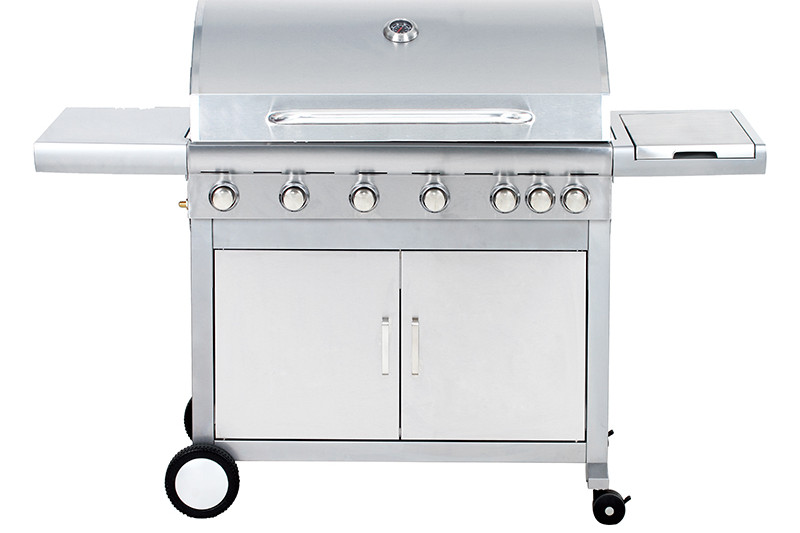
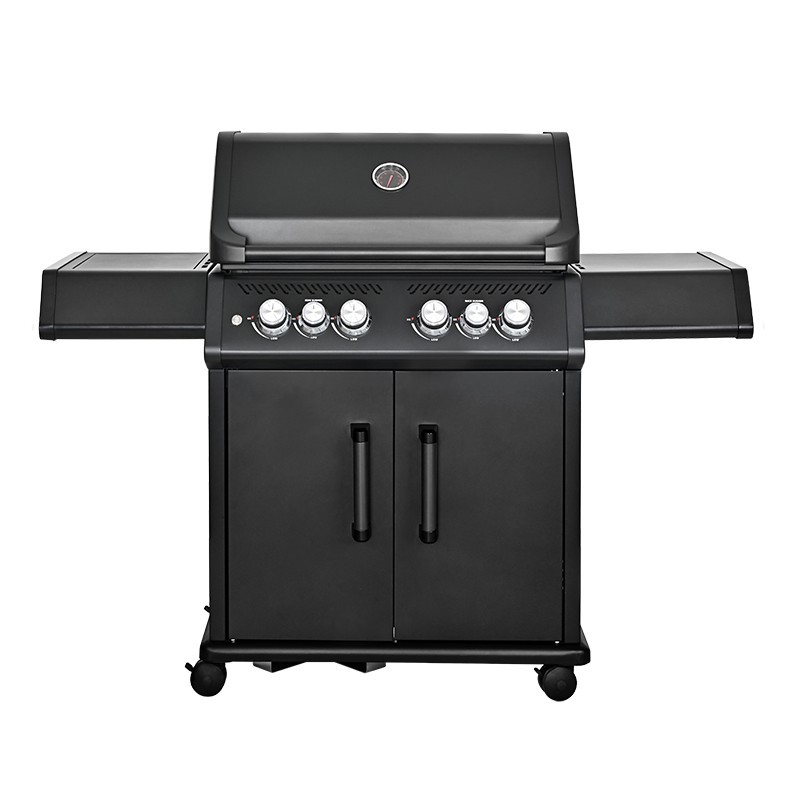
Featured Product: 4-Burner Gas BBQ Grill KYQ-A480RB
| Model | KYQ-A480RB |
| Main Burners | 4 × 3.0 kW (40,920 BTU total) |
| Infrared Side Burner | 4.5 kW (15,354 BTU) – 800°C |
| Back Burner | 4.0 kW (13,648 BTU) |
| Material | Full cast aluminum chamber |
| Cooking Grids | 4 × cast iron |
| Ignition | Piezo push-button |
| MOQ | 176 pcs / 40HQ |
Common BTU Myths Debunked
Despite being one of the most visible specifications on any gas grill, BTU ratings are surrounded by misconceptions. Here are the most common myths and the facts behind them:
| Myth | Fact |
|---|---|
| Higher BTU = better grill | BTU is input, not output. Build quality and heat distribution matter more. |
| BTU includes side burners | Some manufacturers inflate ratings by including side burner BTUs. Always verify main burner BTU only. |
| All BTUs are equal | Burner design, firebox insulation, and grate material all affect how BTUs translate to cooking heat. |
| More BTUs means faster cooking | Heat retention and distribution determine cooking speed, not raw BTU. |
| BTU ratings are standardized | There is no universal testing standard for grill BTU. Ratings are self-declared by manufacturers. |
BTU Ratings Across Different Gas Grill Types
Different gas grill configurations have different BTU expectations. Understanding these norms helps you evaluate spec sheets within the right context:
| Grill Type | Typical Total BTU Range | Typical Cooking Area | Typical BTU/sq in |
|---|---|---|---|
| Portable (1–2 burners) | 10,000 – 22,000 | 150 – 250 sq in | 65 – 110 |
| Freestanding (3 burner) | 30,000 – 40,000 | 400 – 500 sq in | 70 – 90 |
| Freestanding (4–6 burner) | 40,000 – 60,000 | 500 – 750 sq in | 75 – 95 |
| Built-in (premium) | 40,000 – 80,000 | 500 – 1,000 sq in | 80 – 100 |
| Commercial-grade | 60,000 – 100,000+ | 700 – 1,200+ sq in | 85 – 110 |
Portable grills often show higher BTU-per-square-inch numbers because they concentrate heat into a small area. This is normal and does not indicate superior engineering. Conversely, large commercial grills may show lower BTU-per-square-inch numbers but compensate through superior firebox design, thicker materials, and better heat retention.
Conclusion: BTU Is a Tool, Not a Verdict
BTU ratings are a useful starting point for evaluating gas grills, but they should never be the sole criterion for sourcing decisions. A responsible evaluation considers BTU in context with firebox construction, burner design, grate material, heat distribution, and overall build quality. The most successful B2B buyers develop a holistic assessment framework that treats BTU as one data point among many.
Kangye Electric has manufactured gas grills and outdoor cooking equipment since 1989, supplying OEM and ODM partners across 80+ countries. Our engineering team provides comprehensive technical documentation, including burner zone specifications, thermal performance data, and material certifications, to support informed sourcing decisions. Whether you are developing a premium built-in line or a value-oriented freestanding range, we can help you select the right BTU configuration for your market.
For more technical articles and sourcing guides, visit our Blog or contact our sales team to discuss your gas grill project.