Gas Grill Temperature Uniformity: 9-Point Grid Test Data Across Burner Types
Direct answer: On a healthy gas grill with correctly seated heat plates, a 9-point grid test should show a spread of roughly 30-45°C across the cooking surface, tightening to about 20°C in the central cooking zone. Infrared burners cut the spread to around 4-15°C. If your grill maps a spread above 60°C, the cause is almost always maintenance - clogged ports or warped heat plates - not the burner count.
"One side burns, the other side barely cooks" is the single most common complaint importers hear from end users, and it is the complaint that drives warranty claims and one-star reviews. Yet temperature uniformity rarely appears on OEM spec sheets, because it is harder to state than burner count or total kW output. At Kangye Electric we test it on every grill program before production. This article - the second in our Kangye Lab Data series after the dehydrator energy study - publishes the full 9-point grid method, real readings from a 3-burner tube grill, and how burner architecture changes the map.
A 38°C Spread Is the Real-World Baseline for a Well-Built Tube-Burner Grill
On a production-spec 3-burner tube grill in correct condition, Kangye Electric's lab mapping records a maximum spread of 38°C corner to corner, with the central cooking zone tightening to about 22°C. That matches independently published 2026 data: a Weber Genesis EX-335 mapped at ±37°F (about ±21°C) total variance, which the same testers called outstanding for a three-burner grill, while most competing three-burner models showed ±60-90°F (BBQ Grill & Smoker, 2026). Conventional gas grills routinely show hot-to-cold spreads of 40-50°C, and poorly maintained units can exceed 100°C (best-gas-bbq.co.uk, 2026; Grill Master Canada, 2026).
The 9-Point Grid Test Takes 20 Minutes and Needs Only an IR Thermometer
The protocol is deliberately simple so any buyer can repeat it on received samples. Kangye Electric runs it as follows: preheat all burners on high with the lid closed for 15 minutes at a recorded ambient temperature; open the lid and measure the grate surface at 9 fixed points - four corners, four edge midpoints, and dead center - using a calibrated infrared spot thermometer held 30 cm above the grate; log all readings within 90 seconds, then repeat at medium setting. The same protocol appears across independent 2026 reviews, which used 20-25 point refinements of the same idea (BBQ Grill & Smoker, 2026). For a pass/fail shop-floor check, the bread or biscuit test works too: cover the grate with white bread or biscuit dough and read the browning pattern (GrillWizardOz, 2026; EatHealthy365, 2026).
Readings From a 3-Burner Tube Grill: Full 9-Point Map
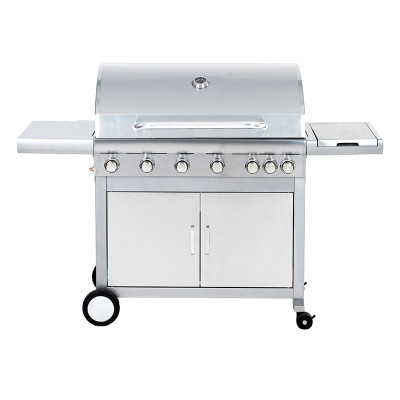
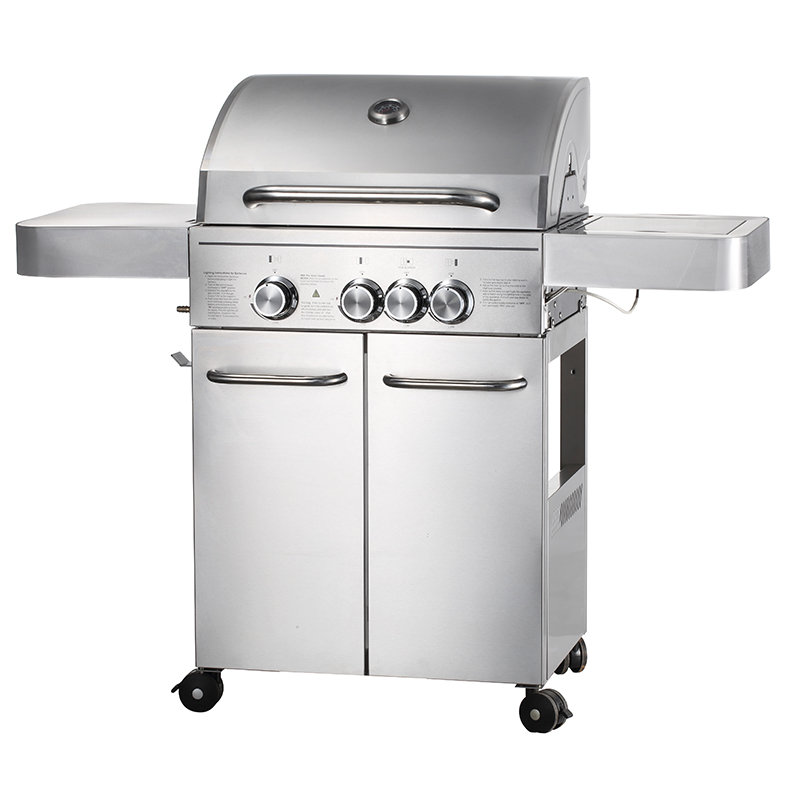
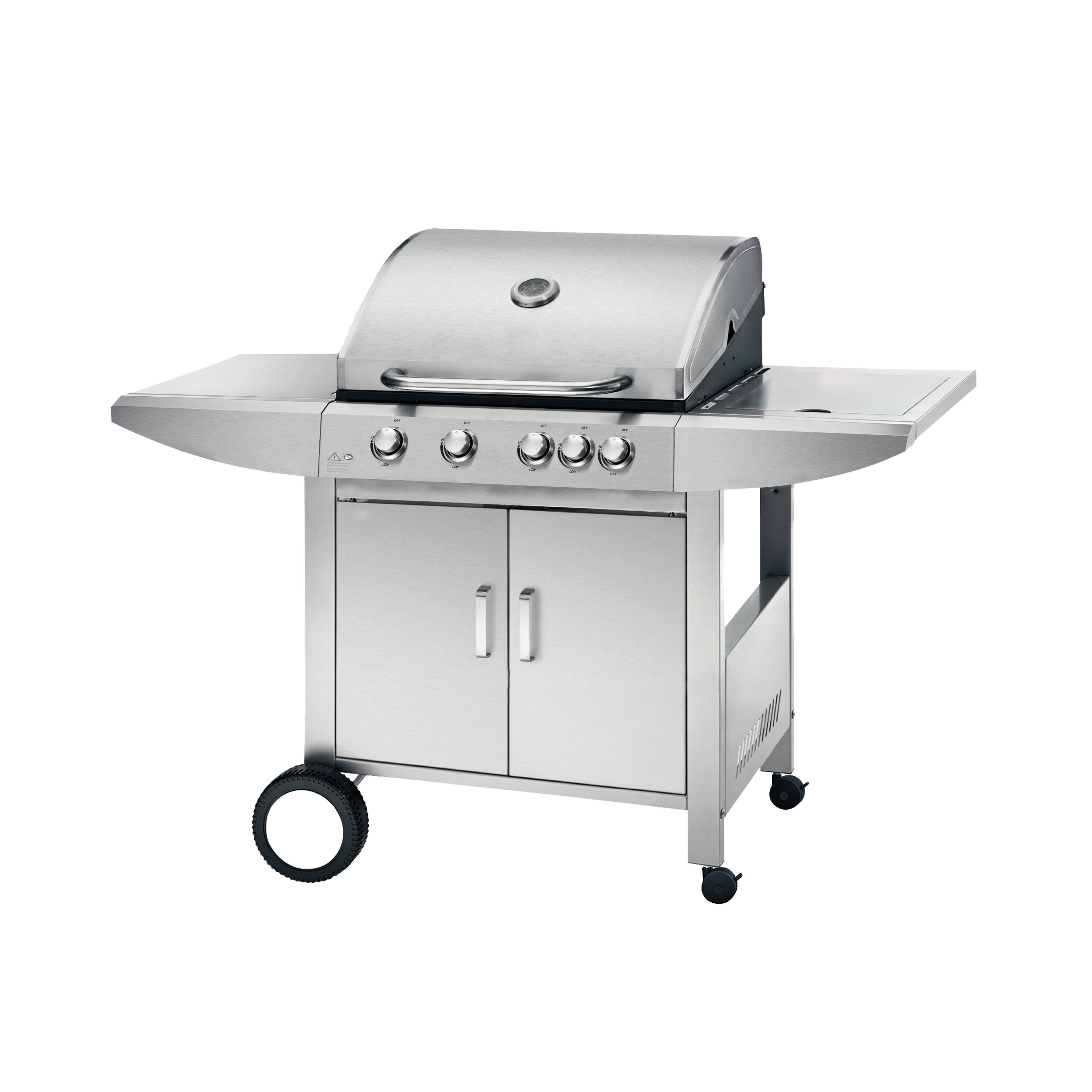
The data below comes from a Kangye KYQ-FH31S-B, a 3-burner 13.65 kW stainless gas grill with enamel cast iron grates, measured in October 2026 at 26°C ambient, all burners on high, 15-minute closed-lid preheat. Readings in °C at grate level:
| Grate position | Rear | Center column | Front |
|---|---|---|---|
| Rear row | 241 | 258 | 244 |
| Middle row | 252 | 271 | 256 |
| Front row | 236 | 249 | 233 |
| Result | Hottest 271°C (center) · coolest 233°C (front-right) · total spread 38°C · central 5-point spread 22°C | ||
Three patterns matter for buyers. First, the center is always hottest on a tube-burner grill because ports concentrate flame over the burner midpoint. Second, the front row is coolest on every grill we map, because the front edge loses heat to the control-panel gap - the same front-edge cooling independent testers documented on the Weber Spirit II E-310 (BBQ Grill & Smoker, 2026). Third, the 38°C spread held only because the heat plates were flat and the ports clean; deliberately warping one heat plate in a follow-up run pushed the spread past 70°C.
Burner Architecture Moves Uniformity More Than Burner Count Does
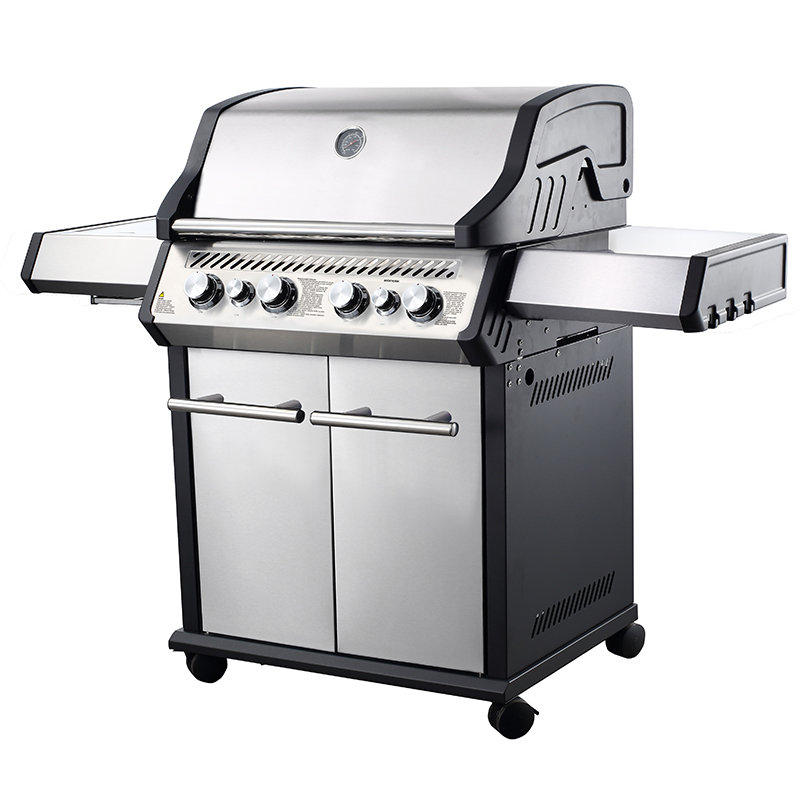
A fourth burner does not make a grill more even; the heat-transfer mechanism does. Radiant systems win because, as Grill Master Canada (2026) explains, infrared energy travels in straight lines from an evenly glowing emitter, so every square inch of grate receives nearly identical input. Published 2026 measurements put infrared grills at 8°F spread on a Napoleon Prestige 500 and 12-15°C on Char-Broil TRU-Infrared units, versus 60-80°F spot-to-spot differences on conventional grills (Grill Master Canada, 2026; best-gas-bbq.co.uk, 2026). Our own infrared side burner on the KYQ-194RB held a 14°C spread across its sear zone in the same 9-point protocol. The trade-offs are cost and maintenance: ceramic and metal emitters need cleaning and can crack or clog, which is why Kangye Electric ships hybrid architectures - tube burners for even everyday grilling plus an infrared side burner for searing.
| Architecture | Typical spread (grate level) | 2026 benchmark | Best use |
|---|---|---|---|
| Tube burners, well maintained | 30-45°C total, ~20°C central zone | Weber Genesis EX-335 ±37°F; Kangye KYQ-FH31S-B 38°C (Kangye lab, 2026) | Everyday grilling, multi-zone, indirect |
| Tube burners, worn plates or clogged ports | 70°C to 100°C+ | Conventional control grill mapped 187°F spread (BBQ Grill & Smoker, 2026) | None - service before sale |
| Infrared emitter (side/rear burner) | 4-15°C | Napoleon 8°F; Char-Broil 12-15°C; Kangye sear zone 14°C (Kangye lab, 2026) | Searing, uniform high-heat zones |
What Moves the Readings Between Two Identical Grills
When two units of the same model map differently, the cause is nearly always one of three things. Warped or misplaced heat plates are the most common - a plate that rocks or sits lower funnels flame to one spot, and GrillWizardOz (2026) lists warped heat plates as the leading cause of uneven cooking on gas grills. Clogged burner ports come second: grease, carbon and spider nests choke individual ports, creating cold stripes that show up clearly in a grid map. Preheat discipline is third - mapping before the grill stabilizes produces misleading results, which is why the protocol requires a full 15-minute closed-lid preheat. All three are fixable in production tooling or in the user manual, which costs far less than a returned container.
Specifying Uniformity in an OEM RFQ: Ask for the Map, Not a Promise
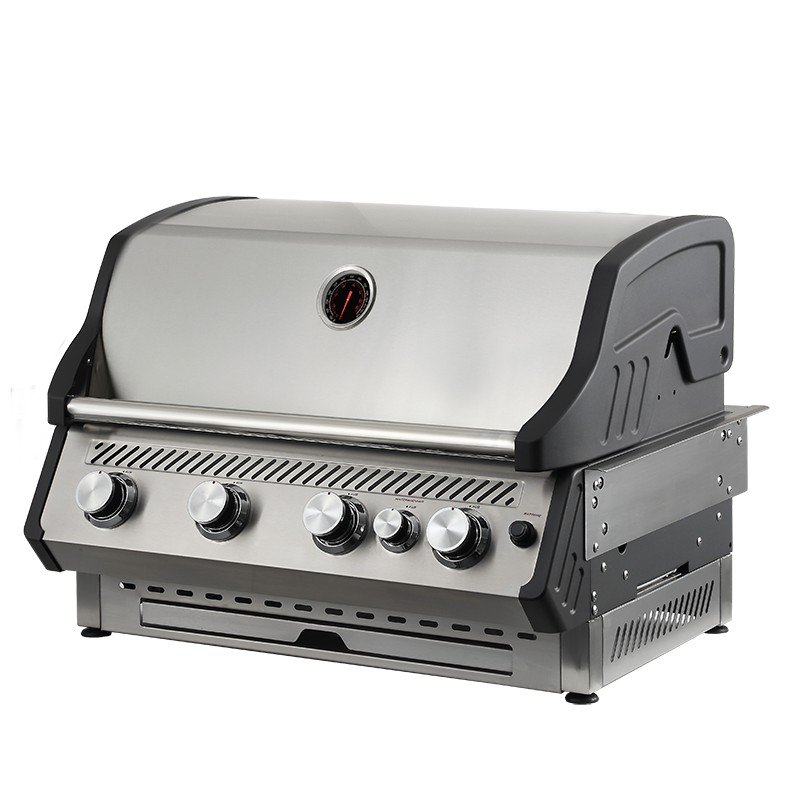
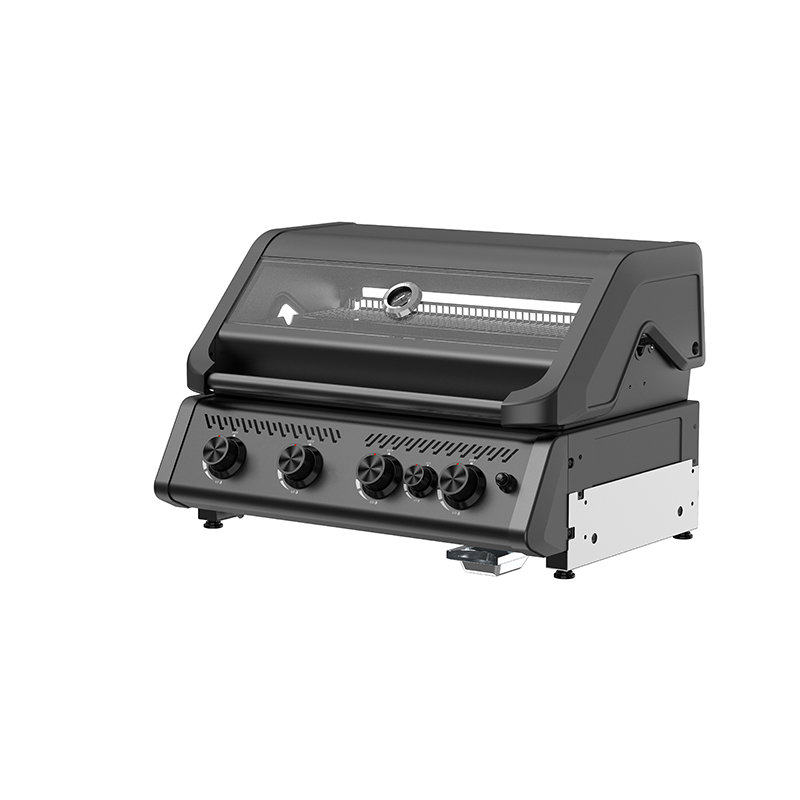
Buyers who care about evenness should write one line into the RFQ: request the supplier's grid temperature map at high and medium settings, taken per the 9-point protocol above, with ambient temperature and preheat time recorded. A factory that tests will send data within a day; one that does not test will send adjectives. For built-in and island installs, uniformity matters even more because the footprint is fixed - users cannot rotate food across a sunken grate as freely - so Kangye Electric maps its built-in models over the full grate rather than the central zone only. For more on how burner shapes affect the map, see our gas grill burner design breakdown and our guide to choosing a gas BBQ grill.
Frequently Asked Questions
How many measurement points should a grill heat map use?
Nine points (corners, edge midpoints, center) is the minimum credible grid and takes under two minutes to shoot. Independent 2026 testers use 20-25 points for review-grade precision, but both methods rank grills the same way at the top and bottom.
What temperature spread is acceptable on a gas grill?
Use 45°C total spread as the acceptance line for a tube-burner grill and 15°C for an infrared zone. Independent 2026 data supports this: premium conventional grills map at 37-63°F spread while infrared units reach 8-15°C.
Does an infrared burner make the whole grill even?
No - it evens the zone it covers. Infrared emitters deliver a 4-15°C spread within their own footprint, which is why hybrid designs pair them with tube burners rather than replacing them.
Can uneven heat be fixed after purchase?
Usually, yes. Clean the burner ports, clear the venturi tubes and replace warped heat plates - the bread test before and after will show the map flattening. A replacement heat plate set costs a fraction of a warranty return.
Sources and Data Notes
- Kangye Electric lab, October 2026 - 9-point grid mapping of KYQ-FH31S-B (3-burner, 13.65 kW) and KYQ-194RB infrared side burner; ambient 26°C; 15-minute closed-lid preheat; calibrated IR spot thermometer at 30 cm. First-party data.
- BBQ Grill & Smoker, 2026 - Char-Broil Commercial TRU-Infrared 63°F max spread vs 187°F on a conventional control; Weber Spirit II E-310 ±25°F core zone; Weber Genesis EX-335 ±37°F total, competitors ±60-90°F.
- Grill Master Canada, 2026 - Napoleon Prestige 500 RSIB 8°F spread at 450°F; conventional grills 60-80°F hot-spot differences; radiant-heat physics explanation.
- best-gas-bbq.co.uk, 2026 - Char-Broil TRU-Infrared variance 15°C vs 40-50°C on conventional gas BBQs.
- GrillWizardOz, 2026 (reviewed Sep 25) - bread-test mapping method; warped heat plates as leading cause of uneven heat.
- EatHealthy365, 2026 - biscuit-test heat mapping and burner-port troubleshooting.
Need Grid-Tested Grills for Your Program?
Kangye Electric supplies free-standing and built-in gas grills with burner architectures matched to your price tier, CE/GS/ETL/CSA certified.
View the built-in series