PID vs On/Off Temperature Control: Precision, Cost, and How to Choose
Every heated appliance has one core job: keep the cooking chamber at the temperature the user asked for. Some do it by flipping a heater on and off like a light switch. Others continuously modulate power like a cruise control system. The difference between these two approaches — on/off (bang-bang) control and PID control — determines everything from the crispness of a batch of jerky to the lifetime of a relay, and even the energy bill at the end of the month.
For B2B buyers sourcing food dehydrators, air fryers, ovens, and electric grills, the type of temperature controller inside the appliance is a hidden spec that shapes product quality, returns rates, and customer satisfaction. Yet it rarely appears on marketing spec sheets. This technical guide explains how on/off and PID controllers work, compares their real-world performance, and gives you a practical framework for evaluating the temperature control of any appliance you plan to source.
What Is On/Off (Bang-Bang) Temperature Control?
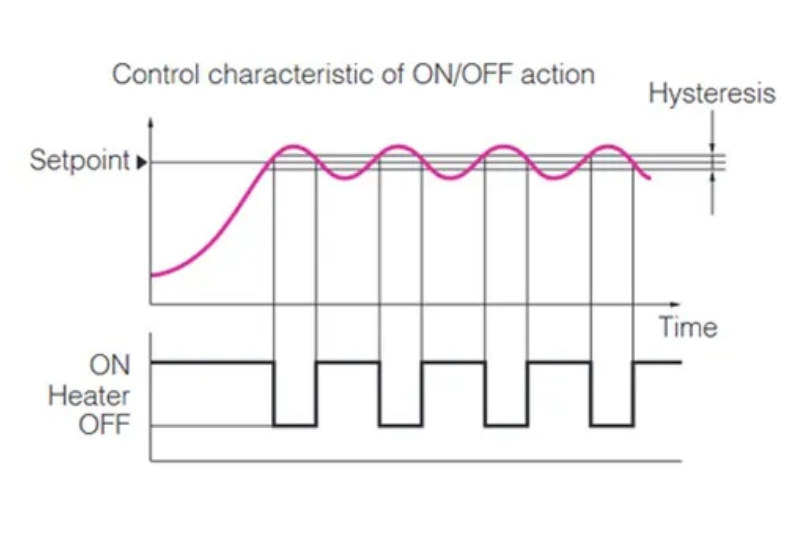
On/off control is the simplest and oldest form of temperature regulation. A thermostat measures the temperature, and when it drops below the setpoint, the heating element switches to 100% power. When the temperature rises above the setpoint, the heater switches completely off. The output is binary: full on or full off, nothing in between.
Because there is always a delay between the heater turning off and the chamber actually cooling down, the temperature does not stop exactly at the setpoint. It overshoots above it, then falls below it, then rises again — producing a continuous sawtooth wave of temperature cycling. To prevent the relay from chattering hundreds of times per minute, on/off controllers use a dead band (hysteresis): a small tolerance window around the setpoint within which the controller takes no action.
Typical accuracy: on/off controllers in consumer appliances maintain temperature within roughly ±3–6°C of the setpoint. Some budget food dehydrators drift even wider, especially when the heater duty cycle is long and the chamber is poorly insulated.
What Is PID Temperature Control?
PID stands for Proportional–Integral–Derivative, and it is the control algorithm used in nearly every industrial process that demands precision. Instead of a binary switch, a PID controller continuously calculates how much power to send to the heater — anywhere from 0% to 100% — based on three terms:
- Proportional (P): responds to the current error — how far the temperature is from the setpoint right now. Large error, lots of power; small error, little power.
- Integral (I): accounts for past error accumulated over time, eliminating the small offset that proportional control alone leaves behind.
- Derivative (D): predicts the future by watching the rate of temperature change, damping the system and preventing overshoot as the setpoint approaches.
In practice this means a PID-equipped dehydrator holds 60°C with only ±0.3–1°C of drift, rather than cycling between 55°C and 65°C. The heating element is driven through a solid-state relay (SSR) or a triac with pulse-width modulation, so the heater gently ramps its power instead of slamming on and off.
| Feature |
On/Off (Bang-Bang) |
PID |
| Control action |
100% on or 100% off |
Continuous power modulation 0–100% |
| Typical accuracy |
±3–6°C |
±0.1–1.5°C |
| Temperature behavior |
Sawtooth cycling around setpoint |
Flat, stable line at setpoint |
| Component cost |
Very low (bimetallic strip or simple relay) |
Higher (microcontroller, sensor, SSR) |
| Setup complexity |
Plug and play |
Requires tuning (often auto-tune) |
| Relay wear |
High — frequent switching |
Low — smooth output, less cycling |
| Energy efficiency |
Moderate — full-power bursts |
Higher — uses only the power needed |
Why Temperature Precision Matters in Kitchen Appliances
For some appliances, a few degrees of drift is cosmetic. For others, it is the difference between a safe, consistent product and a batch of spoiled food. Temperature accuracy matters most where the process window is narrow:
- Food dehydrators: Most fruits and vegetables are optimally dried between 40–70°C. Lower temperatures (40–55°C) preserve heat-sensitive nutrients and enzymes; jerky and meat products require sustained 65–75°C for food safety. An on/off controller swinging ±5°C can intermittently push the chamber above 75°C (slow-cooking instead of drying) or drop it below the safe zone, risking bacterial growth in a 10-hour cycle.
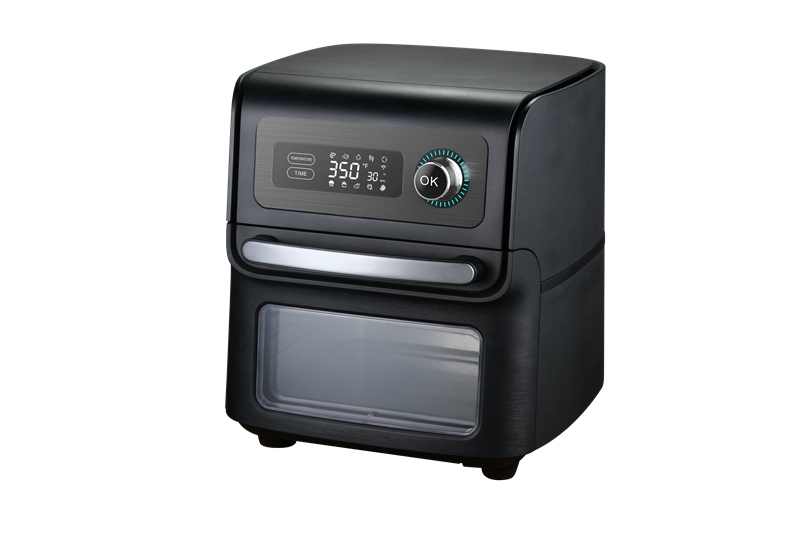
- Air fryers and convection ovens: A user sets 180°C expecting golden fries; a poorly controlled unit can oscillate to 200°C, burning the outside while the inside stays raw — the leading cause of "inconsistent results" complaints.
- Low-temperature cooking: Sous vide and slow cooking hold food at 55–65°C for hours. A ±1°C error matters at these temperatures, which is why precision circulators universally use PID control.
- Steamers and warmers: Over-temperature spikes waste energy, and under-temperature dips create condensation and soggy food.
Independent tests consistently show PID-equipped appliances hold temperature three to four times more accurately than on/off equivalents. In one published comparison, a PID kettle drifted only 1.3–1.8°C at various setpoints versus ±2–5°C for an on/off model — a difference users can taste in coffee and notice in dehydrated fruit texture.
Hysteresis, Overshoot, and the Hidden Costs of Bang-Bang Control
On/off control's sawtooth behavior creates three measurable problems beyond simple inaccuracy:
- Overshoot: The heater is fully on until the moment the setpoint is crossed, so the chamber keeps climbing after switch-off. The wider the dead band, the larger the overshoot — and the wider the effective temperature swing.
- Relay and heater wear: Every on/off cycle stresses the relay contacts and thermally shocks the heating element. A dehydrator running for 12 hours with a narrow dead band can cycle hundreds of times, measurably shortening component life. Manufacturers widen the dead band to protect components — trading accuracy for durability.
- Energy waste: Full-power bursts overshoot the target, then the system must burn energy to recover from the overshoot. Continuous power modulation avoids this oscillation and typically consumes less energy for the same process.
The engineering trade-off is real: on/off controllers are cheap, robust, and perfectly adequate for high-mass, high-tolerance applications like water heating, rice cookers, and basic ovens. They fail only when the process demands tight, sustained temperature.
When On/Off Control Is "Good Enough"
PID is not automatically the right answer for every product. Knowing when on/off control is acceptable protects your margins and avoids over-engineering:
| Application |
Temperature Tolerance |
Recommended Control |
| Basic home oven / toaster |
±10–15°C acceptable |
On/off with wide dead band |
| Water kettle / rice cooker |
±5°C acceptable |
On/off (bimetallic or simple thermostat) |
| Food dehydrator (fruit/vegetable) |
±2–3°C needed for consistent texture |
PID or hybrid digital control |
| Food dehydrator (meat/jerky) |
±1–2°C needed for food safety |
PID with accurate sensor |
| Air fryer / convection oven |
±5°C or better for repeatability |
Digital PID or calibrated on/off |
| Sous vide / precision cooking |
±0.5°C required |
PID (non-negotiable) |
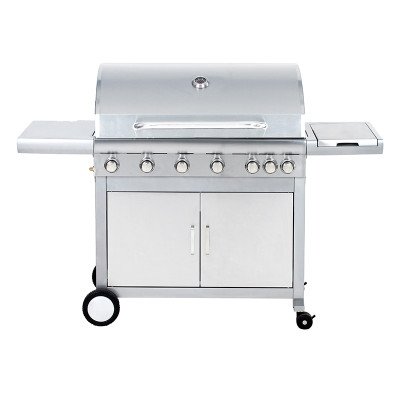
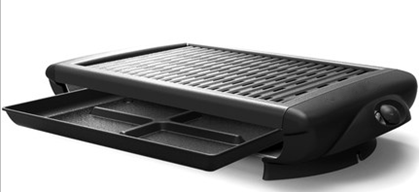
| Electric grill / plancha |
±10°C acceptable (high thermal mass) |
On/off is usually sufficient |
As a rule of thumb: if the product's thermal mass is high and the user cannot taste or see a 5°C swing, on/off control is the cost-optimized choice. If the product cooks for hours, processes food safety-critical items, or competes on "consistent results," digital PID control is the differentiator.
What to Ask About Temperature Control When Sourcing
Temperature control is rarely listed on a spec sheet in the detail buyers need. Here is a practical checklist to use when evaluating suppliers — and what each answer tells you:
| Question |
Why It Matters |
What a Good Answer Looks Like |
| What type of controller does this model use? |
On/off vs PID is the single biggest accuracy driver. |
"Digital PID with auto-tune" or a specific controller brand/model |
| What is the temperature accuracy spec? |
Reveals whether the chamber holds the setpoint or sawtooths around it. |
±1–2°C for dehydrators; ±5°C for grills |
| What sensor type is used? |
NTC thermistors are standard; sensor placement affects accuracy. |
"NTC thermistor, placed in the airflow" |
| How is the heater driven? |
SSR/triac enables smooth PID output; mechanical relay forces on/off. |
"Solid-state relay, PWM drive" |
| What is the temperature range and resolution? |
Narrow ranges can't cover low-temp dehydration (35–40°C) and high-temp air frying (200°C). |
e.g. 35–200°C with 1°C steps |
| Is there an independent over-temperature safety cutoff? |
Even the best controller needs a backup fuse/thermostat for certification. |
"Independent thermal fuse + NTC over-temp protection" |
| Can you provide temperature-hold test data? |
Verified curves beat marketing claims. |
A temperature-logging chart over a full cycle |
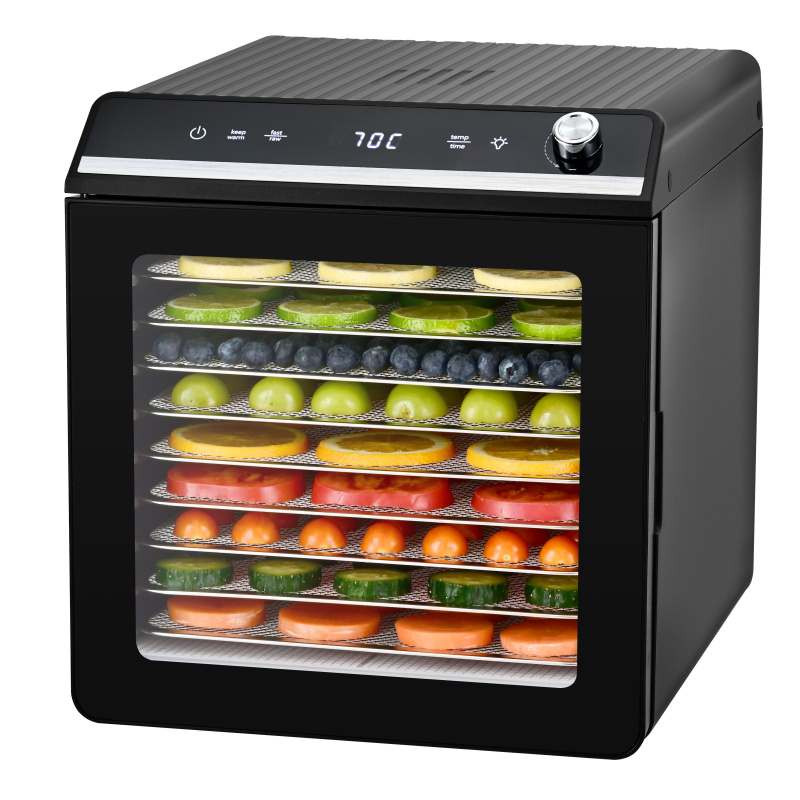
Featured Product: 10-Tray Digital Food Dehydrator KYS-315
| Model | KYS-315 Series |
|---|
| Power | 220-240V, 50/60Hz, 600-700W |
| Trays | 10 × stainless steel |
| Control | Digital temperature control |
| Timer | Up to 48 hours |
| Material | BPA-free stainless steel |
| MOQ | OEM / ODM friendly |
View Product Details
Common Myths About Temperature Controllers
| Myth |
Fact |
| Higher wattage means better temperature control |
Wattage determines heating speed, not stability. Control quality depends on the controller algorithm and sensor. |
| Digital display = PID control |
A digital display can sit on top of a plain on/off thermostat. Ask for the controller type, not the display. |
| On/off controllers are always less safe |
Independent over-temperature protection matters more than the control algorithm. Both types need safety cutoffs. |
| PID is too expensive for consumer appliances |
Modern microcontrollers make PID cost-effective even in mid-range appliances; the incremental cost is often just a better sensor and an SSR. |
| Temperature accuracy is guaranteed by certification |
Certifications (CE, UL, GS) verify safety, not temperature accuracy. Accuracy is a performance spec, not a safety spec. |
Energy Efficiency and Long-Term Operating Cost
Beyond accuracy, the control algorithm has a measurable impact on energy consumption — increasingly important as energy costs rise and consumers read their appliance labels. On/off systems cycle the heater at full power, overshoot the setpoint, then let the chamber cool before reheating. Each recovery burn wastes energy. PID systems modulate power to the exact level needed to hold temperature, eliminating the overshoot-recovery cycle.
For a dehydrator running 8–12 hours per batch, the difference is meaningful. Independent comparisons of PID versus on/off heating show energy savings of roughly 10–20% on long, steady-state processes — savings your end customers will see on their electricity bills, and a selling point you can quote in your product materials.
Component lifetime is the second hidden cost. A mechanical relay cycling hundreds of times across a 48-hour dehydration run wears measurably faster than a solid-state relay making smooth power adjustments. Lower switching frequency means fewer field failures, fewer warranty claims, and lower total cost of ownership — all factors that matter when you are choosing a supplier for a multi-year product line.
How Kangye Approaches Temperature Control Engineering
Kangye Electric has manufactured kitchen appliances since 1989, and temperature control design sits at the heart of our engineering process. Every digital model in our range — from the KYS-315 dehydrator to the KYS-116 air fryer oven — is validated in our in-house testing lab, where we log real temperature curves rather than relying on theoretical specs.
Our engineering team works with each OEM/ODM partner to select the right control strategy for their product and market: PID digital control where accuracy is a selling point, calibrated on/off control with appropriately sized dead bands where it is the cost-optimized choice, and always with independent over-temperature protection, NTC sensor short/open-circuit detection, and thermal fuses as required for CE, UL, GS, and other certifications.
When you source with Kangye, you get more than a spec sheet — you get temperature-hold test data, component traceability, and an engineering team that explains why a controller choice is right for your product, not just what it costs.
Choosing the Right Temperature Control for Your Product Line
Here is a decision framework you can apply to any appliance category you are sourcing:
- Start with the process window. Identify the temperature tolerance your application truly needs — this is the single most important input.
- Match the controller to the window. Wide window and high thermal mass: on/off. Narrow window or long cycles: PID.
- Verify with data. Ask for temperature-hold curves and sensor accuracy specs before committing to a model.
- Price the total cost, not the BOM. Account for energy use, warranty claims, and return rates driven by inconsistent results.
- Keep safety independent. Whatever the control strategy, confirm over-temperature protection is separate and certified.
FAQ: Temperature Control Basics for Buyers
What is the typical accuracy of an on/off thermostat?
Consumer on/off controllers typically maintain ±3–6°C, depending on dead band width, sensor placement, and chamber insulation. The larger the dead band, the wider the swing — and the longer the relay lasts.
Is PID control worth the extra cost in home appliances?
For dehydrators, air fryers, and any long-cycle or food-safety-sensitive product, yes — the accuracy, consistency, and lower energy use usually justify the incremental component cost. For high-mass, high-tolerance products like basic grills and kettles, on/off is often the right economic choice.
Can a digital-display appliance still use on/off control?
Yes. The display and the control algorithm are independent. Always ask the supplier which controller type a model uses, rather than assuming from the user interface.
What sensor type is best for food dehydrators?
NTC thermistors are the industry standard — accurate, inexpensive, and reliable. Sensor placement in the airflow (rather than against a wall) gives the most representative chamber temperature reading.
Does PID control require the user to do anything?
No. Consumer appliances ship with pre-tuned or auto-tuned PID parameters. The user just sets the temperature; the controller does the rest. Tuning complexity is an engineering concern, not a user concern.
Conclusion: Precision Is a Spec You Can Verify
The gap between on/off and PID temperature control is not an academic detail — it shows up in dried fruit texture, air-fryer browning consistency, energy bills, relay failures, and ultimately return rates. Understanding the difference turns temperature control from an invisible internal component into a spec you can specify, verify, and sell.
Kangye Electric has supplied OEM and ODM kitchen appliances to partners across 80+ countries since 1989, with the engineering depth to match the right controller to the right product — and the test data to prove it. Whether you are launching a new dehydrator line, upgrading an air fryer range, or simply want to understand what is inside the products you currently import, our team can help.
For more technical articles and sourcing guides, visit our Blog or contact our sales team to discuss your next project.