Pizza Oven vs Regular Home Oven: Cook Time, Energy Cost and Results Compared
Pizza Oven vs Regular Home Oven: Cook Time, Energy Cost and Results Compared
Quick Answer
A dedicated outdoor pizza oven cooks a 12-inch pizza in roughly 90 seconds to 3 minutes at 400-500 degrees C, while a regular home oven needs 10-15 minutes at 250-280 degrees C after a 15-45 minute preheat. Per baking session, a portable gas pizza oven consumes about 0.4-0.6 kWh of energy (roughly 5-8 cents of gas or electricity), compared with 2.0-2.5 kWh (around 25-35 cents) for a full-size conventional oven cycle. The pizza oven wins clearly on speed, crust quality and running cost; the home oven wins on capacity, versatility and zero extra purchase. Below, Kangye Electric compares the two appliance classes on cook time, energy cost and finished results, using data from 2026 cooking tests and manufacturer specifications.
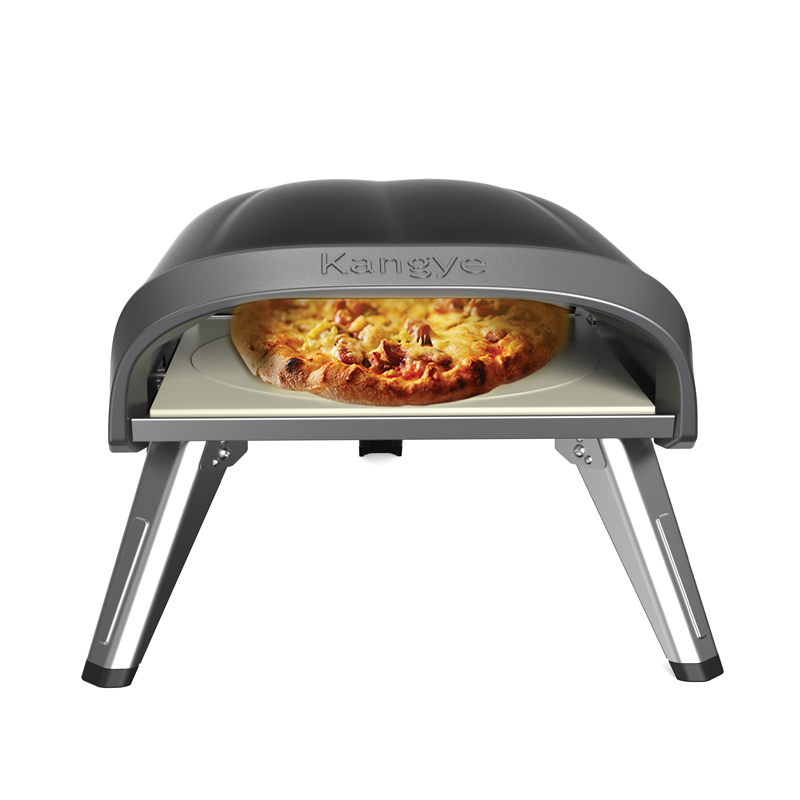
Buying a pizza oven used to be a decision reserved for restaurants. In 2026, compact 4kW gas pizza ovens such as the KYQ-KPS12A stainless steel outdoor pizza oven from Kangye Electric have brought stone-floor, high-temperature baking into ordinary backyards. But is a dedicated appliance really better than the oven already sitting in your kitchen? This guide compares the two options across the three factors that matter most to buyers: how long each method takes, what each baking session costs in energy, and how the finished pizza actually turns out.

Cook Time: 90 Seconds vs 12 Minutes, Plus the Preheat Gap
A pizza oven finishes a Neapolitan-style pizza in 60-120 seconds and a thicker crust in 2-3 minutes, whereas a home oven needs 10-15 minutes of bake time alone, and that difference compounds once preheating is counted.
The reason is physics. Outdoor pizza ovens reach 400-500 degrees C (750-950 degrees F), close to wood-fired oven temperatures, which sets the dough surface almost instantly. Regular home ovens top out at about 250-290 degrees C (500-550 degrees F) in standard mode, and most household models realistically stabilize near 230-250 degrees C on their hottest setting. At those temperatures, the water in the dough escapes slowly, stretching total bake time past the 10-minute mark.
Preheating is the hidden cost that most comparisons skip. Published 2026 kitchen tests report preheat windows of 10-20 minutes for countertop and portable gas pizza ovens (the KYQ-KPS12A reaches baking temperature in about 15 minutes), while a full-size conventional oven typically needs 15-45 minutes to reach and stabilize at 250 degrees C, and home ovens with thick pizza stones need even longer for the stone itself to saturate. Counting preheat plus bake, a two-pizza weeknight session in a pizza oven takes under 30 minutes from ignition to table; the same session in a kitchen oven often stretches past an hour.
| Metric | Outdoor Pizza Oven (4kW gas) | Regular Home Oven |
|---|---|---|
| Baking temperature | 400-500 degrees C (750-950 F) | 230-290 degrees C (450-550 F) |
| Preheat time | 10-20 minutes | 15-45 minutes |
| Bake time per pizza | 90 seconds to 3 minutes | 10-15 minutes |
| Pizzas per hour (realistic) | 20-40 | 4-6 |
| Typical stone diameter | 12 inches | Limited by cavity size |
Energy Cost per Baking Session
Per session, a portable gas pizza oven uses roughly one quarter of the energy of a conventional oven cycle, which is why the per-pizza cost gap grows quickly for families that bake often.
The numbers come from 2026 energy-cost analyses of household cooking appliances. A conventional electric oven draws 2,000-3,000W and, across a preheat plus 15-minute bake, consumes approximately 2.0-2.5 kWh. At typical 2026 residential electricity rates, that works out to roughly 25-35 cents per session. A 1,500W-class countertop appliance consumes around 0.4 kWh per short session, and a 4kW gas pizza oven such as the Kangye Electric KYQ series runs on a standard propane or butane canister, consuming the gas equivalent of roughly 5-8 cents per baking session because the burner only runs at full power for minutes, not an hour.
Two practical nuances matter. First, home ovens are usually already needed for other dishes, so their standby efficiency depends on batch cooking. Second, gas pizza ovens are immune to electricity price spikes, an increasingly relevant point in 2026 utility markets. The table below summarizes the per-session picture.
| Cost Factor | Outdoor Pizza Oven (4kW gas) | Regular Home Oven (electric) |
|---|---|---|
| Power rating | 4,000W gas burner | 2,000-3,000W electric elements |
| Energy per session | Approx. 0.4-0.6 kWh equivalent | Approx. 2.0-2.5 kWh |
| Cost per session (2026 rates) | Approx. 5-8 cents | Approx. 25-35 cents |
| Cost per 10 pizzas | Approx. 0.5-0.8 dollars | Approx. 2.5-3.5 dollars |
| Annual cost (weekly pizza night) | Approx. 3-4 dollars | Approx. 13-18 dollars |

Results: Crust, Toppings and Consistency
Pizza ovens produce a leopard-spotted, puffy, wood-fired-style crust that a 250-degree-C home oven physically cannot replicate, because crust char and oven spring depend on intense radiant and conductive heat delivered within the first 60 seconds.
At 450 degrees C, the stone floor blasts the dough base with conductive heat while radiant heat from the dome browns the top, producing the classic spotted char and airy cornicione. Home-oven pizzas cooked on a metal tray at 250 degrees C tend toward a paler, cracker-like base; adding a pizza stone narrows the gap but cannot close it, since the oven simply cannot supply enough top heat to finish the toppings before the base dries out. 2026 taste tests consistently rank stone-floor, high-temperature baking ahead on crust texture, cheese melt and moisture retention.
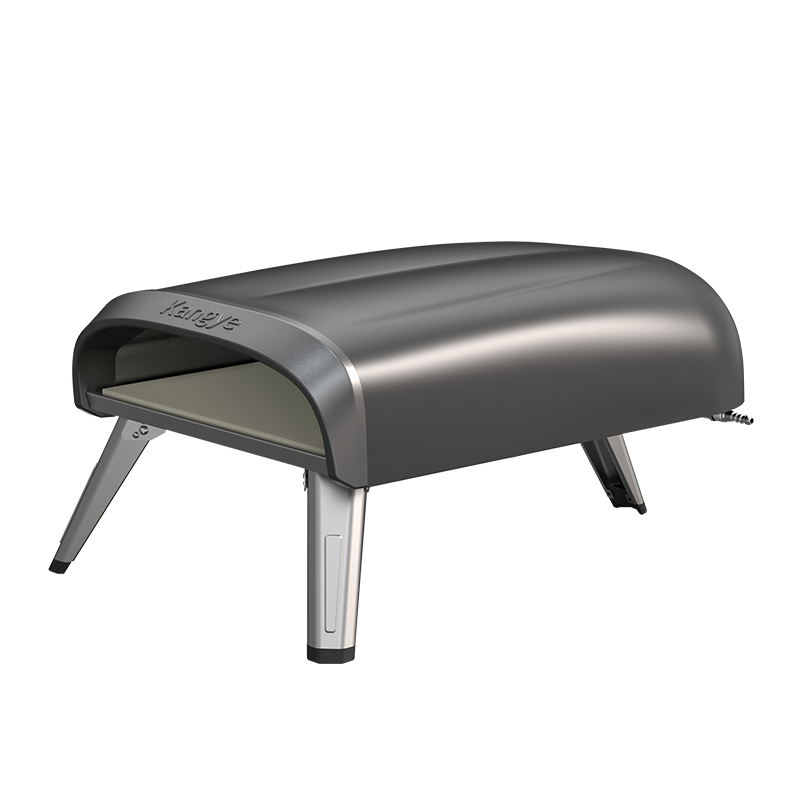
Consistency also differs. A dedicated pizza oven with a built-in thermometer, like the KYQ-KPS12B cast aluminum model shown below, lets the cook verify stone temperature before launching each pizza, so pie number eight comes out the same as pie number one. Home ovens cycle on thermostat swings of 10-20 degrees, and opening the door to check progress drops cavity temperature sharply.
Capacity, Versatility and Other Trade-offs
The home oven still wins whenever the job is bigger than one 12-inch pizza, since it can hold multiple trays, bake bread and roast a chicken at the same time, and works year-round regardless of weather.
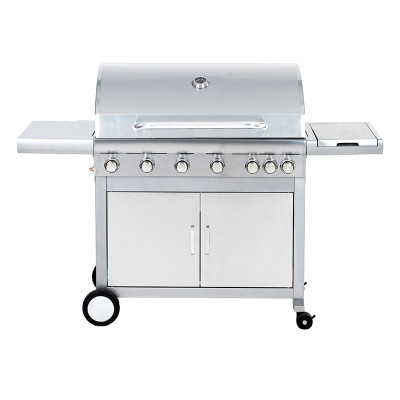
A pizza oven cooks one pizza at a time on a 12-inch stone, and an outdoor unit needs shelter from wind and rain. On the other side of the ledger, a pizza oven is a social appliance: guests watch each 90-second bake, and the appliance itself becomes the centerpiece of an outdoor cooking station. These pizza ovens are designed to pair visually with gas grill ranges, so buyers building a full outdoor kitchen can coordinate finishes and materials in one product family. For buyers who only cook frozen pizzas a few times a year, a dedicated oven is hard to justify; for weekly fresh-pizza households, the speed and quality gains are immediate.
Which Should You Buy in 2026?
Choose a dedicated outdoor pizza oven if you bake fresh pizza weekly or more, entertain outdoors, or simply want wood-fired results; keep relying on your regular home oven if you cook frozen pizzas occasionally or need multi-dish capacity.
A practical 2026 rule of thumb: if your household eats pizza more than twice a month and you already own any outdoor cooking equipment, the per-session savings and the quality jump together justify a compact gas pizza oven. Models such as the KYQ-KPS12A (stainless steel, 12-inch stone, thermometer) and KYQ-KPS12B (cast aluminum, lighter for transport) from Kangye Electric cover the two most common use cases: a permanent outdoor-kitchen installation and a portable unit for camping or tailgating. Both accept standard gas canisters, heat to baking temperature in about 15 minutes, and are available for OEM and ODM customization through the manufacturer's brand-partner program.
Frequently Asked Questions
Can a regular home oven really not make good pizza?
It can make good pizza, just not wood-fired-style pizza. With a preheated pizza stone or steel placed on the top rack and the oven at its maximum setting, a home oven produces a solid New-York-style slice in 8-12 minutes. What it cannot reproduce is the 60-90 second bake, the leopard-spotted char and the moist, airy crumb that come from 450-degree-C radiant heat.
How much does it cost to run a gas pizza oven per year?
At roughly 5-8 cents of gas per session, a weekly pizza night costs about 3-4 dollars per year in fuel. Even at three sessions per week, annual fuel cost stays in the range of 8-12 dollars, a small fraction of what the same sessions would cost in a full-size electric oven.
Are outdoor pizza ovens safe on a wooden deck or table?
Yes, with basic precautions. Keep the oven on its supplied base or a heat-resistant pad, maintain the clearance to combustibles stated in the manual (typically 20-30 cm on all sides), and never operate it indoors or under a low awning. Models with enclosed burners and stable feet, such as the Kangye Electric KYQ series, are designed for standard patio use.
Is a 12-inch stone big enough for a family?
For most families, yes, because the 90-second bake time means pizzas arrive continuously rather than all at once. A household of four typically finishes three to four pizzas within 15 minutes of the first bake, which is faster than waiting for a single large pizza from a home oven.
Do pizza ovens cook anything besides pizza?
A stone-floor oven at 400-plus degrees C handles flatbreads, naan, roasted vegetables, steaks seared on cast iron and even baked desserts with charred finishes. It is a specialist appliance, but the same intense heat that makes great pizza also makes it a fast high-heat cooking station for anything that benefits from a hard sear.
Sources and Data Notes
Cook-time and temperature figures for pizza ovens and home ovens are drawn from 2026 cooking-equipment tests and appliance specification sheets published by kitchenwisehub.com, eathealthy365.com and grillmaster360.co.uk. Energy-consumption and per-session cost estimates are based on 2026 energy-cost analyses from homeadviserlab.com and mineralwaters.org, using typical residential electricity rates and standard propane canister prices. Pizza-area and servings math follows the calculators published by jordospizzacalculator.com. Product specifications, including the 4kW burner rating, 12-inch cordierite stone and preheat time, are taken from Kangye Electric product documentation for the KYQ-KPS12A and KYQ-KPS12B. All figures are approximate and vary with ambient temperature, gas type, electricity rates and oven condition; treat them as planning ranges rather than guarantees.