Stainless Steel Grades in Kitchen Appliances: SUS443 vs SUS304 vs SUS430 vs SUS201 — A Complete Comparison
Introduction: Not All Stainless Steel Is Created Equal
Stainless steel is the most widely used material in kitchen appliance manufacturing — from food dehydrators and grills to air fryers and pizza ovens. Its corrosion resistance, strength, clean appearance, and durability make it the default choice. However, the term "stainless steel" covers dozens of grades with vastly different properties. Four grades dominate the kitchen appliance industry: SUS443, SUS304, SUS430, and SUS201. Each has a distinct chemical composition, performance profile, and cost structure. Understanding these differences is essential for OEM buyers, distributors, and technical professionals. This guide compares all four grades side by side, with a particular focus on SUS443 — a nickel-free ferritic stainless steel that rivals SUS304 in corrosion resistance at a significantly lower cost.
Quick Reference: 4-Grade Comparison Table
The table below summarizes the critical differences across all four stainless steel grades commonly used in kitchen appliances. Key highlights include SUS443's high chromium content (21%), zero nickel, and corrosion resistance approaching SUS304.
| Property | SUS443 | SUS304 | SUS430 | SUS201 |
|---|---|---|---|---|
| Standard | JIS G4305 | JIS G4305 | JIS G4305 | JIS G4305 |
| Type | Ferritic | Austenitic | Ferritic | Austenitic |
| Chromium (Cr) | 21% | 18-20% | 16-18% | 16-18% |
| Nickel (Ni) | ~0% (Ni-free) | 8-10.5% | ~0% | 3.5-5.5% |
| Manganese (Mn) | ≤1.0% | ≤2.0% | ≤1.0% | 5.5-7.5% |
| Corrosion Resistance | ★★★★ (Rivals 304) | ★★★★ | ★★☆ | ★★ |
| Relative Cost | $$ (Medium) | $$$ (High) | $ (Low) | $$ (Medium-Low) |
| Magnetic | Yes (Ferritic) | No | Yes (Ferritic) | No (cold-worked) |
| Thermal Conductivity | 22.5 W/m·K | 16.2 W/m·K | 26.1 W/m·K | ~16 W/m·K |
| Thermal Expansion (20-100°C) | 10.5 ×10⁻⁶/°C | 17.3 ×10⁻⁶/°C | 10.4 ×10⁻⁶/°C | ~17 ×10⁻⁶/°C |
| Food Contact Safe | ✅ Yes | ✅ Yes | ⚠️ Limited | ❌ Not recommended |
| Typical Applications | Pizza ovens, BBQ grills, sinks, range hoods, IH cookware | Food dehydrators, medical equipment, chemical processing | Appliance exteriors, automotive trim, decorative panels | Budget cookware, railway vehicles, indoor decoration |
Chemical Composition: What Makes Each Grade Unique
The fundamental difference between these stainless steel grades lies in their alloy composition. SUS443 (JIS G4305) is a ferritic stainless steel with 21% chromium, zero nickel, and titanium stabilization. The high chromium content creates a dense passive oxide layer that provides exceptional corrosion resistance despite the absence of nickel. The titanium addition prevents chromium carbide formation during welding, maintaining corrosion resistance at welded joints. SUS304 (18/8 stainless) contains 18-20% chromium and 8-10.5% nickel, creating a stable austenitic crystal structure that is non-magnetic and highly ductile. SUS430 is a ferritic stainless steel with 16-18% chromium and essentially zero nickel, making it magnetic and significantly cheaper but with reduced corrosion resistance. SUS201 was developed as a lower-cost alternative to SUS304 by replacing a portion of the nickel with manganese (5.5-7.5%) and nitrogen — a compromise that significantly reduces corrosion resistance, especially in humid or salty environments.
Corrosion Resistance: SUS443 Rivals SUS304
Corrosion resistance is the most critical property for kitchen appliances exposed daily to moisture, food acids, and cleaning chemicals. SUS304 offers excellent corrosion resistance across most environments, withstanding water, acidic foods (tomatoes, citrus), and alkaline cleaning agents without pitting or rusting. What makes SUS443 remarkable is that — despite containing zero nickel — its corrosion resistance has been independently verified to be equivalent to or better than SUS304. In a 4-year atmospheric exposure test conducted in Okinawa by JFE Steel, SUS443 (JFE443CT) demonstrated corrosion resistance superior to SUS304 in a coastal environment. SUS430 offers good resistance in dry indoor environments but is susceptible to pitting in coastal areas or high-humidity conditions. SUS201 has the lowest corrosion resistance of the four — it is prone to rust in humid environments and can develop surface corrosion when exposed to acidic foods, making it unsuitable for food-contact surfaces.
SUS443 vs SUS430: A Significant Upgrade
SUS443 is often described as an upgraded SUS430, and the data supports this. The key difference is chromium content: SUS443 contains 21% chromium versus 16-18% for SUS430. This additional chromium elevates SUS443's corrosion resistance from "fair" (SUS430 level) to "excellent" (approaching SUS304 level). Both are ferritic (magnetic) and nickel-free, but SUS443 adds titanium stabilization that SUS430 lacks, improving weldability and preventing sensitization during welding. The pitting resistance equivalent number (PREN) for SUS443 is approximately 21, compared to 16-18 for SUS430 and 18-20 for SUS304. For kitchen appliance manufacturers, upgrading from SUS430 to SUS443 means significantly better durability in humid kitchen environments without the cost premium of SUS304. This makes SUS443 the ideal choice for applications like pizza oven burners, BBQ grill components, range hoods, and sink basins where both corrosion resistance and cost control matter.
Cost Analysis: The Price-Performance Sweet Spot
Material cost varies significantly between grades, driven primarily by nickel content — a globally traded commodity with volatile pricing. SUS304 is the most expensive because of its 8-10.5% nickel content. SUS430 costs approximately 30-50% less than SUS304 since it contains no nickel. SUS443 falls between the two — cheaper than SUS304 but slightly more expensive than SUS430 — because it also contains no nickel but has a higher chromium content. The critical advantage of SUS443 is cost stability: because it is nickel-free, its price does not fluctuate with nickel market volatility, unlike SUS304. SUS201 positions itself between SUS430 and SUS304 in cost, but its lower corrosion resistance often leads to hidden costs from product returns, warranty claims, and brand reputation damage. For OEM buyers, the total cost of ownership calculation should include not just material price but also failure rates, warranty exposure, and customer satisfaction.
Thermal Properties: Why They Matter for Appliances
SUS443 offers significant advantages in thermal performance. Its thermal conductivity is 22.5 W/m·K, approximately 40% higher than SUS304 (16.2 W/m·K). This means SUS443 heats up more evenly and transfers heat more efficiently — a critical advantage for cooking appliances like pizza ovens and BBQ grills where uniform heat distribution directly affects cooking results. SUS443 also has a lower coefficient of thermal expansion (10.5 ×10⁻⁶/°C vs 17.3 ×10⁻⁶/°C for SUS304), meaning it expands and contracts less with temperature changes. This reduces dimensional distortion in welded assemblies and improves the longevity of components subjected to repeated heating and cooling cycles. SUS430 has the highest thermal conductivity (26.1 W/m·K) but its lower corrosion resistance limits its applications for food-contact components.
Magnetic Properties and Practical Impact
SUS443 and SUS430 are magnetic (ferritic structure), while SUS304 and SUS201 are non-magnetic (austenitic structure). Magnetic properties matter for several reasons in kitchen appliances. Magnetic stainless steel is compatible with IH (induction heating) cooking systems, making SUS443 an excellent choice for cookware and griddle surfaces. Magnetic materials can also be handled with magnetic sorting and separation in recycling and manufacturing processes. However, magnetic stainless steel can potentially interfere with sensitive electronic sensors in some smart appliances, requiring careful electromagnetic compatibility design. The non-magnetic nature of SUS304 makes it preferred for applications where magnetic interference must be avoided, such as electronic control housings. In the case of SUS201, it is non-magnetic in its annealed state but becomes slightly magnetic after cold working, which can create inconsistency in applications where magnetic properties matter.
Grade SUS201: Understanding the Limitations
SUS201 was developed as a cost-reduction strategy — replacing expensive nickel with manganese and nitrogen. While this brings the price down, the trade-offs are significant. SUS201 has markedly lower corrosion resistance than SUS304 and even SUS430, particularly in humid environments. It is more prone to pitting, stress corrosion cracking, and intergranular corrosion. In the context of kitchen appliances, where food-contact surfaces are exposed to moisture, acids, and cleaning chemicals for years, SUS201 is not a suitable choice for components that contact food. Leading appliance manufacturers, including Kangye, do not use SUS201 for any food-contact components. The minimal cost savings from using SUS201 are outweighed by the risks of premature corrosion, product failure, and damage to brand reputation. For non-food-contact interior components in dry environments, SUS201 may be acceptable as a cost-saving measure, but it should never be specified for surfaces that contact food.
Applications: Matching the Right Steel to Each Component
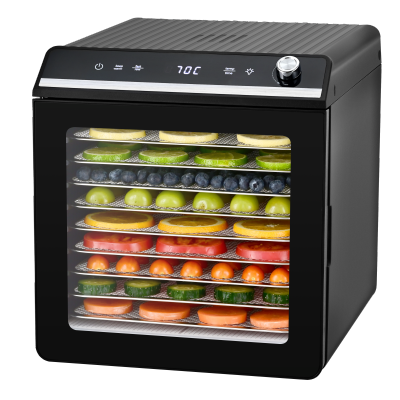
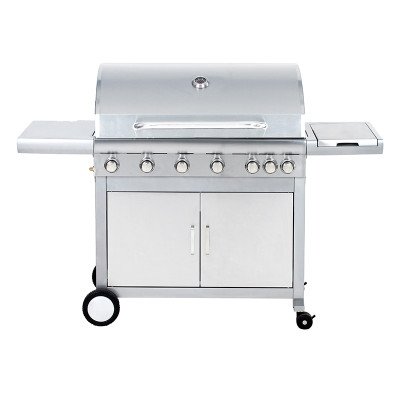
In a well-designed kitchen appliance, different components may use different stainless steel grades to optimize cost without compromising food safety or performance. SUS443 is ideal for: pizza oven burners, BBQ grill components, range hoods, sink basins, IH cookware, and outdoor appliance housings — offering excellent corrosion resistance at a moderate cost. SUS304 is ideal for: food dehydrator trays, commercial kitchen equipment, medical-grade appliances, and any component requiring maximum corrosion resistance with non-magnetic properties. SUS430 is suitable for: non-food-contact decorative panels, appliance exteriors, structural brackets, and interior components not exposed to moisture or food acids. SUS201 has limited applications: budget indoor decorative trim, non-food structural components in dry environments, and applications where the buyer explicitly accepts the corrosion risk in exchange for cost savings. For food-contact applications, SUS304 and SUS443 are the only recommended choices.
Conclusion: Choosing the Right Stainless Steel for Your Product
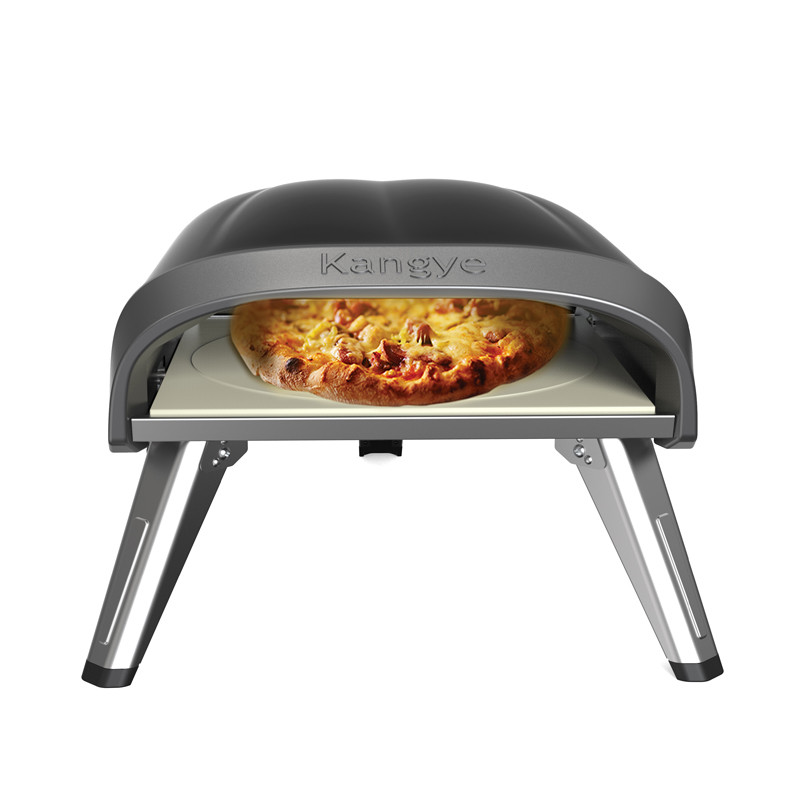
Understanding the differences between SUS443, SUS304, SUS430, and SUS201 is essential for making informed material decisions in kitchen appliance manufacturing. SUS443 has emerged as a compelling middle-ground option — offering corrosion resistance approaching SUS304, at a significantly lower and more stable cost, with better thermal properties. SUS304 remains the gold standard for maximum corrosion resistance and food safety. SUS430 provides a budget option for non-contact components. SUS201, while cost-effective, carries corrosion risks that make it unsuitable for food-contact applications. For OEM buyers and distributors, specifying the right stainless steel grade for each component directly impacts product quality, longevity, and brand reputation. Kangye Electric Appliance uses SUS304 for food dehydrator trays and SUS443 for gas pizza oven burners, ensuring that every food-contact component meets the highest standards of safety and durability.