Tariffs & Trade Policy Impact: What Global Buyers Need to Know in 2026
The 2026 Tariff Landscape: What Changed and Why It Matters
Few forces shape the kitchen appliance trade as decisively as tariffs and trade policy. In 2026, the rules of the game have shifted twice in a single year — and the consequences are rippling through every sourcing decision, every price quote, and every landing cost calculation.
For B2B buyers — importers, distributors, and retail brands — understanding this landscape is no longer optional. The days of stable, predictable duty rates are over. What matters now is agility: knowing which tariff layers apply to your product, where the exemptions are, and how to structure your supply chain so that a policy change in Washington or Brussels does not derail your quarter.
This guide breaks down the 2026 tariff environment for kitchen appliances, the EU's expanding compliance wall, and the concrete strategies global buyers are using to protect margins and keep products moving.
Manufacturing hubs in China are recalibrating production and export strategy as tariff policies evolve in 2026.
Decoding the US Tariff Stack on Kitchen Appliances
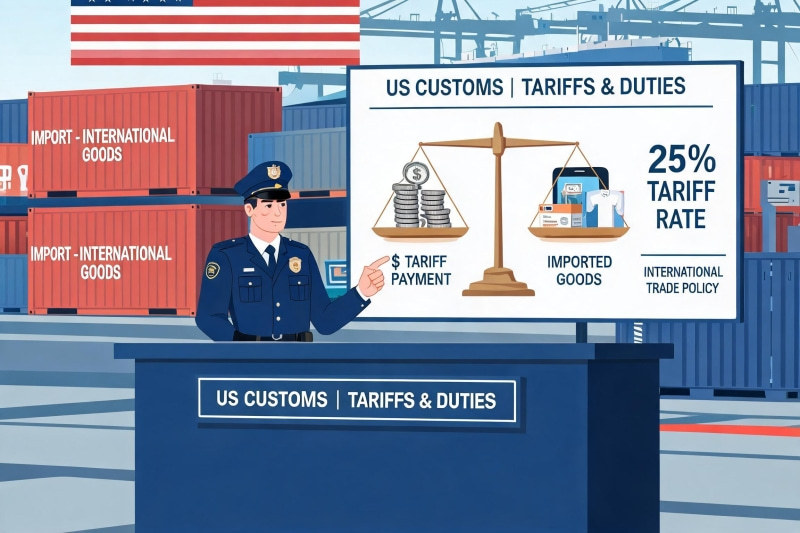
Importing kitchen appliances from China into the United States in 2026 carries a total effective tariff of roughly 38% on many small kitchen electrics. That figure is not a single duty — it is a stack of three separate layers applied to the customs value:
| Tariff Layer | Rate | What It Is |
|---|---|---|
| MFN Base Rate | 3% | Most-Favoured-Nation duty applied to all WTO members, base rate for most kitchen electrics (HTS Chapters 8509, 8516) |
| Section 122 Surcharge | 10% | Temporary global tariff introduced February 2026; expired 2026-07-24 |
| Section 301 (China) | 25% | China-specific additional tariff that stacks on top of MFN and other duties |
| Total Effective Rate | ~38% | Stacked duty on customs value before MPF/HMF processing fees |
For a USD 10,000 ocean shipment (FOB value), that 38% stack means roughly USD 4,000 in duties before Merchandise Processing Fees (0.3464%) and Harbor Maintenance Fees (0.125%) are added. On a per-unit basis, this transforms the total landed cost picture — and it is the single biggest reason US buyers are renegotiating terms, shifting volumes, and reevaluating suppliers.
Importantly, the stack is not uniform across all products. Fans and certain small appliances escaped the Section 301 layer and carry a lower combined rate, while induction cookers, electric kettles, and rice cookers retain the full 25% Section 301 duty plus base and temporary layers — a combined rate of roughly 28%. The right HS classification can change your duty burden by thousands of dollars per container.
The New Section 301 Round: Small Appliances in the Crosshairs
When the temporary Section 122 global tariff expired on July 24, 2026, the US Trade Representative moved quickly. On July 23, the USTR announced a new Section 301 action covering 60 countries and territories, with additional duties of 10% to 12.5% — and China was placed in the highest tier at 12.5%, effective July 24, 2026.
The new round has two headline effects for appliances:
- Large appliances are already covered: High-metal-content appliances (air conditioners, refrigerators, washing machines) were already subject to Section 232 tariffs, so the new 301 round does not double-charge them.
- Small appliances re-entered scope: Low-metal-content small appliances (vacuum cleaners, fans, many small kitchen electrics) had previously been exempted from Section 232 — and now face the new 301 additional duty instead.
The bigger structural point: because the new tariffs apply to nearly all trading partners, the old playbook of "just move production to Southeast Asia" no longer works. Vietnam and Thailand face the same 12.5% tier. The competitive game has shifted from tariff avoidance to supply-chain efficiency and product differentiation.
There is also a signal of relief. The US and China have agreed in principle to reciprocal tariff reductions of at least USD 30 billion each, with the US side expected to remove 301 additional duties on non-strategic products including home appliances. The final list has not been published, but buyers should monitor it closely — it could meaningfully reduce effective rates in 2027.
From Southeast Asia Back to China: The Order-Return Wave
The 2026 policy shift triggered one of the most visible dynamics in the appliance trade: a wave of orders returning from Southeast Asia to China.
Between 2024 and early 2026, tariff differentials pushed production of fans, ice makers, and other small appliances to Vietnam and other Southeast Asian hubs. When US rates on Chinese electric fans fell from a combined 24.7% to 14.7% under the February 2026 policy, while Vietnam's combined rate sat at roughly 10%, the gap narrowed from 14.7 percentage points to just 4.7 points.
With Southeast Asian production costs running 10–15% higher than China's, that shrinking gap flipped the economics. Export data confirms the shift:
- China's small-appliance exports to the US in January–April 2026 reached USD 3.847 billion, down 21.1% year on year — but April alone hit USD 1.09 billion, up 3.9%, signaling the turnaround.
- April US-bound shipments of electric rice cookers, ovens, hair dryers, and irons rose 45.9%, 26.1%, 49.4%, and 81.9% respectively year on year.
- Manufacturers report high-volume, high-quality, short-lead-time orders returning to Chinese factories, while simple, low-value assembly stays in Southeast Asia — a structural two-track model.
For buyers, this means China remains the most cost-competitive high-quality production base for kitchen appliances — and that the "China plus Southeast Asia" dual-track strategy, not a wholesale exit, is the winning configuration.
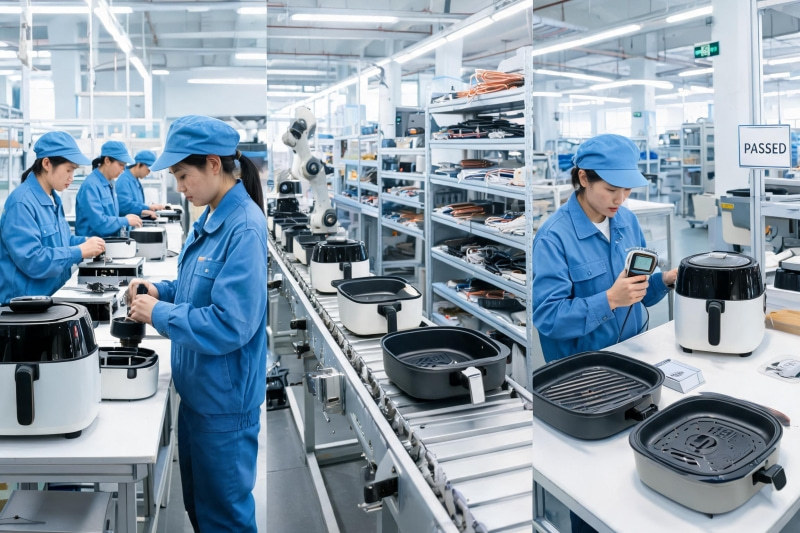
China's appliance ecosystem — mature workers, complete supply chains, and stable quality control — is drawing high-value orders back.
Global Export Data: Where Growth Is Really Happening
Despite the turbulence, China's overall appliance exports are growing. In the first half of 2026, home appliance exports reached RMB 360.96 billion (about USD 50 billion), and white goods exports hit USD 71.89 billion, up 4.6% year on year — a rebound from 2025's near-flat 0.6% growth.
The regional picture matters more than the headline. Europe has become the largest incremental market, its share of Chinese appliance exports rising from 24.16% in 2012 to 30.14% in H1 2026 — the EU's 28-member share of 24.82% is a fifteen-year high. Meanwhile, the North American share has fallen from its 2020 peak of 25.74% to just 15.57%, with the US alone at 13.8%.
Belt and Road countries now absorb 35.87% of Chinese appliance exports (USD 25.785 billion in H1), and ASEAN's share has nearly doubled since 2012 to 12.54%. Kitchen appliance categories are growing briskly: electric ovens +17.3%, dishwashers +17.9%, range hoods +15.9%, rice cookers +10.3%, and induction cookers +9.5% in H1 2026.
| Region | Share of Chinese Appliance Exports | Trend |
|---|---|---|
| Europe (incl. EU) | 30.14% (EU-28: 24.82%) | Fifteen-year high; fans, mobile AC, dishwashers surging |
| Asia (incl. ASEAN) | 37.45% (ASEAN: 12.54%) | RCEP dividends; refrigerators & Chinese-style kitchen appliances penetrating |
| Belt & Road (64 countries) | 35.87% | USD 25.785 billion in H1; the export "basic plate" |
| North America (US) | 15.57% (US: 13.8%) | Declining for a decade; trade barriers and tariff stacks |
| Africa & Latin America | ~5.3% / ~9% | Steady expansion; new incremental space |
The takeaway for sourcing professionals: diversification is now the default strategy. Buyers who depend on a single market or a single origin are exposed to exactly the kind of shocks that 2026 has delivered twice.
Beyond Tariffs: The EU's Green Compliance Wall
Tariffs are only half the story. In Europe, the real barrier in 2026 is regulatory compliance — and it is getting sharper at the border.
EU customs authorities are intensifying physical sampling of small kitchen appliances — notably air fryers and coffee machines — testing for phthalates and lead. The consequences of failure are severe: not just fines, but destruction of entire shipments and permanent blacklisting of the brand in the EU market.
Three frameworks now operate as primary filters at the border:
- RoHS (2011/65/EU): Ten restricted substances in electrical equipment; lead exemptions tightened in 2026. Compliance is mandatory for CE marking. A single whole-machine "certificate" is no longer enough — customs expects BOM-level lab data for homogeneous materials.
- REACH (EC 1907/2006): The SVHC Candidate List reached 253 substances as of February 2026, updated twice a year. If any component exceeds 0.1% of an SVHC by weight, the importer bears notification obligations with ECHA.
- WEEE: Producer registration is mandatory in every EU sales country (e.g., EAR in Germany, Ecosystem in France). Importers cannot piggyback on a factory's registration — and the crossed-out wheelie bin symbol alone is not compliance.
CE Certification in 2026: Not Just a Piece of Paper
For kitchen appliances entering the EU, the CE marking sits on top of an increasingly demanding technical base. The key updates for 2026:
- LVD 2014/35/EU: Electrical safety now follows EN IEC 60335-1:2025 (the 2020 edition plus 2025 amendment). Factories still referencing the 2012 or 2016 versions are, legally speaking, non-compliant even with a CE mark printed on the product.
- EMC 2014/30/EU: Stricter interference limits for high-frequency switching power supplies — a common weak point when budget suppliers remove EMC filters to save a few cents per unit.
- ErP 2009/125/EC: Under Regulation 2023/826, standby power consumption must not exceed 0.5W — many products certified in 2023 no longer pass.
- RED 2014/53/EU: Smart and Wi-Fi-connected kitchen devices must meet cybersecurity requirements under Annex U.
The practical implication for buyers: the supplier you choose determines your compliance risk. A factory with current test reports, traceable component-level data, and active SVHC monitoring is not a "nice to have" — it is the difference between clearing the border and losing a container.
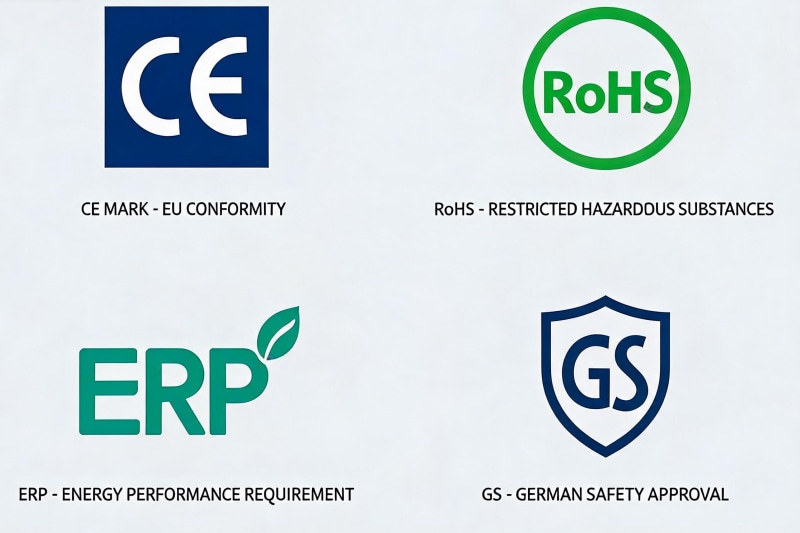
Current safety and environmental test data — LVD, EMC, RoHS, REACH — is becoming a border-level requirement in the EU.
HS Codes and Origin Rules: Getting the Paperwork Right
Under a stacked tariff regime, correct HS classification is a financial matter, not an administrative one. Kitchen appliances mostly fall under HTS Chapter 8509 (electro-mechanical domestic appliances) or 8516 (electric heating appliances), with base MFN rates of 2–4% — but the specific 8- or 10-digit line determines which additional layers apply.
Common classification pitfalls in 2026:
- Misclassification: An air fryer with convection features can plausibly sit in different subheadings; the choice changes the duty stack.
- Origin rules: With 232 and 301 layers tied to country of origin, the "substantial transformation" test matters more than ever — especially for products assembled in one country from Chinese components.
- Documentation: Keep complete bills of materials, manufacturing records, and supplier declarations. In a post-verification world, the burden of proof sits with the importer.
Work with a customs broker who understands appliance classification, and ask your factory for a tariff analysis of your specific models. A few hours of diligence can save thousands of dollars per container.
Sourcing Strategies for a Tariff-Shifting World
Given the volatility of 2026, leading importers are not waiting for policy to settle — they are building resilience into the sourcing model itself. Five strategies stand out:
- Model the total landed cost, not the unit price. Factor in duties, fees, freight, and compliance into every comparison. A slightly higher unit price from a tariff-favorable origin can win on landed cost.
- Build a two-track supply chain. Keep high-volume, high-quality, time-sensitive production in China; use Southeast Asia for simple assembly and tariff-hedging. This mirrors what China's own manufacturers are doing.
- Diversify destination markets. With Europe and Belt & Road countries growing at double digits while North America shrinks, a portfolio of markets reduces dependence on any single tariff regime.
- Redesign for tariff classification. In some cases, product design changes — materials, feature sets, function mix — can move a product into a more favorable classification. Consult a specialist before locking a design.
- Partner for compliance. Choose factories that maintain current certificates, component-level documentation, and proactive SVHC monitoring. Compliance is now a sourcing criterion, not a checkbox.
Market Insight
China's H1 2026 white goods exports reached USD 71.89 billion, up 4.6% year on year, with kitchen categories like electric ovens (+17.3%) and dishwashers (+17.9%) leading growth. Meanwhile the EU's share of Chinese appliance exports hit a fifteen-year high of 24.82% — Europe, not North America, is where the next sourcing opportunities are concentrating.
How Kangye Helps Buyers Navigate Trade Policy
For buyers navigating this shifting terrain, the right manufacturing partner reduces both cost risk and compliance risk. Kangye, a kitchen appliance OEM/ODM manufacturer based in Guangdong — the heart of China's appliance cluster — is built around exactly this challenge.
Kangye's approach to trade policy resilience includes:
- Current, verifiable compliance: Products are certified to UL, ETL, CE, and other standards with test reports and component-level documentation, so buyers can clear EU and US borders without surprises.
- Flexible OEM/ODM capability: From branding and packaging to voltage configuration and feature sets, Kangye adapts products for the destination market — including design input that can support favorable tariff classification.
- Production agility: With mature supply chains and stable quality control in Guangdong, Kangye handles high-volume, tight-deadline orders that demand speed and consistency.
- Export documentation support: Complete commercial documentation, BOM-level compliance data, and customs-oriented paperwork — the practical tools buyers need in a post-verification trade environment.
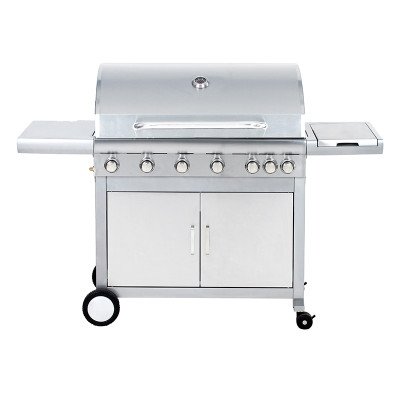
Featured Product: Kangye 1350W Indoor Electric BBQ Grill KYS-868
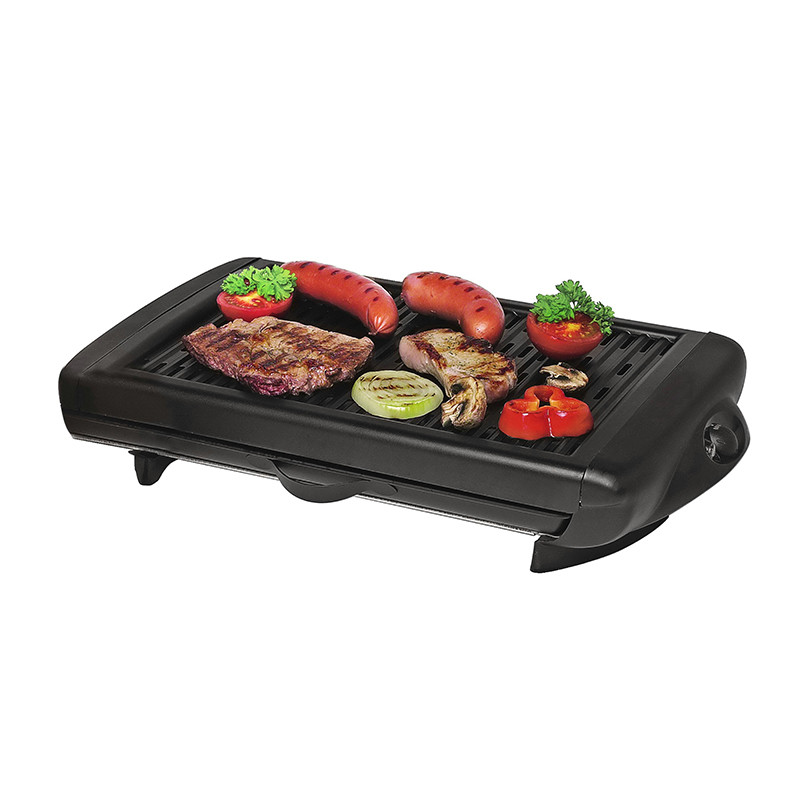
The Kangye KYS-868 1350W Indoor Electric BBQ Grill is a strong candidate for buyers looking to expand electric outdoor-living lines with a product that balances performance, safety, and certification readiness. With a non-stick grilling plate and OEM/ODM flexibility, it is designed for the markets where electric grills are growing fastest.
- 1350W power with adjustable temperature control
- Non-stick cooking plate for easy cleaning and healthier grilling
- Smoke-reducing design suitable for indoor use
- Certifications and export documentation available for destination markets
- OEM/ODM customization: branding, packaging, voltage, plug types
Key Takeaways for Global Buyers
Tariff policy in 2026 is volatile, but it is also navigable. The buyers who succeed will be the ones who treat trade policy as a variable to be managed — with data, structure, and the right partners.
- Know your tariff stack: US small kitchen appliances from China carry roughly 38% in stacked duties; verify your product's exact classification and layers.
- Watch the policy calendar: The new Section 301 round (10–12.5%) took effect July 24, 2026, and reciprocal US–China reductions are under discussion for 2027.
- Compliance is a border filter: RoHS, REACH, WEEE, and updated CE standards are now enforced with physical sampling — component-level data beats whole-machine certificates.
- China remains the cost-quality leader: With tariff gaps narrowing and order volumes returning, China's mature ecosystem still delivers the best combination of cost, quality, and speed.
- Diversify everything: Markets, origins, and suppliers. Resilience, not prediction, is the winning strategy in a tariff-shifting world.
Key Takeaway
Tariffs and trade policy are no longer background noise — they are a core variable in every sourcing decision.
Buyers who combine landed-cost modeling, dual-track supply chains, and compliance-ready partners like Kangye can turn policy volatility into a competitive advantage.
For importers and distributors evaluating kitchen appliance sourcing in this environment, Kangye offers OEM and ODM services backed by decades of manufacturing experience — from electric grills and air fryers to food dehydrators and vacuum sealers. Our team can help you assess tariff exposure, certification requirements, and the right configuration for your market.