The Pet Tech Boom: How Smart Pet Products Are Reshaping the Appliance Industry
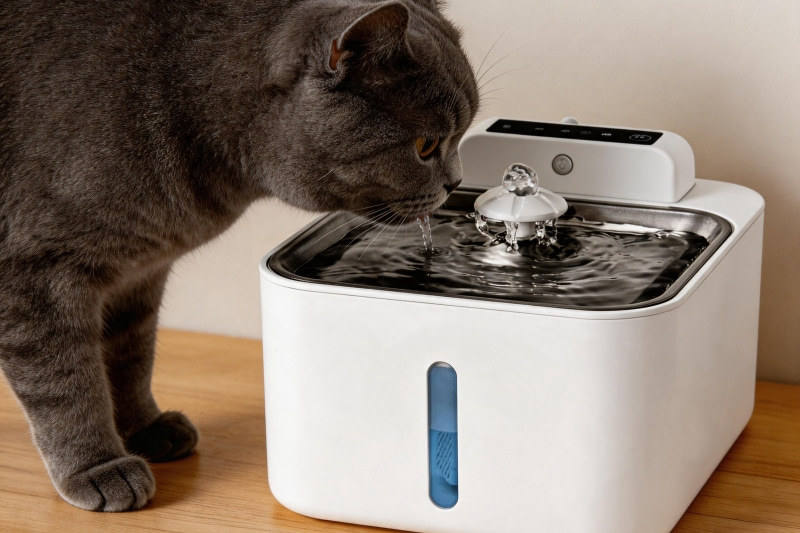
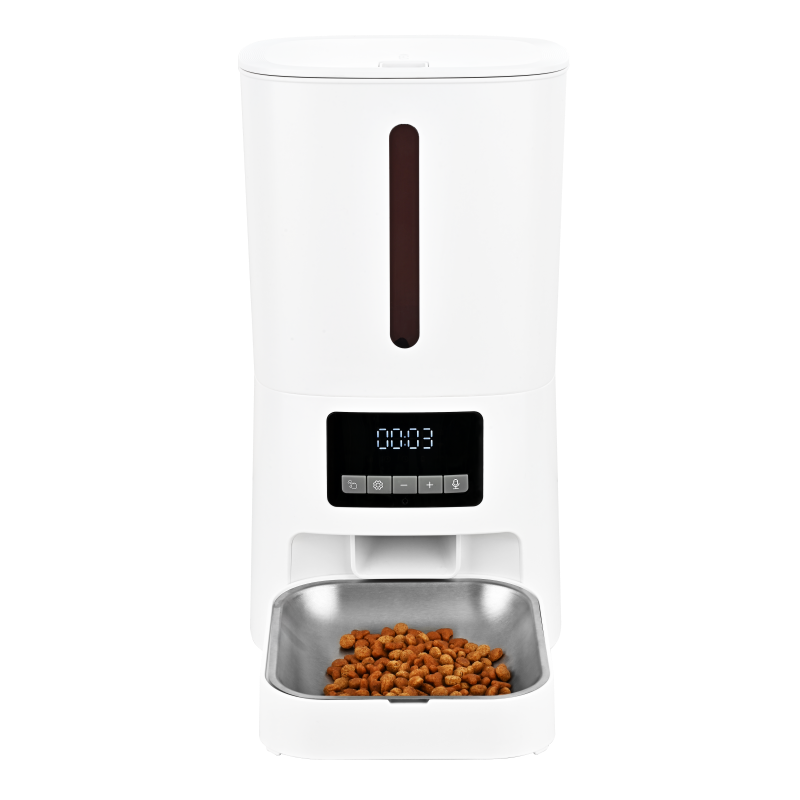
The pet tech category has crossed from niche to mainstream. What began as GPS collars for anxious owners has expanded into a full ecosystem of smart feeders, wireless water fountains, AI-enabled pet cameras, automatic litter boxes, and health-monitoring wearables — appliances that now sit on retail shelves next to air fryers and vacuum cleaners. For B2B buyers, importers, and private-label brands, the question is no longer whether pet tech is a real market. It is how fast the window of opportunity stays open, and which products will carry the growth. This industry insight report draws on market research published in 2025 and 2026 to map the size of the pet tech boom, the categories and regions where growth is concentrated, the manufacturing advantage China brings to the supply chain, and the practical implications for appliance OEM/ODM buyers planning their next assortment. Independent research houses differ on the exact denominator — some count all connected pet devices, others only electronic pet care appliances — but every credible 2026 forecast points in the same direction: double-digit growth for the rest of the decade. Global pet tech market estimates (2026): Context matters as much as the headline number. Smart pet products now represent about 6% of total global pet supplies spending, up from 2.8% in 2020. The category is not replacing traditional pet supplies — it is adding a technology layer on top of a base that is itself growing. The American Pet Products Association reports that around 66% of US households own a pet, with annual US pet industry spending exceeding US$147 billion in 2023, and the average US pet owner spent about US$1,960 on their pet that year. A global pet population that exceeds one billion animals means the addressable market keeps expanding, not just the penetration rate. Four structural forces explain why this boom is durable rather than a fad: The affordability caveat: advanced pet tech devices typically retail between US$50 and US$250, often with a recurring subscription. That pricing keeps adoption concentrated in higher-income households today — which is precisely why cost-down engineering and private-label value positioning remain open lanes for OEM buyers. Not all pet tech grows equally. The 2026 revenue picture, based on supplier-side and market research data, shows a clear hierarchy: By unit volume, smart feeders lead the market — roughly 82 million units of an estimated 145 million smart pet products sold worldwide in 2026. Automatic litter boxes generate the highest revenue per category, and pet cameras have the highest first-time adoption rate among new pet owners, with around 25% of new US pet owners buying a camera within six months. Demand is global, but the geography of growth is uneven: Two species-level details are worth watching: dogs dominate the installed base at 58.6% of the pet type share, but cats are the fastest-growing segment at a 13.3% CAGR. Litter box automation and cat-specific hydration products ride that tailwind. China supplies more than 65% of global pet non-food products, and the smart pet hardware segment is concentrated in exactly the industrial clusters that already make the world's small appliances. Guangdong and Zhejiang together command roughly 68% of Chinese pet product export volume, and the Pearl River Delta — Shenzhen's chip and algorithm design, Dongguan's precision manufacturing, and Foshan's appliance engineering heritage — has become the de facto global hub for smart feeders, GPS trackers, pet cameras, and health wearables. What the cluster brings to pet tech: China's pet supplies market itself exceeded RMB 100 billion in 2025 with annual growth above 11%, giving manufacturers a domestic proving ground before products ship overseas. For buyers, the practical takeaway is that sourcing pet tech from the same factory that supplies your kitchen program consolidates quality systems, certifications, and logistics into one relationship. The pet tech boom is arguably the best adjacency opportunity for small-appliance OEMs in a decade. The skills that built successful kitchen programs map almost one-to-one onto pet hardware: The risk for buyers is the opposite direction: treating pet tech as if it were commodity kitchenware. Pet products fail in the market for different reasons — battery life that under-delivers, filters that clog, dispensing that jams, sensors that false-trigger — and those failure modes are exactly where OEM engineering discipline shows up in return rates. Four technology waves will define which pet tech products win shelf space over the next 24 months: Pet tech sits at the intersection of appliance safety, food-contact materials, and connected-device regulation — which makes certification a sharper filter than it is for most consumer goods. For OEM buyers, the rule is simple: settle the compliance package before sampling, not after. A pet fountain is not just a pump in a bowl — it is an electrical device, a water-contact vessel, and increasingly a connected product, and each layer has its own certificate. Kangye has applied two decades of kitchen appliance OEM/ODM engineering to a focused pet care line — a deliberate adjacency strategy: the same quality system, the same compliance framework, and the same factory that builds our kitchen products now builds pet hardware. The KYS-13B targets the highest-volume segment of the pet tech boom: reliable, app-free scheduled feeding with a genuine power-outage safety net. It is a strong candidate for importers and private-label brands building a mainstream smart pet SKU with minimal software overhead. Both pet products carry the same OEM/ODM flexibility as Kangye's kitchen line — private-label branding and packaging, voltage and plug configuration, feature adjustments, and complete export documentation. For brands that want to bundle pet care with their existing kitchen appliance program, one factory, one quality system, and one compliance framework covers both. Not yet in the segments where most volume lives. The market is growing 12–19% per year, but brand concentration is still low — the top five players held roughly 30% of the market in 2025, and category leaders like Garmin captured only about 11%. Private-label and regional brands still have room, especially in mid-range feeders, fountains, and pet cameras that undercut US$150 with solid reliability. By percentage growth, automatic litter boxes (~24% CAGR) and pet air purifiers (~32% YoY) are the fastest. By unit volume, smart feeders lead. By first-time buyer pull, pet cameras have the highest adoption rate among new pet owners. The safest entry path for most importers is a feeder-plus-fountain bundle, which covers both the volume and the hydration trend with shared customer intent. The core disciplines are the same — material quality, electrical safety, production capability, and export compliance. The differences are the food-contact layer (bowls, reservoirs, kibble chutes), battery power architecture, and for connected products, RF certification and app/cloud dependencies. Work with a factory that treats these as standard scope, not special requests. Because they are measured under different conditions. Continuous pump or motor operation drains far faster than sensor-triggered modes that activate only when the pet approaches. When comparing cordless fountains or feeders, ask for run time under the same operating mode and battery capacity. The KYS-15B, for example, quotes up to 27 days in sensor mode with a 3600 mAh pack — a number that assumes sensor-triggered operation, not continuous pumping. It can be a strong consolidation move. Pet hardware reuses pumps, temperature control, power management, and food-contact materials from the kitchen line, so the same quality system and compliance framework apply. Sourcing both from one certified factory also simplifies audits, certifications, and logistics — provided the factory has real pet-product references, not just a promise to "figure it out." For the US: UL/ETL electrical safety, FCC for wireless modules, FDA food-contact compliance for reservoirs and chutes, and Proposition 65 compliance for retail channels. For the EU: CE (LVD + EMC), CE-RED for RF devices, RoHS and REACH chemical compliance, and food-contact declarations under EU 1935/2004. Battery-powered devices additionally need UN38.3 and IEC 62133. Confirm the complete package with your factory before ordering samples. Building a pet tech assortment for 2027? Kangye supports OEM/ODM development of pet feeders, wireless water fountains, and pet treat appliances with certification-ready compliance packages. Contact our team to discuss samples, MOQs, and customization options.The Pet Tech Boom: A Market at an Inflection Point
Market Size: The Numbers Behind the Boom
Why Pet Tech Is Growing So Fast: The Demand Drivers
Category Scorecard: Where the Growth Is Concentrated
Category
2026 Revenue
Growth Signal
Why It Is Growing
Automatic litter boxes
~US$2.3 billion
Fastest-growing major category (~24% CAGR)
Rotation designs, camera-enabled premium tiers, single-cat households as the core buyer
Smart pet feeders
~US$1.6 billion
~21% YoY
Battery backup now a must-have; cameras drive the US$199–349 premium tier
Smart water fountains
~US$950 million
~16% YoY
Cordless, sensor-activated models are replacing corded pumps
Pet cameras & monitors
~US$1.1 billion
~17% YoY; fastest sub-segment 12.9% CAGR
AI activity detection (barking, vomiting, seizure alerts) is the 2026 feature battle
Pet air purifiers
~US$540 million
~32% YoY (fastest in percentage terms)
Allergy awareness, apartment living, fragmented brand landscape
Wearables & GPS trackers
26.4% share of total pet tech
GPS-based tech leads at 29.4% share
Location safety is the entry point; health biometrics are the upgrade path
Regional Outlook: North America Leads, Asia Pacific Accelerates
China's Manufacturing Advantage in Pet Tech
From Kitchen Appliances to Pet Care: What It Means for OEMs
Technology Trends Reshaping the Category
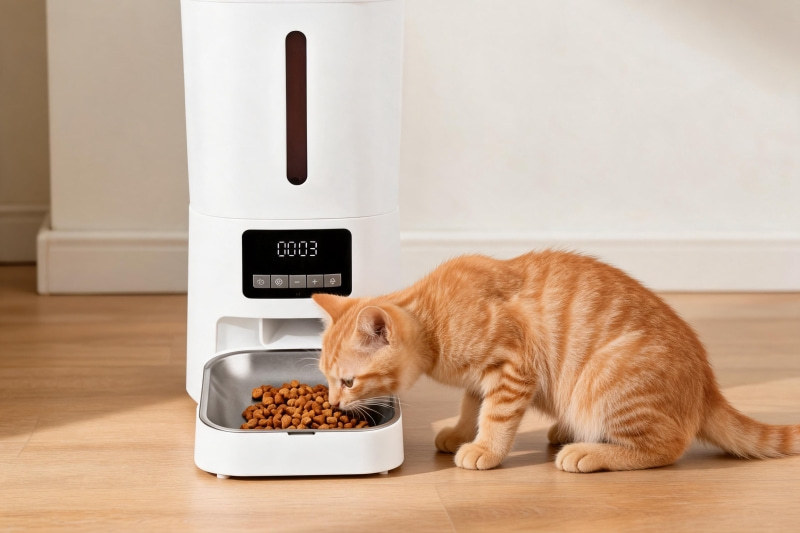
Compliance and Certification: The Non-Negotiable Layer
Kangye's Pet Care Line: Built for the Boom
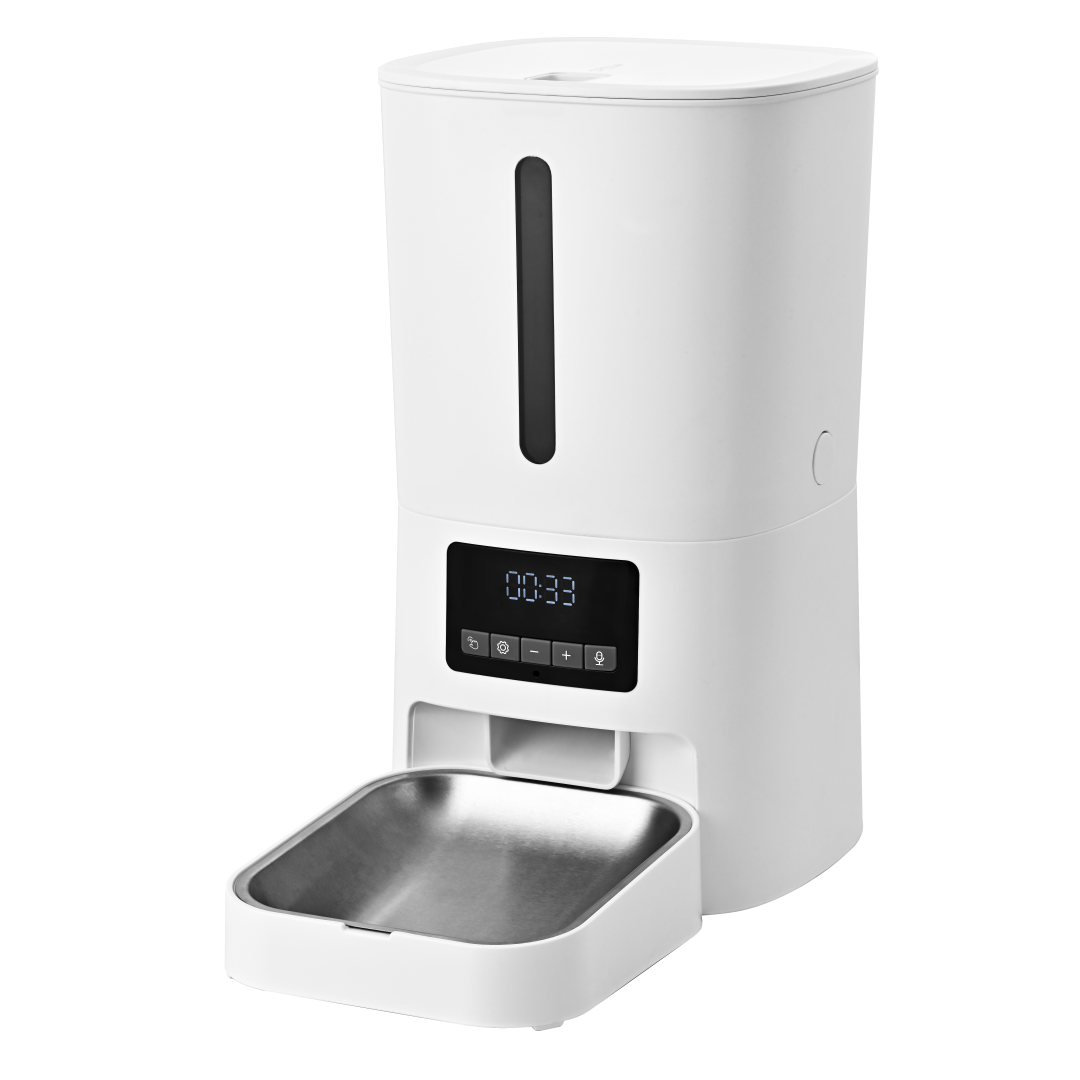
Featured Product: Kangye Automatic Cat Dog Feeder KYS-13B
Key Takeaways for Global Buyers
Frequently Asked Questions
Is the pet tech market oversaturated?
What is the fastest-growing pet tech category?
How does pet tech sourcing differ from kitchen appliance sourcing?
Why do battery life claims vary so much between pet products?
Should pet tech be sourced from the same factory as kitchen appliances?
What certifications do smart pet products need for the US and EU?