The Rise of Smart Kitchen Appliances: What Manufacturers Need to Know
Introduction: The Smart Kitchen Transformation
In 2026, kitchen appliances are undergoing their most significant transformation since the introduction of the microwave oven. Smart technology — driven by AI, IoT connectivity, and advanced sensors — is turning standalone appliances into intelligent cooking systems. The global smart kitchen appliance market is experiencing robust growth as consumers demand convenience, precision, and connectivity in their cooking experiences. According to industry research, smart kitchen appliance penetration has surpassed 30% in developed markets, with projections indicating continued acceleration through 2030. For OEM manufacturers like Kangye, understanding this transformation is essential for developing products that meet evolving market expectations.
AI Integration: From Smart to Intelligent
Artificial intelligence has moved beyond simple voice control to become the core intelligence of modern kitchen appliances. AI-powered cooking assistants can now recognize food items, recommend optimal cooking programs, and adjust parameters in real-time based on cooking progress. Major brands have deployed large cooking models — specialized AI systems trained on thousands of recipes and cooking profiles — that enable appliances to learn user preferences and improve over time. For OEM manufacturers, integrating AI capabilities requires careful consideration of hardware requirements (processing power, sensors), software development, and user interface design. Kangye's smart appliances are designed with modular electronics platforms that support future AI integration, allowing brand partners to add smart features without complete hardware redesigns.
IoT Connectivity: Building the Connected Kitchen Ecosystem
Internet of Things (IoT) connectivity is the foundation of smart kitchen functionality. Wi-Fi and Bluetooth-enabled appliances can communicate with each other, with smartphone apps, and with cloud platforms. A connected ecosystem enables capabilities like remote monitoring and control, recipe downloads, automatic software updates, and usage analytics. However, true smart kitchen integration requires interoperability across brands — a challenge the industry is still addressing. Apple HomeKit, Amazon Alexa, Google Home, and Matter protocol are competing standards. For OEM manufacturers, supporting multiple connectivity standards adds development complexity but is increasingly expected by consumers. Kangye offers IoT-ready platforms that can be customized to support the connectivity standards required by target markets.
Digital Control and Preset Functions: What Consumers Expect
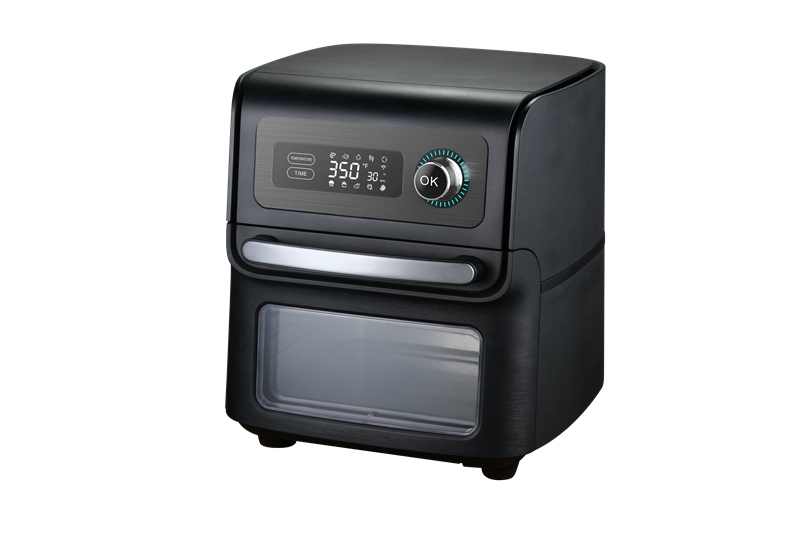
Today's consumers expect intuitive digital interfaces that simplify cooking. Digital control panels with preset cooking functions — typically 8-12 presets covering air frying, baking, roasting, dehydrating, toasting, and reheating — have become standard features in mid-range and premium appliances. Touchscreen displays, recipe databases, and step-by-step cooking guidance are increasingly common in higher-end models. Kangye's KYS-116 series 16L air fryer oven features 8 preset functions controlled through a digital interface, with adjustable temperature from 35-200°C and a 24-hour timer. These digital control features represent the baseline for smart appliance functionality that consumers expect in 2026.
Sensors and Precision Cooking Technology
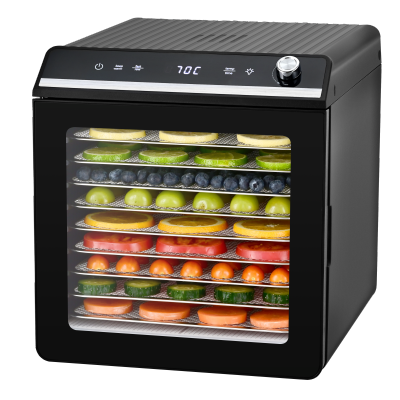
Advanced sensors are the key enabler of precision cooking in smart appliances. Temperature sensors monitor cooking progress with ±1°C accuracy. Humidity sensors detect moisture levels to determine when food is fully dehydrated. Weight sensors in high-end models can automatically calculate cooking time based on food mass. Optical sensors identify food types and suggest optimal cooking programs. For food dehydrators, precision temperature control is critical for food safety — maintaining accurate drying temperatures ensures meat reaches safe internal temperatures while preserving nutrient content. Kangye's appliance designs incorporate high-accuracy temperature sensors and digital PID control loops that maintain setpoint temperatures within ±2°F, meeting the requirements of both food safety standards and premium cooking applications.
Market Trends Driving Smart Appliance Adoption
Several converging trends are accelerating smart kitchen appliance adoption. Health consciousness is driving demand for appliances that support healthy cooking methods — air frying, steaming, and precise low-temperature cooking. The clean-label movement has consumers seeking transparency in food preparation, and smart appliances that track cooking parameters provide this visibility. Time scarcity in dual-income households creates demand for convenience features like programmable cooking and app-based control. The smart home ecosystem — where consumers already have connected lighting, security, and entertainment — naturally extends to the kitchen. Energy efficiency regulations are also pushing manufacturers toward smart energy management features that optimize power consumption.
OEM Considerations: Building Smart Without the Software Burden
For many appliance brands, developing proprietary smart technology in-house is prohibitively expensive. OEM manufacturers that offer integrated smart solutions provide significant value. Kangye's approach is to offer a modular smart platform — the hardware (WiFi module, sensors, control board) is integrated during manufacturing, while the software layer (app, cloud services, AI features) can be provided by the brand or by Kangye's technology partners. This approach allows brands of all sizes to launch smart appliances without multi-million dollar R&D investments. Key considerations include data privacy compliance (GDPR in Europe, CCPA in California), over-the-air update capability, and long-term platform support for the appliance's expected service life.
Regional Differences in Smart Appliance Adoption
Smart appliance adoption varies significantly by region. North America leads in smart home ecosystem integration, with strong adoption of voice assistants and app-controlled appliances. Europe emphasizes energy efficiency and data privacy, with smart features that optimize power consumption gaining traction. Asia Pacific — particularly China — is the fastest-growing market, driven by tech-savvy consumers and strong government support for smart manufacturing. In China, smart kitchen appliance penetration is growing at over 15% annually. Kangye, based in Shunde, China, is strategically positioned to serve both domestic Chinese demand and export markets with products that meet regional connectivity and certification requirements.
Opportunities for OEM Partners in the Smart Appliance Space
The smart kitchen appliance revolution creates significant opportunities for OEM partners. The ability to offer connected products differentiates brands in a competitive market. Smart features command premium pricing — typically 15-30% above equivalent non-smart models. Usage data from connected appliances provides valuable insights for product development and marketing. Subscription services (recipe downloads, meal planning, extended warranties) create recurring revenue streams. Kangye offers comprehensive OEM/ODM services for smart appliances, including hardware integration, connectivity module selection, certification support, and flexible minimum order quantities. Contact our team to discuss how we can bring your smart appliance vision to production.
Conclusion: The Future Is Connected
Smart kitchen appliances are no longer a futuristic concept — they are today's market reality. With AI, IoT, and advanced sensors becoming standard features, manufacturers who invest in smart capabilities position themselves for long-term success. Kangye Electric Appliance is ready to partner with brands at every stage of smart appliance development, from concept to production. Contact our OEM sales team to explore how we can support your smart kitchen product strategy.