The Science Behind Food Dehydration: Temperature, Airflow & Nutrient Retention
Introduction: Dehydration — The Oldest Form of Food Preservation
Food dehydration is one of humanity's oldest preservation methods, dating back thousands of years to sun-drying techniques used by ancient civilizations. Today, modern electric food dehydrators have transformed this ancient practice into a precise science. At its core, dehydration removes moisture from food to create an environment where bacteria, yeast, and mold cannot survive. Fresh food typically has a water activity level above 0.95 — well within the range where microorganisms thrive. Dehydration pushes this below 0.60, creating shelf-stable food that can last months or even years without refrigeration. But achieving safe, nutritious, and high-quality dehydrated food requires understanding the interplay of three critical variables: temperature, airflow, and time.
Temperature: Finding the Sweet Spot for Food Safety
Temperature control is the most critical factor in food dehydration. Too low, and moisture remains high enough for microbial growth. Too high, and the food surface hardens — a phenomenon called case hardening — while moisture remains trapped inside, creating a breeding ground for spoilage. The USDA recommends that meat and poultry reach an internal temperature of 160°F (71°C) during dehydration to eliminate pathogens. For fruits and vegetables, the optimal range is 125-135°F (52-57°C), which drives off moisture without cooking the food. Herbs require even lower temperatures — 95-115°F (35-46°C) — to preserve volatile oils. Kangye food dehydrators offer precise digital temperature control from 95-167°F (35-75°C), with accuracy within ±2°F.
Airflow: Why Horizontal Airflow Produces Superior Results
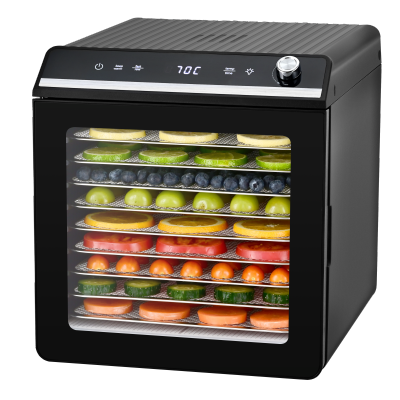
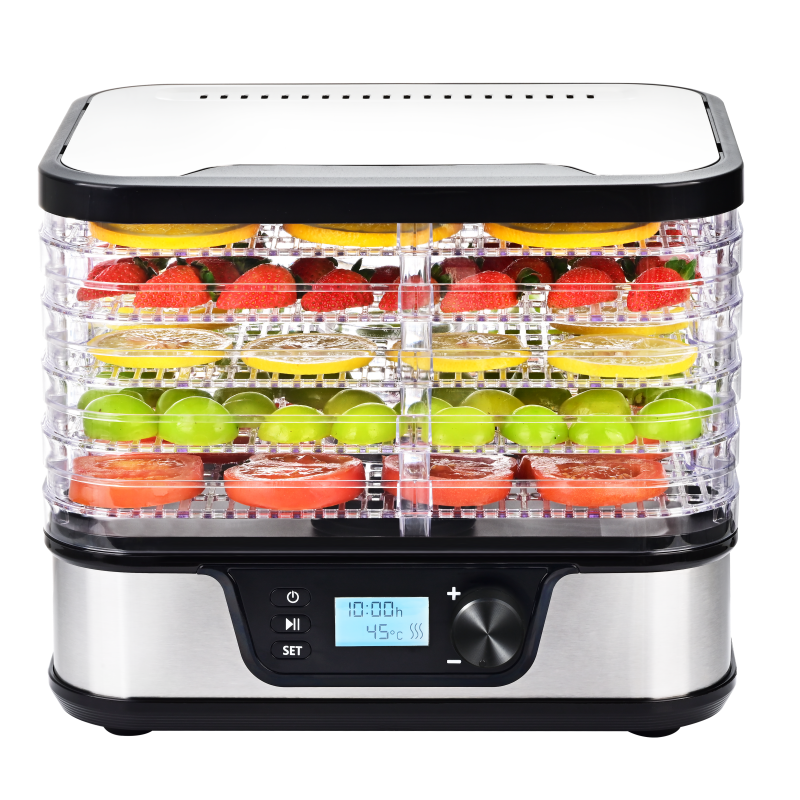
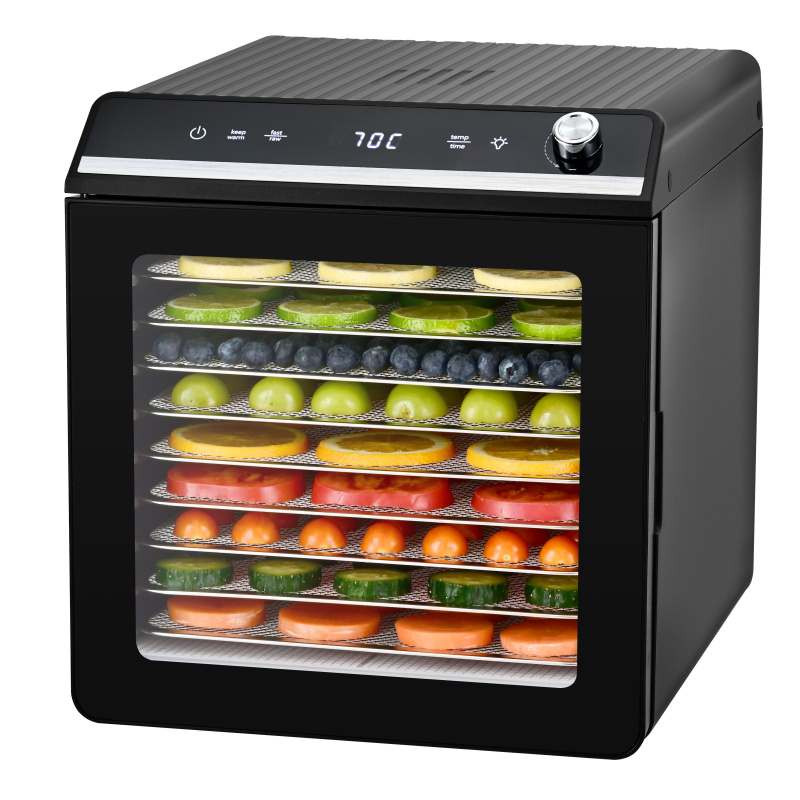
Airflow is the engine of dehydration. Warm air carries moisture away from the food surface, and the rate of moisture removal depends on air velocity, temperature, and humidity. In vertical airflow dehydrators (bottom or top-mounted fans), hot air rises through stacked trays, creating a temperature gradient — the bottom trays receive the hottest air while top trays get progressively cooler air. This gradient can reach 15-25°F between the first and last tray, requiring manual rotation for even results. Horizontal airflow dehydrators solve this fundamental design problem. By placing the fan and heating element at the rear of the cabinet, air moves horizontally across every tray simultaneously at the same temperature and velocity. Studies show that horizontal airflow systems can reduce drying time by 20-30% compared to vertical designs for the same food load, while eliminating the need for tray rotation.
Case Hardening: The Silent Enemy of Quality Drying
Case hardening occurs when the surface of food dries too quickly, forming a hard shell that traps moisture inside. This is typically caused by temperatures that are too high in the early stages of dehydration. The trapped moisture creates conditions for mold growth and spoilage, while the hard exterior makes the food unappealing. Proper dehydration requires gradual moisture removal — starting at moderate temperatures to allow internal moisture to migrate to the surface, then maintaining steady conditions throughout. Dehydrators with precise temperature control and uniform airflow minimize the risk of case hardening. For jerky production, case hardening is particularly problematic because the exterior appears dry while the interior remains at unsafe moisture levels.
Nutrient Retention: What Dehydration Preserves — and What It Does Not
Dehydration preserves most of a food's calories, fiber, minerals, and protein content. However, heat-sensitive vitamins — particularly vitamin C and B vitamins — are partially lost during the process. Research published in the Journal of Food Composition and Analysis shows that vitamin C retention in home-dehydrated green peppers was approximately 75% immediately after drying, but dropped to just 16% after five months of storage at room temperature. Vitamin A also degrades over time, while minerals like potassium, calcium, and magnesium remain stable. The key insight for commercial producers is that drying method matters significantly. Studies comparing tray drying (which uses intermittent airflow) to oven drying found that tray drying consistently produced higher retention of vitamin C and antioxidant activity. Kangye's horizontal airflow dehydrators help maximize nutrient retention by reducing total drying time.
Moisture Content: How Dry Is Dry Enough?
Determining when food is adequately dehydrated is a critical food safety question. The USDA specifies that properly dried fruits should have a moisture content of 18-20%, vegetables 10%, and jerky 15-20%. Practical indicators include: fruits should be pliable but not sticky, with no visible moisture when cut; vegetables should be brittle or crisp; jerky should bend and crack but not break. Commercial producers should invest in moisture analyzers for batch verification. Kangye dehydrators with adjustable timers up to 48 hours allow precise scheduling of drying cycles.
Pre-Treatment Methods: Blanching, Dipping, and Marinating
Pre-treatment before dehydration significantly affects final quality. Blanching — brief scalding in boiling water or steam — stops enzyme activity that would otherwise degrade flavor, color, and texture during storage. For fruits, dipping in an acidic solution prevents oxidative browning. For jerky, marinating before dehydration adds flavor and can improve food safety. Commercial producers should establish standardized pre-treatment protocols for each product type.
Dehydration vs Freeze-Drying: Understanding the Difference
Freeze-drying produces superior nutrient retention — typically 90%+ of vitamin C — by freezing food and sublimating ice under vacuum. However, freeze-drying equipment costs 5-10 times more than conventional dehydrators. For most commercial applications — jerky, dried fruit, vegetable chips, herbs, pet treats — conventional dehydration provides an excellent balance of quality, throughput, and cost. The global food dehydrator market is projected at $2.7-3.7 billion in 2026, with horizontal airflow systems gaining market share.
Commercial Considerations: Scaling Up Production
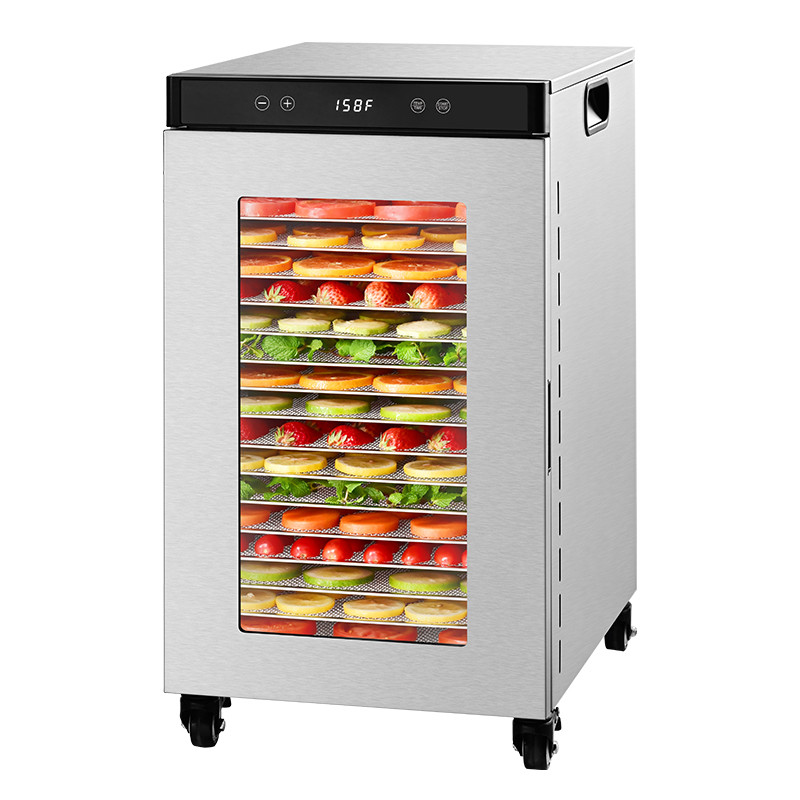
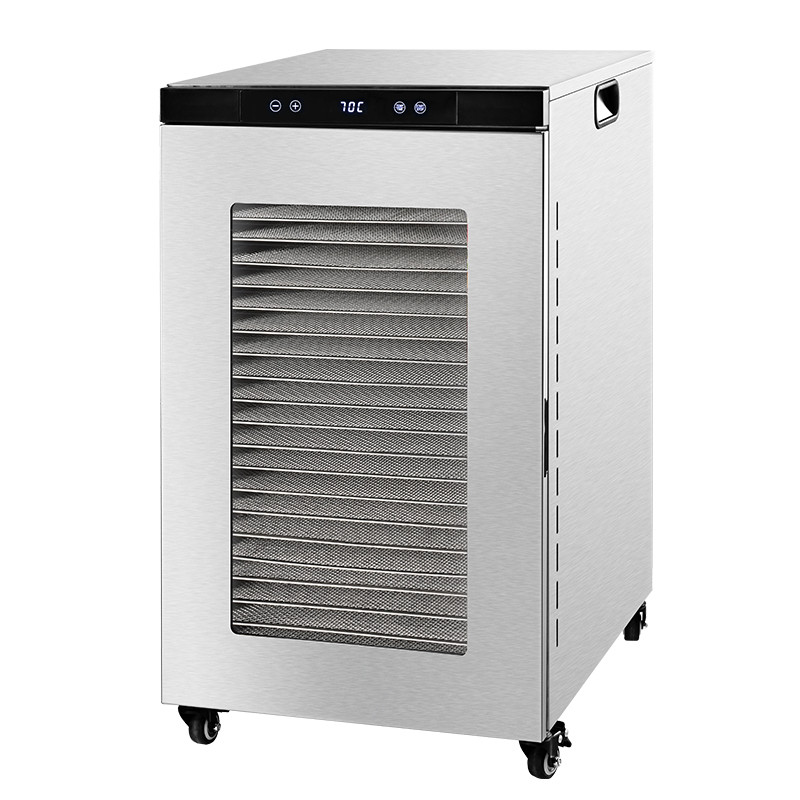
For businesses scaling from home to commercial operations, dehydrator specifications become critical. Continuous-duty motors, all-stainless steel construction, NSF certification, and precise PID temperature control are requirements for commercial equipment. Kangye's commercial dehydrator line — KYS-500A/R (16/17 trays) and KYS-510A/R (20/22 trays) — is engineered for continuous operation with 304 stainless steel construction, horizontal airflow, and 48-hour programmable timers.
Conclusion: Understanding the Science for Better Results
Food dehydration is both an ancient practice and a modern science. Understanding temperature, airflow, nutrient retention, and food safety transforms dehydration into a reliable production method. Whether you are a home enthusiast, small business owner, or OEM buyer, choosing equipment with precise temperature control, uniform horizontal airflow, and food-grade construction is essential. Kangye Electric Appliance combines scientific understanding with manufacturing expertise to deliver dehydrators trusted by brands worldwide.