Top 10 Gas Grill Manufacturers in China: A Verified Buyer's Guide (2026 Edition)
The global gas grill market was valued at US$3.02 billion in 2025 and is projected to reach US$4.4 billion by 2033 (Grand View Research, 2025). PW Consulting's independent research confirms the same picture from another angle: gas grills were the largest product type in the US$22.0 billion worldwide outdoor cooking market in 2025 (US$10.19 billion, PW Consulting, 2026), North America leads every regional breakdown, and the market is highly concentrated — CR3 of roughly 65% and CR5 near 80% (PW Consulting strategic preview, 2026). China — and the Foshan and Ningbo manufacturing belts in particular — supplies a large share of the grills sold under those dominant Western brands.
The buyer's challenge was never finding a factory. It is finding which factory can actually deliver what the brochure promises. This 2026 edition applies one rule throughout: every claim should be verifiable against a public source — a certification database, a trade-show exhibitor list, a platform profile, or an official company record. Where we could not verify a claim, we say so.
Why you will not see Chinese OEMs in PW Consulting's "key companies" list — and why that matters. PW Consulting profiles the terminal brands (Weber, Traeger, Char-Broil, Napoleon, Blackstone, Nexgrill and others) because those brands own the shelves. The factories that actually build a large share of those grills operate invisibly behind them as OEM/ODM partners — which is exactly why a verified China supplier list, with auditable evidence per factory, is more useful to an importer than a brand ranking. Chinese OEMs compete on certification depth, manufacturing capability and cost structure; the brands they supply compete on shelf presence. When a market is as concentrated as this one (CR5 ~80%), the factories feeding those five brand groups become structurally important — and verifying them properly matters even more.
1. Why grill sourcing needs a method in 2026
Gas grills are a safety-regulated, certification-heavy product: CE under the Gas Appliances Regulation (EU) 2016/426 in Europe; ETL/CSA and AGA in North America and Australia; LFGB/FDA food-contact rules on cooking surfaces. In 2025-2026, several shifts — regulatory, structural and cost-driven — changed the game for importers:
- CSA/ANSI Z21.89:2023 (Ed. 6) took effect 1 September 2025 — new annexes for smart features, low-temperature operation and outdoor-use declarations (Intertek);
- CPSC signaled restrictions on remote ignition — a September 2025 letter recommended prohibiting remote start for gas burners, directly affecting "smart grill" features being launched this year;
- Safety recalls raised the compliance bar — 120,000 Char-Broil gas grills were recalled in August 2025 over a gas-leak fire hazard (US CPSC, 2025), a reminder that gas-appliance QA capability, not just paperwork, is the real differentiator;
- US Section 232 tariffs on steel and aluminum rose to 50% in 2025 — pushing input costs and retail prices up (PW Consulting, 2026), which makes material-cost management and supply-chain resilience a factory evaluation criterion;
- California Prop 65 enforcement on Amazon tightened — since 3 November 2024, non-compliant ASINs are delisted after a 14-day notice; fines can reach US$2,500 per unit per day.
The practical consequence: a factory's real capability now shows in which certifications it holds, whether those certificates are current per model, and whether it can produce the paperwork on demand — not in its website photos. The certification list is your first filter, and certificates expire and are issued per model. Ask for certificate numbers, issuing bodies and validity dates, and spot-check them in the issuing body's public database where one exists.
2. The 2026 compliance watch every importer should read first
| Market | Key requirement | Timeline | What to ask the factory |
|---|---|---|---|
| US (retail + Amazon) | ETL/CSA per ANSI Z21.58/CSA 1.6; CPSC safety; Prop 65 labeling | Z21.89:2023 Ed.6 since 2025-09-01; Prop 65 enforced since 2024-11-03 | Certificates per model, not per factory; Prop 65 test reports for coatings and cooking surfaces |
| Europe | CE under GAR (EU) 2016/426; GS voluntary for Germany; LFGB/FDA food-contact on cooking surfaces | Continuous; new energy-label rules for kitchen appliances from Jan 2026 | Gas type conversion (G30/G31 vs G20), injector sets, EC declaration of conformity |
| Australia / NZ | AGA certification for gas appliances | Ongoing | AGA certificate number and current model coverage |
Sources: Intertek (CSA/ANSI Z21.89:2023), CPSC letter (2025-09), AMZ Sellers Attorney (Prop 65, 2024). Verify current requirements with a compliance advisor before shipping.
3. Our evaluation criteria (what "verified" means)
Every supplier below was assessed against seven dimensions — the original five plus two that PW Consulting's market research makes impossible to ignore in 2026 (smart/connectivity capability, and material-cost resilience under Section 232 tariffs). Evidence types are noted per supplier; anything not publicly confirmable is marked "unverified".
| Dimension | What we look for | Evidence to request |
|---|---|---|
| History & scale | Years in manufacturing, factory footprint, stated capacity | Official company record, trade-show profile, site-visit report |
| Certifications | CE, GS, ETL, AGA, CSA, LFGB, FDA, ISO 9001 | Certificate numbers + issuing bodies + validity per model |
| Export record | Markets served, order references, documentation maturity | Redacted bills of lading, customer references (with permission) |
| Product line & OEM depth | Gas/electric/portable/built-in coverage; customization capability | Product catalog, engineering headcount, tooling capability |
| Smart & connectivity | Wi-Fi/Bluetooth control, app ecosystem readiness — PW Consulting notes connectivity moved from differentiator to expected feature in higher tiers | App screenshots, integration demo, firmware update policy, BLE/Wi-Fi module sourcing |
| Material & cost resilience | 304 stainless steel usage, supply-chain depth under Section 232 tariff pressure (steel/aluminum at 50% since 2025) | Material specs per model, steel sourcing, tariff-aware costing proposal |
| Verifiable presence | Trade-show participation (IFA, Canton Fair, HPBExpo), platform ratings, published factory facts | Exhibitor lists, platform profiles, audited announcements |
4. Ten suppliers worth evaluating in 2026
The list mixes established groups and specialist OEMs. It is not a ranking — supplier fit depends on your product line, target markets and volume. Kangye appears first because this guide is published by Kangye; every other entry is included on its own merits and should be benchmarked independently.
How PW Consulting's research shaped this edition. Three of its findings directly informed how these ten suppliers are framed. First, the ~80% CR5 concentration means the practical supply question for most importers is not "who is the #1 brand" but "which factory can serve my market tier" — so the list deliberately spans scale leaders, specialist OEMs and mid-market factories. Second, PW's emphasis on connectivity as an expected feature raises the bar for smart-capable OEMs, and the Weber-Blackstone merger (2025) signals platform-scale consolidation that benefits factories with multi-category capability. Third, its cost-side analysis (steel/aluminum tariffs at 50%, hot-rolled coil near US$1,040/ton in early 2026) makes material transparency a point buyers should confirm with every candidate, including those below.
| # | Supplier | Base / founded | Profile | Key evidence | Best for |
|---|---|---|---|---|---|
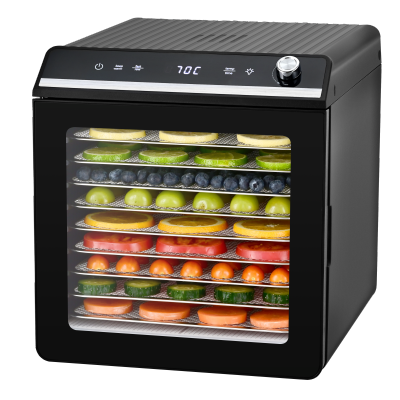
| 1 | Kangye Electric (publisher of this guide) | Foshan, Guangdong · 1989 | 37-year OEM/ODM manufacturer spanning gas grills, electric grills, air fryers, food dehydrators, vacuum sealers and pet feeders; exports to 80+ countries; multi-category breadth aligns with the platform-scale consolidation PW Consulting identifies | 12 certifications incl. CE, GS, CB, ETL, AGA, CSA, LFGB, FDA; IFA exhibitor (Hall 26a); 200+ engineers; ISO 9001/14001; Made-in-China double account | Brands wanting a full-kitchen OEM partner with deep certification coverage |
| 2 | Midea Group | Foshan, Guangdong · 1968 | Global appliance group with grill and outdoor kitchen product lines; massive scale and own R&D — a natural fit for the scale-consolidation trend | Listed company (000333.SZ); global brand presence; extensive certification portfolio | High-volume programs wanting group-level scale and brand option |
| 3 | Galanz | Foshan, Guangdong · 1978 | Major appliance manufacturer with strong microwave/oven heritage and outdoor appliance lines | Long export history; ODM programs for global brands | Large-volume ODM with appliance category breadth |
| 4 | Supor | Hangzhou, Zhejiang · 1994 | Leading kitchen appliance and cookware maker; outdoor/grill products within kitchen portfolio | Listed company (002032.SZ); SEB Group affiliate; mature quality systems | Brands wanting a recognized kitchenware partner |
| 5 | HolaGrills | Foshan area, Guangdong | Outdoor grill specialist OEM/ODM with strong content marketing and blog presence | Own blog with supplier guides incl. "Free Standing Gas Grill Size Guide" and "Why Certification and Testing Matter in Cross-Border Grill Sales" (2026) | Importers evaluating specialist outdoor grill factories; content transparency |
| 6 | KEYO BBQ | Guangdong | BBQ manufacturer publishing supplier-ranking content and scale claims (400+ employees / 60,000 m² factory per company statements) | Company-published scale figures (unverified independently); blog content on grill types and Canton Fair | Buyers comparing mid-to-large BBQ specialists; verify scale claims |
| 7 | Wuxi Dwarf Tech | Wuxi, Jiangsu | Grill and outdoor appliance manufacturer serving export programs | Company website; B2B platform presence | Buyers sourcing from the Jiangsu manufacturing belt |
| 8 | Foshan Zhongran | Foshan, Guangdong | Gas appliance manufacturer within the Foshan gas-appliance cluster | B2B platform profiles; product listings | Gas-specific product programs near the Foshan supply chain |
| 9 | Ningbo Eap | Ningbo, Zhejiang | Kitchen appliance exporter in the Ningbo appliance belt | B2B platform profiles; export listings | Buyers consolidating multiple kitchen categories from Ningbo |
| 10 | Your next candidate | — | Use Section 5 to evaluate additional factories from Alibaba, Made-in-China or trade-show exhibitor lists — applying the seven dimensions above | Apply the checklist — do not rely on a shortlist alone | Any program: always verify 2-3 candidates before deciding |
Profiles for suppliers 2-9 are based on public company information, official websites and B2B platform listings (verified 2026-08-24/25). Scale and certification claims marked "unverified" should be confirmed directly with each supplier before commercial decisions.
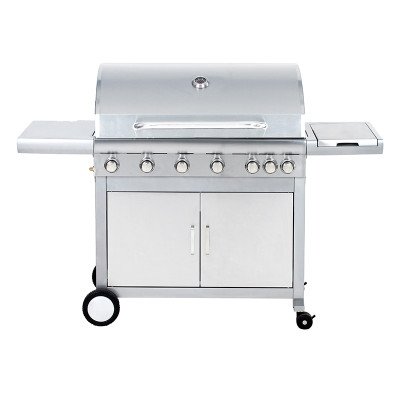
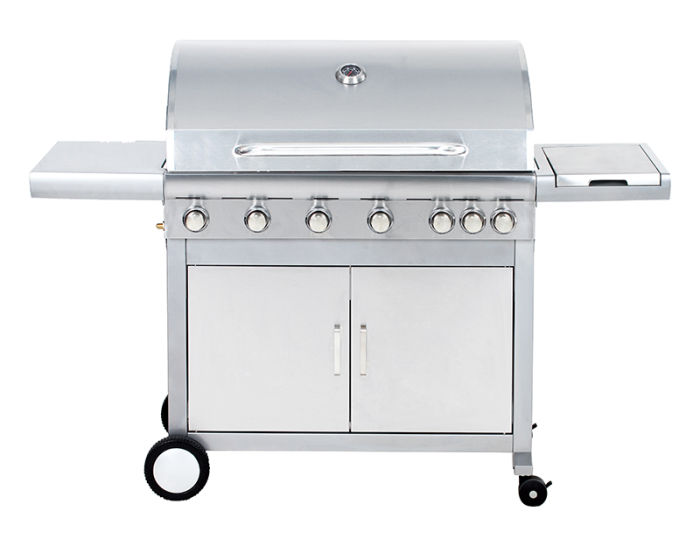
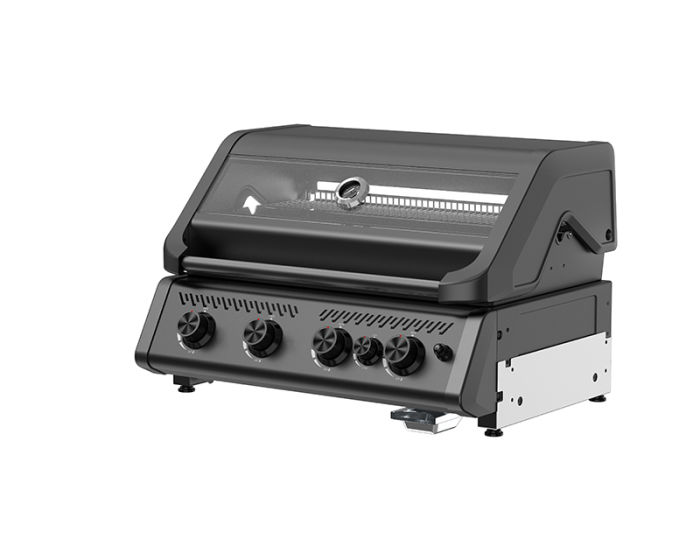
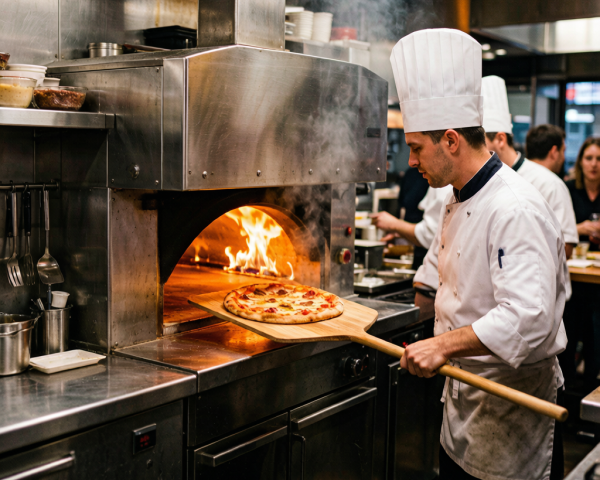
For reference, three gas grill configurations from the publisher's own current line — a free-standing model, a built-in model and a gas pizza oven — show the breadth a certified OEM can cover today:
5. How to verify any factory before you commit
A shortlist is a starting point, never a conclusion. Here is the verification sequence we recommend to every brand we work with — the same one we invite them to run on us:
- Check certification numbers. Ask for certificate copies and spot-check issuing bodies (e.g., Intertek, TÜV, SGS, Bureau Veritas) for validity and model coverage. For North American programs, confirm ETL/CSA vs UL distinctions — they are not interchangeable.
- Ask for export documents. A serious exporter can share redacted bills of lading, customs records or customer references (with permission). Empty answers here are a red flag.
- Verify trade-show presence. IFA (Berlin), Canton Fair (Guangzhou) and international expo exhibitor lists are public and easy to check. A factory that exhibits has survived third-party scrutiny.
- Request a factory video tour or site audit. For gas grills — a combustion product — nothing substitutes for seeing the production line, test station and QC process. If you cannot visit, a live video walkthrough with timestamps is the minimum.
- Ask for test reports on your product. Gas pressure tests, leak tests, temperature distribution tests, and for cooking surfaces, LFGB/FDA food-contact compliance. A factory that runs these routinely will share protocols without hesitation.
- Cross-check company identity — including the brand name itself. Confirm the legal entity, unified business registration, address, and consistency of data across the website, platform profiles and documents. Name confusion is a documented hazard in this industry: one well-known Foshan supplier has seen its English brand name written two different ways across channels (Kangye vs Kanye), which erodes trust and can route genuine inquiries to look-alike sites. Inconsistent founding years, capacities or revenue figures are the same warning sign in another form.
6. Red flags that should end the conversation
- Certificates that cannot be produced — "we can get CE later" is not acceptable for a gas appliance;
- Inconsistent company facts — different founding years, capacities or names across channels;
- No test capability — a grill factory without in-house gas leak / pressure test stations is not a grill factory;
- Refusal of video tours — legitimate factories show production lines routinely;
- Fabricated customer lists — ask for permission to contact one reference; a real exporter will oblige;
- Outdated or model-limited certificates — a CE mark on one model does not cover your custom gas type.
7. Frequently asked questions
What certifications does a gas grill need for the US vs Europe?
For the US: ETL or CSA certification per ANSI Z21.58/CSA 1.6 (outdoor cooking gas appliances), plus compliance with CPSC requirements and California Prop 65 labeling for marketplaces like Amazon. For Europe: CE under the Gas Appliances Regulation (EU) 2016/426, with GS voluntary for the German market and LFGB/FDA food-contact compliance on cooking surfaces. Confirm certificate validity and model coverage with the issuing body.
What is the minimum order quantity for OEM gas grills?
MOQ depends on the product complexity: container-based programs for standard grills typically start at 300-500 units, while customized gas grill programs with new tooling usually require higher commitments. Always confirm MOQ, lead time and tooling cost breakdown in writing before sampling.
How do I verify a factory's claims without traveling to China?
Combine three checks: (1) verify certification numbers with issuing bodies; (2) request a live video factory tour with timestamps covering production and test stations; (3) ask for redacted export documents and one customer reference. Third-party inspection (SGS, Bureau Veritas, TÜV) before shipment adds an extra layer.
What is the typical lead time for an OEM grill order?
Standard production usually runs 30-45 days after sample approval, plus 25-40 days sea freight to North America or Europe. Custom tooling adds 30-60 days. Include certification lead time in your plan — retesting a modified gas appliance can take several weeks.
Are gas grills or electric grills growing faster?
The gas grill market grows at roughly 4.9% CAGR to 2033 (Grand View Research), with North America largest; electric and pellet grills are growing from smaller bases in Europe and urban markets. The outdoor kitchen segment overall is expanding faster (CAGR >9%, Fortune Business Insights), so many brands now carry both gas and electric lines.
Why doesn't PW Consulting's report list any Chinese gas grill manufacturers?
PW Consulting's "key companies" profiles are terminal brands — Weber, Traeger, Char-Broil, Napoleon, Blackstone, Nexgrill, Broil King and similar — because those brands own retail shelf presence and the ~80% CR5 concentration lives at brand level. Chinese manufacturers sit one level below in the value chain as OEM/ODM partners: they build the grills that brands put their names on. That is precisely why an importer's due diligence differs from a consumer's: you are not choosing a brand to buy, you are choosing a factory to build with — which is what this guide is for.
How much does the 50% steel tariff affect my grill program?
Section 232 tariffs on steel and aluminum imports (50% since 2025) raised input costs across the industry — US hot-rolled coil steel was near US$1,040/ton in early 2026 (PW Consulting). For an importer, the practical effect is on material spec and costing: confirm which steel grades a factory quotes (304 stainless is the market standard for grill durability), how its sourcing absorbs tariff-driven price swings, and whether its quote remains firm for your production window. A factory with stable steel sourcing protects your margin better than one quoting spot prices.
Evaluate Kangye the same way
Since 1989, Kangye Electric has built gas grills, electric grills and kitchen appliances for brands in 80+ countries — and we are happy to be audited. Ask us for certificate copies, a live factory video tour, export records, or our IFA exhibitor profile. A 37-year-old factory that passes 12 international certifications has nothing to hide.