UL vs ETL vs cETL vs CE: Which Certification Does Your Target Market Actually Require?
Direct answer: For US retail, a kitchen appliance needs an NRTL safety mark from an OSHA-recognized lab - UL or ETL, and either satisfies the requirement because both test to the same UL-developed standards. Use cETL (cETLus) when one file must cover both the United States and Canada. For the EU, CE marking is legally mandatory under the Low Voltage and EMC Directives, with GS Mark added as a voluntary but retail-driven premium in Germany. Choose by target market first, and by budget and lead time second.
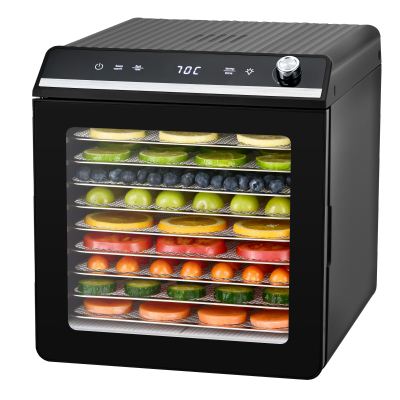
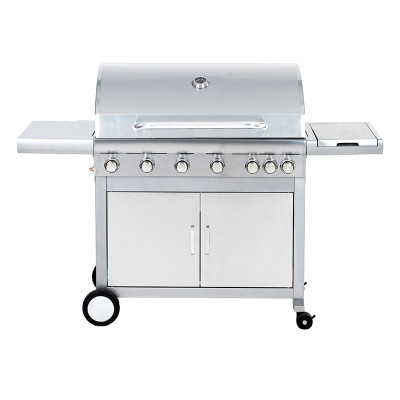
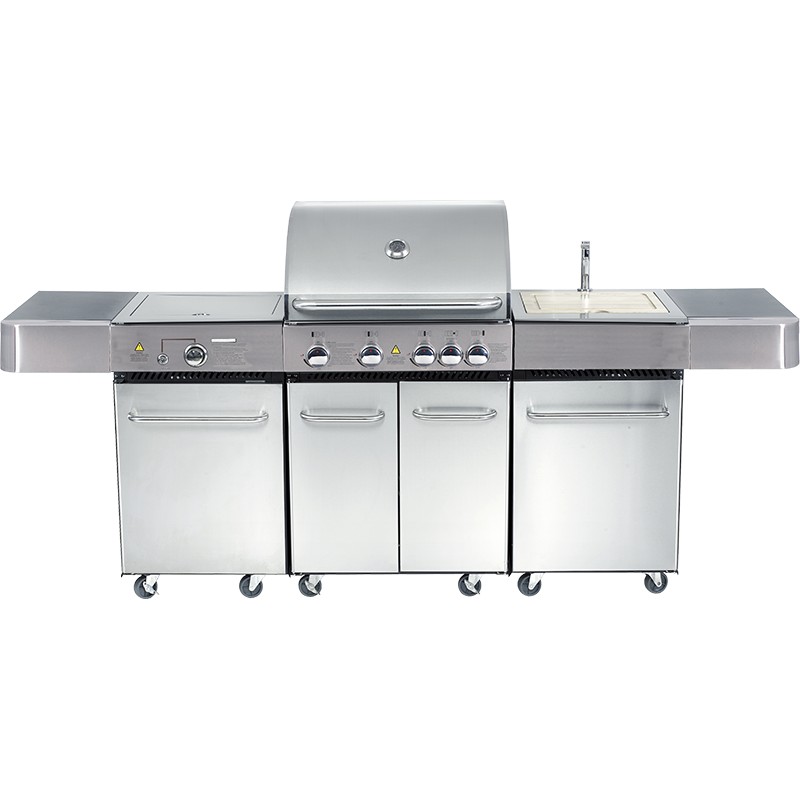
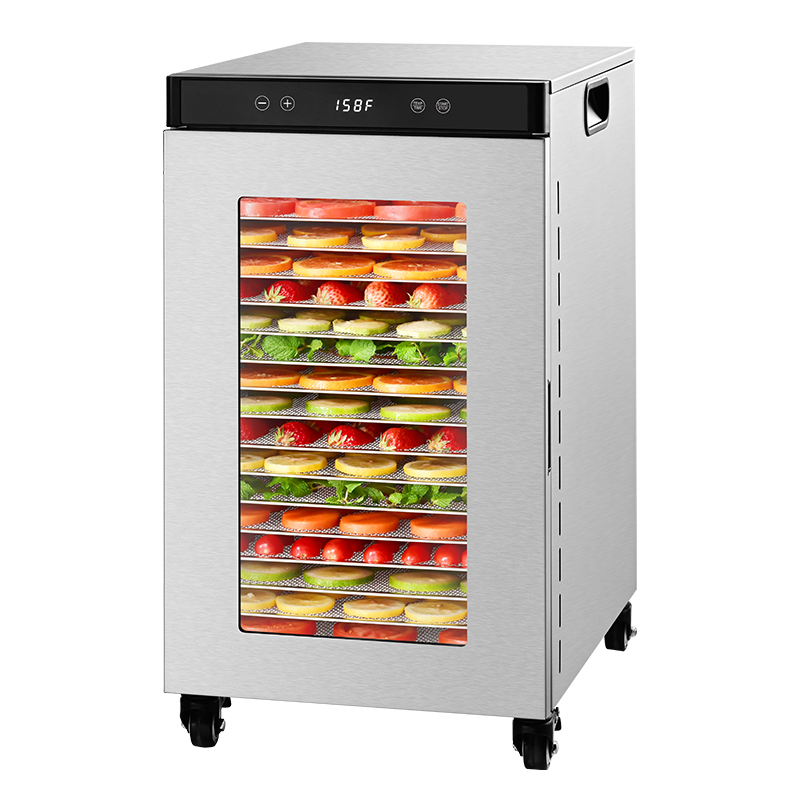
Importers ask us this question almost every week, because the wrong choice costs real money: retesting, relabeling and missed launch windows. The matrix below reflects what a manufacturer with an in-house compliance team - like Kangye Electric, which ships CE, GS, CB, ETL, AGA, CSA, LFGB and FDA certified products - actually plans around when a buyer says "we need this certified." Here is how the four marks differ, what each one really costs in 2026, and how to pick the right one before you tool up production.
UL and ETL Are the Same Test, Different Lab
UL Listed and ETL Listed carry equal legal standing in the United States, because both marks come from Nationally Recognized Testing Laboratories (NRTLs) accredited by OSHA. UL Solutions and Intertek (issuer of the ETL mark) both test products against the same UL-developed safety standards - for a countertop appliance that typically means the UL 1026 / UL 982 family or the ANSI equivalents. US retailers, Amazon and most municipal electrical inspectors accept either mark, and an Epic Sourcing 2026 guide confirms that the practical difference is brand recognition, not safety rigor. UL has been operating since 1894, so some buyers default to asking for "UL" out of habit even when ETL would satisfy the same code requirement.
The consequence for procurement is simple: you are choosing a lab, not a safety level. Third-party data puts ETL comprehensive cost 10-20% below UL for the same product category (Keen Sourcing, 2026), and ETL scheduling is typically 30% faster on standard projects (Huayu Test, 2026). The one place the distinction still bites is contract language - a small minority of vendor manuals or industrial specs name UL specifically, so confirm with the buyer before certifying.
cETL and CSA: One File, Two North American Markets
If your appliance ships to both the US and Canada, a dual-jurisdiction mark saves an entire second certification cycle. Intertek issues the cETLus mark - ETL and cETL together cover both countries from one evaluation, and the same logic applies to UL's cUL or a CSA mark (Kafuwell, 2026). Canadian retailers and provincial electrical authorities accept cETLus as full proof of compliance with Canadian electrical codes. For a gas grill heading to both markets, plan the combination from day one, because adding a jurisdiction after the file is open usually means re-review of affected sections rather than a clean add-on. Note that gas appliances additionally need certification to the relevant gas standards - ANSI Z21.58/CSA 1.6 for North America - which we covered in detail in our low-pressure propane grill article.
CE Is the EU Legal Baseline, GS Is the German Retail Filter
CE marking is not a quality label - it is a legal declaration that the product meets EU essential requirements under the Low Voltage Directive, EMC Directive and applicable product regulations. For most mains-powered kitchen appliances the route is self-declaration (Module A): testing to harmonised standards such as the EN 60335 series, a technical file, and a signed Declaration of Conformity. One-off budget for low-risk electronics on the LVD/EMC route runs about EUR 7,000-19,800 with a frozen design, plus EUR 1,000-2,500 per year to maintain compliance (getCE.eu, EU Regulatory Entry Cost Index, 2026). Self-declaration projects typically close in 4-12 weeks, while products requiring Notified Body involvement can take 6-18 months (Silvereye, 2026). Since December 2024, the GPSR regulation also obliges EU marketplaces to check CE conformity before listing, so a missing DoC now blocks e-commerce sales directly.
GS Mark (Geprufte Sicherheit) is voluntary, but in practice German and Austrian retail chains expect it on major appliances, and buyers know the difference between CE and GS when evaluating a supplier pitch (Kafuwell, 2026). GS is issued by an accredited body such as TUV, requires annual production facility audits, and sits on top of - not instead of - CE. In short: CE opens the EU legally, GS opens the German shelf commercially.
The Market-by-Market Certification Matrix
The table below is the quick-reference version our project managers use when a buyer sends a multi-market RFQ. Match the row to your destination, then read the cost column as a 2026 planning range for a typical countertop or outdoor cooking appliance - final quotes depend on model count, wireless features and how certification-ready the factory already is.
| Target market | Mark required | Legal status | Typical cost (2026) | Typical lead time |
|---|---|---|---|---|
| United States | UL or ETL Listed (NRTL) | Commercially mandatory (retailers, insurers, inspectors) | ETL ~USD 4,500-9,000; UL ~USD 6,000-12,000 for small kitchen appliances | ETL 4-8 weeks; UL 8-16 weeks |
| US + Canada combined | cETLus or cUL | Commercially mandatory in both | Modest uplift over single-market ETL; one evaluation | Same order as single market |
| European Union / EEA | CE (LVD + EMC + applicable regs) | Legally mandatory | ~EUR 7,000-19,800 one-off + EUR 1,000-2,500/yr | 4-12 weeks self-declaration; 6-18 months if Notified Body |
| Germany / Austria retail | CE + GS | CE mandatory; GS expected by chains | GS adds body fees plus annual factory audits | Add several weeks after CE |
| UK | UKCA (CE transitional) | Legally mandatory - confirm current status | Similar scope to CE | Similar to CE route |
| Australia / New Zealand | RCM | Legally mandatory | Separate testing and registration | Plan extra lead time |
Cost sources: Keen Sourcing 2026 (small kitchen appliance ETL USD 4,500-9,000 vs UL USD 6,000-12,000), TUSKO Consulting 2026 (simple mains ETL listing USD 6,000-15,000, 6-12 weeks; UL USD 10,000-25,000, 8-16 weeks), getCE.eu 2026 (CE ranges above). Ranges vary by product complexity and lab - treat them as budgeting inputs, not quotes.
Cost and Timeline: Where the Money Actually Goes
First certification is only half the bill. Both UL and ETL require ongoing factory surveillance - quarterly follow-up inspections at the plant, with a share of visits unannounced - plus annual listing fees (Greenark, 2026). A Greenark 2026 comparison of the same 65W charger project found ETL non-recurring engineering cost roughly 80% of UL's, and first-test lead times of 10-18 business days versus UL's 14-22 (2026 Q2 averages). Over a three-year product life, the maintenance gap is smaller than the entry gap, but the entry gap is what decides cash flow for a first container.
| Cost driver | UL / cUL | ETL / cETL | CE |
|---|---|---|---|
| Initial testing + engineering | Highest; premium engineer rates and stricter design review | 10-30% lower on comparable projects | Moderate; driven by number of directives |
| Factory surveillance | Quarterly follow-up inspections | Quarterly, similar cadence | None for self-declaration; annual for GS |
| Annual maintenance | Listing fees, higher per additional variant | Listing fees, typically lower | EUR 1,000-2,500/yr to keep file current |
| Design change cost | Formal variance process, 3-5 weeks typical | Streamlined permissive-change process | Re-declare DoC; retest if safety-relevant |
How a Manufacturer Sequences Certification in Practice
In an OEM project the certification plan is locked before tooling, not after. At Kangye Electric the sequence looks like this: fix the bill of materials with certified components (a UL-listed assembly requires UL-recognized internal parts - substituting a cheaper connector after approval invalidates the file), pre-test the engineering sample against the target standard, then submit formally. A CB report under the IECEE scheme is the strongest shortcut - it is accepted by both NRTL labs and EU bodies, and existing CB certificates for IEC 60335 can meaningfully cut test scope, cost and weeks from an NRTL or CE project (TUSKO Consulting, 2026). That is also why certification depth is a due-diligence question when comparing factories: ask which files the factory holds in its own name, which are customer-held, and how recently surveillance passed. Our earlier guides on auditing an appliance factory and the OEM development timeline cover this in the broader sourcing context.

Common Mistakes That Cost Importers Real Money
Three failure patterns show up repeatedly. First, certifying the wrong configuration: a listing covers the exact model tested, so a "similar" variant with a different heating element or control board is uncertified until re-reviewed - always match certificate model numbers to purchase orders. Second, accepting a certificate without verifying it: check the issuing lab against OSHA's NRTL list, then search UL Product iQ or the Intertek directory by file or control number and confirm the holder name matches your supplier (Keen Sourcing, 2026). Third, ignoring the wireless layer: a Wi-Fi-connected appliance needs FCC (US) or RED (EU) testing in addition to the safety mark, which can double the test scope (Greenark, 2026). Each of these is cheap to prevent at the RFQ stage and expensive to fix after a container lands.
Frequently Asked Questions
Is ETL Listed as legitimate as UL Listed for US retail?
Yes. Both are OSHA-recognized NRTLs testing to the same UL-developed standards, and Amazon, Home Depot, Lowe's and Walmart accept either mark. Only a minority of vendor contracts name UL specifically - ask your buyer before certifying (Epic Sourcing, 2026).
How much cheaper is ETL than UL in 2026?
For the same product category, expect roughly 10-30% lower first-certification cost and faster scheduling. A small kitchen appliance runs about USD 4,500-9,000 with ETL versus USD 6,000-12,000 with UL (Keen Sourcing, 2026); long-term maintenance costs are closer because both require quarterly factory inspections.
Can one certification cover the US and Canada together?
Yes. The cETLus mark covers both countries from a single Intertek evaluation, just as cUL does for UL. Plan the dual jurisdiction before testing starts, and remember gas appliances also need gas-scheme certification such as ANSI Z21.58/CSA 1.6.
Does CE marking replace UL or ETL?
No. CE is the EU legal route and has no standing in North America; UL or ETL is the accepted NRTL proof for the US. Products sold in both markets carry both marks, and a CB report can share much of the underlying test data between schemes.
How long should I budget for certification in an OEM project?
For a kitchen appliance: CE self-declaration 4-12 weeks, ETL 4-8 weeks, UL 8-16 weeks, plus GS audits if the German retail route applies. Failed first tests add 2-4 weeks, so pre-testing before formal submission is the cheapest schedule insurance (Epic Sourcing, 2026; Silvereye, 2026).
Sources and Data Notes
- Keen Sourcing (2026): UL vs ETL cost comparison - ETL 10-20% lower; small kitchen appliance UL USD 6,000-12,000 vs ETL USD 4,500-9,000; certificate verification via OSHA NRTL list, UL Product iQ, Intertek directory.
- TUSKO Consulting (2026): ETL listing for simple mains products USD 6,000-15,000 / 6-12 weeks; UL USD 10,000-25,000 / 8-16 weeks; CB report leverage on NRTL projects.
- getCE.eu, EU Regulatory Entry Cost Index (2026): LVD/EMC self-declaration route EUR 7,000-19,800 one-off plus EUR 1,000-2,500/yr; Notified Body adds months.
- Silvereye (2026): CE self-declaration 4-12 weeks; Notified Body route 6-18 months; GPSR marketplace obligations since December 2024.
- Epic Sourcing (2026): ETL and UL equivalence, retailer and Amazon acceptance, 4-8 week baseline listing timeline.
- Greenark (2026): ETL NRE ~80% of UL on matched project; 10-18 vs 14-22 business days first-test lead time (2026 Q2); quarterly surveillance both bodies.
- Kafuwell (2026): cETL/cUL dual-market coverage; GS expected by German retail chains; UKCA note post-Brexit.
- Huayu Test (2026): ETL approval ~30% faster on standard projects; UL variance process 3-5 weeks.
- Kangye Electric company records: certification scope (CE, GS, CB, ETL, AGA, CSA, LFGB, FDA) and internal certification sequencing practice.
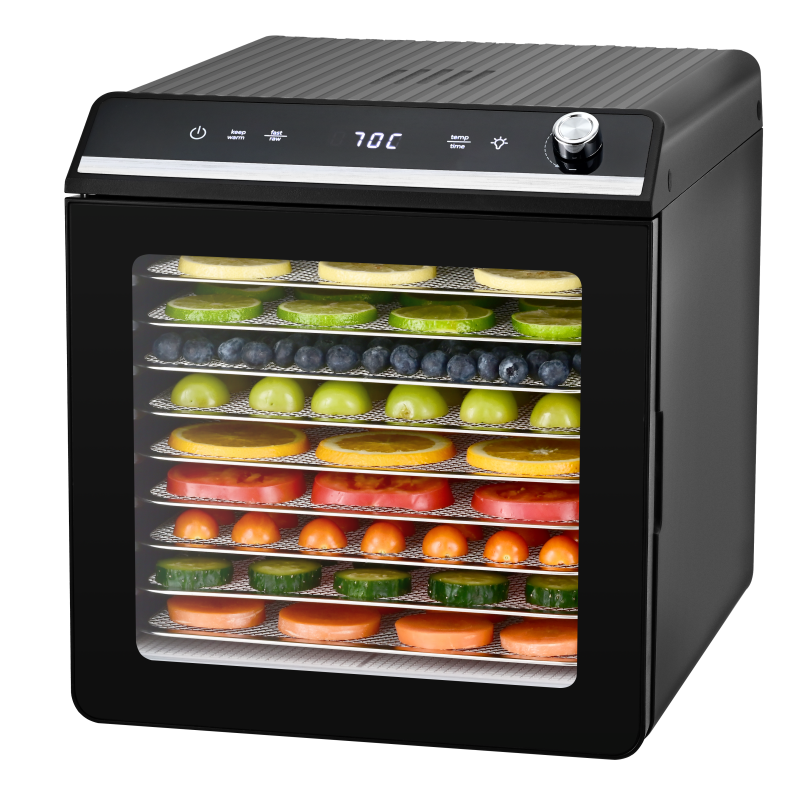
Certification-Ready OEM Appliances Since 1989
Kangye Electric builds food dehydrators, gas BBQ grills, pizza ovens and air fryer ovens with CE, GS, CB, ETL and CSA files ready for your target market - backed by 200+ engineers and a 150,000 m2 manufacturing base.
View Certified Products