Understanding Electrical Ratings: The First Spec on Every Nameplate
Every electric appliance carries a small plate of printed characters — usually on the back or underside — that quietly determines whether the product will work, survive, or fail in your market. It lists voltage, frequency, power, and current. Most consumers never read it. For the B2B buyers, distributors, and importers who source kitchen appliances from factories, that plate is the single most important document on the product: get the electrical rating right and the appliance works everywhere it ships; get it wrong and you face returns, recalls, and liability.
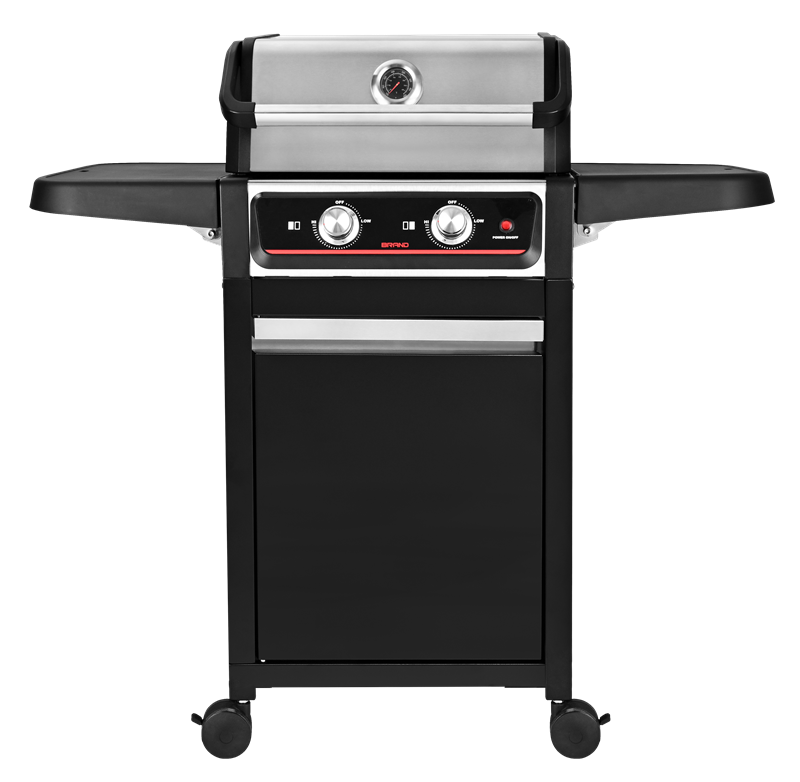
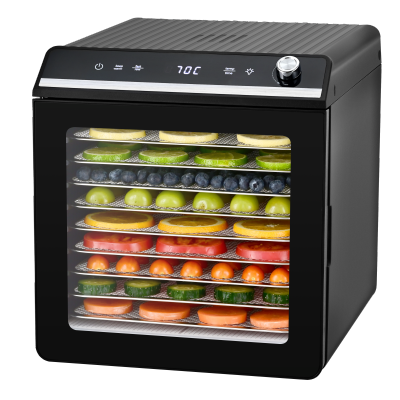
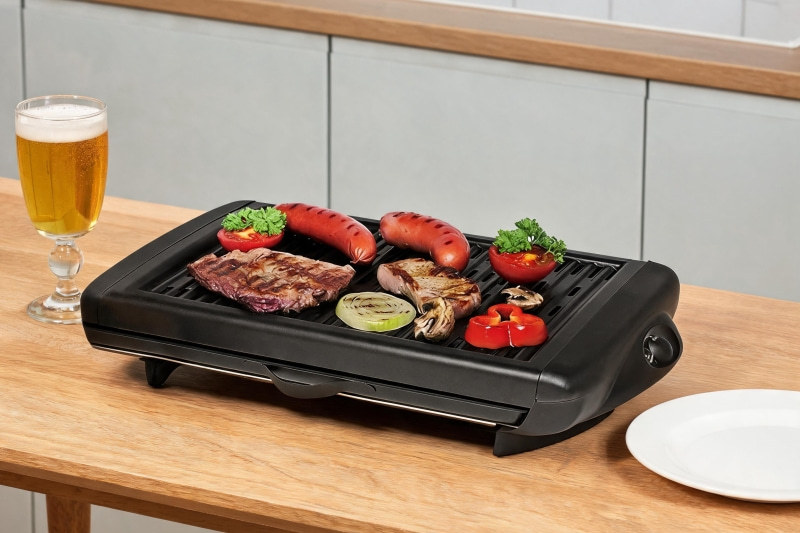
This technical guide explains what each figure on an appliance rating plate actually means, how the world’s power grids differ, what certifications verify (and what they don’t), and how to evaluate electrical ratings when sourcing OEM kitchen appliances — from air fryers and electric grills to food dehydrators and steam cookers.
What Is an Electrical Rating, Exactly?
An electrical rating is a set of declared operating limits for an appliance, defined by international standards and printed on the product’s nameplate. It tells the installer, inspector, and end user the conditions under which the appliance is designed to operate safely. Under IEC 60335, the global safety benchmark for household and similar electrical appliances, a rating plate must declare at minimum:
- Rated voltage — the nominal supply voltage, such as 120V or 220–240V, and the range the product accepts.
- Rated frequency — 50Hz, 60Hz, or a combined 50/60Hz rating.
- Rated power input — in watts (W) or kilowatts (kW), or the rated current in amperes (A).
- Manufacturer identity — brand or trademark, model designation, and country of origin.
- Protection class symbols — such as the “double square” symbol for Class II (double-insulated) construction, plus IP ratings where relevant.
These values are not marketing claims — they are legally significant declarations. In the EU, the Low Voltage Directive (2014/35/EU) and the CE marking process make the manufacturer responsible for the accuracy of the ratings on the plate. In the United States, products must be certified by a Nationally Recognized Testing Laboratory (NRTL) such as UL, which audits both the rating and the product against it.
The Global Voltage Map: 120V, 230V, and Everything Between
According to IEC 60038, the world’s household electricity supply falls into two broad voltage families: the 100–127V family used across North America, Japan, and parts of South America, and the 220–240V family used by roughly three-quarters of the world’s countries — Europe, most of Asia, Australia, Africa, and the Middle East.
| Market |
Standard Voltage |
Frequency |
Plug Standard |
| United States |
120V (±5% nominal; supply ranges 110–127V) |
60Hz |
Type A / B (NEMA) |
| Canada |
120V |
60Hz |
Type A / B |
| Japan |
100V (East 50Hz, West 60Hz) |
50Hz / 60Hz |
Type A / B |
| European Union |
230V (EN 50160: 230V +10% / -6%) |
50Hz |
Type C / E / F |
| United Kingdom |
230V |
50Hz |
Type G (BS 1363) |
| Australia / New Zealand |
230V |
50Hz |
Type I |
| China |
220V |
50Hz |
Type A / I |
| Brazil |
127V or 220V (region-dependent) |
60Hz |
Type C / N |
| India |
230V (with frequent fluctuation) |
50Hz |
Type C / D / M |
Two important consequences follow from this map. First, a product rated for only 120V/60Hz cannot be sold as-is in a 230V market — connecting it will overstress the insulation and destroy components. Second, even markets that share a nominal voltage differ in real-world tolerance: India’s supply can sag well below 230V, which is why wide-input designs are strongly recommended there. This is why nearly every global brand now specifies appliances with a rated input range such as 100–240V rather than a single fixed voltage.
Frequency: The 50Hz / 60Hz Trap That Breaks Motors
Voltage gets most of the attention, but frequency is the quieter killer. An appliance’s rated frequency must match the grid because motors and transformers are designed around it. A 60Hz-only induction motor run on 50Hz will rotate roughly 17% slower, overheat, and can stall under load; a 50Hz motor run on 60Hz will run faster, draw more current, and wear out prematurely. Pumps, compressor-driven refrigeration, line-frequency timers, and older mechanical clocks are all frequency-sensitive.
Modern electronic appliances with switch-mode power supplies — chargers, digital control boards, and products rated “50/60Hz” — are generally immune to frequency differences because they convert AC to DC internally. But the heating elements, fans, and motors in kitchen appliances often are not. The safe rule for sourcing: demand a rating that covers both frequencies (50/60Hz) whenever the product contains any motor, fan, or transformer, and confirm the motor design with the factory rather than assuming.
The practical risk is concentrated in markets with unusual combinations — Japan (100V, but 50Hz in the east and 60Hz in the west), Brazil (127V or 220V), and parts of Central America. A fan-driven appliance like an air fryer or dehydrator that is rated only for 60Hz is a warranty claim waiting to happen in a 50Hz market.
Watts, Volts, and Amps: The Math Behind the Nameplate
Three figures on the nameplate are linked by physics, and understanding the relationship helps you evaluate power claims, circuit requirements, and plug types:
- Power (W) = Voltage (V) × Current (A) — for resistive loads, the current an appliance draws at rated power depends on the local voltage.
- Resistive loads scale with V². A heating element designed for 220V connected to 120V delivers only about 30% of its rated power — the classic reason a “220V kettle” plugged into a 120V outlet barely warms. Conversely, a 120V element on 220V delivers roughly 3.4 times its rated power and will burn out within minutes.
- Amps determine the circuit. A 3000W appliance on a 230V supply draws about 13A; on a 120V supply it would need 25A — more than a standard 15A US circuit can deliver. This is why high-power products are often down-rated for the US market rather than sold at full European wattage.
For buyers, this math matters in three ways: it explains why the “same” product is often sold with different wattage in different regions (the KYS-203A outdoor electric grill, for example, is specified at 3000W or 2400W for 220–240V markets and 1600W for 120V markets); it tells you whether the product needs a special plug or dedicated circuit; and it lets you sanity-check a supplier’s spec sheet — if the stated watts and amps contradict V × A, the sheet is wrong.
What Each Line on a Rating Plate Really Tells You
Reading a nameplate correctly is a practical skill for any sourcing professional. Here is what to look for, and what each line means:
| Nameplate Line |
What It Means |
What to Check |
| 220–240V ~ 50/60Hz |
Rated voltage range and frequency. “~” denotes AC. A range means the product accepts any voltage within it. |
Does the range cover your target market’s grid, including tolerance? |
| 120V ~ 60Hz |
Single-voltage rating. The product is designed for one supply only. |
Will require a separate SKU or transformer for other grids. |
| 3000W or 13A |
Rated power input or current at rated voltage. |
Cross-check with V × A; confirm plug and circuit requirements. |
| Class II symbol (double square) |
Double-insulated construction; no earth wire required. |
Common on small appliances; confirm grounding method for metal-bodied products. |
| IPX4 or similar |
Ingress protection — resistance to solids and water. |
Critical for outdoor grills and products used near water. |
| Model / Brand / Origin |
Legal identity of the responsible manufacturer. |
Verify traceability for warranties and compliance audits. |
Regulations also require the markings to be permanent and legible. IEC 60335 specifies that markings must withstand a water-and-solvent wipe test — literally, a damp cloth and then a cloth soaked in solvent, with the marking still readable afterward. A rating printed on a cheap sticker that smears during testing is a compliance failure, not a cosmetic one. In Gulf Cooperation Council markets, the G-Mark regulations go further: the nameplate must be bilingual (English and Arabic), permanently fixed, and the G-Mark itself at least 5mm tall.
The Certifications Behind the Ratings
An electrical rating is only as trustworthy as the certification behind it. Certifications verify that the product actually meets the safety requirements of its target market — and that the nameplate accurately reflects the tested configuration. The landscape differs by market:
| Market |
Mark |
Nature |
| United States |
UL / ETL (NRTL marks) |
Third-party testing by a nationally recognized lab under OSHA’s NRTL program |
| Canada |
CSA / cUL |
Third-party certification |
| European Union |
CE |
Manufacturer’s self-declaration of conformity to LVD and other directives |
| Germany |
GS |
Voluntary third-party safety certification, highly respected in retail |
| China |
CCC |
Compulsory certification for listed product categories |
| Japan |
PSE |
Mandatory for electrical products under the DENAN law |
| Australia / NZ |
RCM / SAA |
Mandatory electrical safety registration and compliance marking |
| Gulf states (Saudi, UAE, etc.) |
G-Mark / GCC |
Compulsory conformity marking, bilingual nameplate required |
| Kenya and other African markets |
PVoC |
Pre-export verification of conformity for customs clearance |
Behind the marks are standardized tests. IEC 60335-1 (currently the 2020 sixth edition, adopted by more than 50 countries) is the general safety standard for household appliances up to 250V single-phase, supported by product-specific Part 2 standards — IEC 60335-2-9 for grills, ovens, and air fryers, 60335-2-14 for food processors and blenders, 60335-2-15 for coffee makers and kettles. Testing typically covers electrical strength (dielectric withstand tests of 3000–4000V AC on reinforced insulation), leakage current (limited to roughly 0.25–3.5mA depending on product and earthing), temperature rise on accessible surfaces, abnormal operation, and moisture conditioning at 93% relative humidity.
One distinction is essential for buyers: certifications verify safety, not performance or accuracy. A CE- or UL-certified air fryer has passed electrical safety testing — but certification says nothing about how evenly it browns or how consistently it holds temperature. Ratings and certifications are the gate; quality and performance are the product.
What Happens When Ratings Don’t Match the Grid
The failure modes of a mismatched appliance range from disappointing to dangerous:
- Under-voltage: A 220V-rated heater on a 120V supply produces about a quarter of its rated heat — the product works but performs so poorly the customer demands a refund.
- Over-voltage: A 120V-rated product on a 230V supply receives roughly 3.4× its rated power. Insulation breaks down, components burn, and in the worst case the product catches fire — a safety hazard, not just a defect.
- Frequency mismatch: Motors run at the wrong speed, transformers overheat, and line-timed functions drift.
- Wrong plug or rating declaration: Even a technically compatible product fails market entry if the nameplate, plug type, or certification mark doesn’t match local rules — customs can hold the entire container.
The commercial cost is documented and large. An Amazon seller survey found voltage incompatibility to be one of the top causes of returns in the electronics category, with mismatch-driven return rates reported as high as 18%. Customs and market-surveillance data show the scale of the labeling problem: a 2024 export inspection by Shenzhen Customs found that over one in five small appliance samples that failed inspection had missing or incorrect voltage markings — concentrated among products sold through cross-border e-commerce platforms. Every one of those failures is a shipment held, a listing suspended, or a retailer fined.
Dual-Voltage Design: One Product, Two Worlds
The cleanest answer to the global voltage split is wide-input design. Testing organizations including UL Solutions recommend products accept 100–240V at 50/60Hz, which covers more than 90% of the world’s markets with a single SKU and a simple plug change. Switch-mode power supplies already do this in chargers and control boards; extending the philosophy to heating products means designing elements, fans, and control circuits to operate across the full range, and choosing components rated for the worst case.
True dual-voltage heating design is not trivial: a heating element’s resistance is fixed, so a 220V element cannot simply be reused at 120V. Serious manufacturers engineer separate element configurations for each voltage family, or use power-regulating electronics that hold output constant across inputs. When a supplier lists a product with different wattage per voltage — as with the KYS-203A electric grill at 3000W for 220–240V and 1600W for 120V — it signals genuine dual-voltage engineering rather than a re-labeled single-voltage design. That distinction is exactly the kind of detail a rating plate reveals to a trained buyer.
Featured Product: 1600–3000W Outdoor Electric BBQ Grill KYS-203A
| Model | KYS-203A |
|---|
| Power | 220-240V, 50/60Hz, 3000/2400W | 120V, 60Hz, 1600W |
| Temperature | 100–330°C adjustable |
| Cooking Area | 1750 cm² |
| Size | 1100 × 560 × 1100 mm |
| Certification | CE / RoHS compliant, market-specific ratings available |
| MOQ | OEM / ODM friendly |
View Product Details
How to Verify Electrical Ratings When Sourcing
Ratings cannot be verified from a brochure. Here is a practical checklist to use with any factory — and what a credible answer looks like:
| Question to Ask |
Why It Matters |
What a Good Answer Looks Like |
| What are the rated voltage and frequency for each target market? |
The foundation of everything else; single-voltage products need separate SKUs. |
Explicit list, e.g. “220-240V 50/60Hz for EU; 120V 60Hz for US” |
| Is the wattage the same across voltage versions, or re-engineered? |
Re-engineered elements signal genuine dual-voltage design. |
“3000W (230V) / 1600W (120V) with separate element configurations” |
| Which certification marks will the shipped product carry? |
Marks must match the destination market and the actual configuration shipped. |
“CE + RoHS for EU, UL/ETL or CSA for North America, PSE for Japan” |
| Can you share the test report and certificate numbers? |
Paper marks without test reports are a red flag. |
Certificate numbers you can verify with the issuing body |
| What is the nameplate marking method and placement? |
IEC requires permanent, legible markings that survive wiping. |
“Laser-engraved or molded plate, meets IEC 60335 wipe test” |
| What plug types and cord lengths are offered per market? |
Plug standards differ (BS 1363 in UK, Type F in Germany, Type I in Australia). |
Market-matched cordsets with relevant approvals |
| Is there independent over-temperature and overload protection? |
Safety certification requires fault-condition protection, not just normal operation. |
“Thermal fuse + NTC over-temp cutoff, independent of control” |
Common Misconceptions About Electrical Ratings
| Myth |
Fact |
| Higher wattage always means a better product |
Wattage defines heating speed and circuit requirements, not quality. A correctly engineered 1600W 120V product outperforms a mismatched higher-wattage one. |
| A universal plug adapter solves everything |
Adapters fix the plug shape, never the voltage or frequency. The appliance must still be rated for the local supply. |
| CE mark is issued by a certification body |
CE is a manufacturer’s self-declaration. Third-party marks like GS or UL provide independent verification; always ask for test reports. |
| If it passes a factory test, it will pass local inspection |
Factory test conditions rarely match destination-market regulations. Certification must be market-specific. |
| Voltage ratings are a safety issue only |
They are also a commercial issue: mismatch drives returns, customs holds, and brand damage. |
How Kangye Engineers Electrical Ratings
Kangye Electric has manufactured kitchen appliances since 1989, supplying OEM and ODM partners across more than 80 countries. Electrical rating engineering is a core discipline in our factory: every model is built around the voltage and frequency of its destination market, with heating elements, motors, and controls specified for the actual grid — not a generic reference design.
For multi-market product lines, our engineering team develops separate rated versions with appropriate wattage (as with the KYS-203A grill’s 3000W/2400W/1600W variants), selects certified cordsets and plugs for each destination (BS 1363, Schuko, NEMA, Type I, and others), and prepares the technical files needed for CE, UL/ETL, GS, PSE, CCC, and RCM certification programs. Nameplates are produced to IEC 60335 marking requirements — permanent, legible, correctly placed — so the product carries the right story on its plate before it ever reaches customs.
When you source with Kangye, you receive the rated specifications and certification documentation for your specific market, not a generic spec sheet. Our engineers will walk you through the voltage, frequency, plug, and protection decisions for your product line — and show you the test reports behind every rating.
FAQ: Electrical Ratings for Global Buyers
Can a 220V appliance be used on a 120V supply with an adapter?
No. An adapter only changes the plug shape. A 220V-rated product on 120V will deliver only about 30% of its rated power and will not work correctly; on the reverse combination it can be destroyed or become a fire hazard. Use a product rated for the local voltage, or a certified transformer of adequate capacity.
Why do US and EU versions of the same appliance have different wattage?
Because heating elements obey V²/R. The same physical element delivers far more power at 230V than at 120V, so manufacturers re-engineer elements per voltage family to achieve the intended cooking performance and circuit compatibility.
Is 50/60Hz rating always necessary?
Any product with a motor, fan, pump, or transformer should be rated 50/60Hz (or single-frequency for a single-market design) because motors are frequency-sensitive. Purely resistive or electronic loads are less sensitive, but the safe sourcing default is a dual-frequency rating.
Does CE certification cover the US market?
No. CE covers EU requirements only. The US requires NRTL certification (UL, ETL, or CSA marks) for many products, plus compliance with local codes. Certification is always market-specific.
How do I verify a supplier’s certificate is real?
Ask for the certificate number and the issuing body, then verify through the body’s public database (for example, the UL product iQ directory or the IECEE CB Scheme database). Be suspicious of certificates that name a lab that cannot be verified.
Conclusion: The Nameplate Is the Contract
The electrical rating is the contract between a product and the grid it plugs into. It determines whether the appliance performs, passes customs, stays safe, and avoids returns — and it is the first thing a competent buyer verifies before committing to a container of products. Voltage, frequency, watts, plug, certification: each line on the plate tells a story about how seriously the manufacturer engineered the product for your market.
Kangye Electric has spent nearly four decades getting those stories right, and our engineering and certification teams are ready to support yours — from rating design and market-specific variants to the test reports that back them up. For more technical articles and sourcing guidance, visit our Blog or contact our sales team to discuss your next project.