Vacuum Sealer vs Dehydrator: Which Food Preservation Method Costs Less per kg?
Short answer: dehydrating costs less per kilogram of food preserved. Published comparisons put drying at $0.25–0.50 per pound against $0.30–0.60 for vacuum sealing plus freezing (DishAlchemy, 2026), and a dehydrator’s only consumable is electricity — about $0.30–2.00 per batch (LatestCost, 2026). Vacuum sealing wins on speed and nutrient retention, so the right answer for most portfolios and kitchens is both.
A vacuum sealer removes air; a dehydrator removes water. Because the two appliances attack spoilage differently, their cost structures barely overlap: one spends money on bags and freezer electricity, the other spends it on hours of low-wattage drying. This guide quantifies each cost driver with 2026 published data, works a 50 kg household example, and ends with what the numbers mean for importers choosing between the two categories. Energy figures for the dehydrator side are drawn from our earlier Kangye Lab Data test roundup, where a full batch consumes 1–7 kWh by food type (BestDehydrator, 2026).
What actually drives the cost of each method
Vacuum sealing spends money on consumables; dehydrating spends it on machine-hours. That single difference explains almost every line in the table below. A sealer draws 80–150 W for 10–30 seconds per bag, so its electricity bill is nearly zero (KitchenDeals UK, 2026; EnergyBS, 2026), but every portion needs a bag and, for perishables, continuous freezer or refrigerator power afterwards (FarmstandApp, 2026). A dehydrator runs 4–12 hours per batch yet needs no consumable and no cold chain, because dried food is shelf-stable in the pantry (DishAlchemy, 2026).
| Cost component | Vacuum sealing | Dehydrating |
|---|---|---|
| Equipment price | $50–300 device (EnergyBS, 2026) | $100–500 machine (DishAlchemy, 2026) |
| Main consumable | Bags $0.10–0.50 each (EnergyBS, 2026) | None; trays are reusable |
| Energy in use | ≈0.0005 kWh per seal (KitchenDeals UK, 2026) | 1–7 kWh per batch (BestDehydrator, 2026) |
| Storage energy | Freezer or refrigerator runs continuously | None; pantry shelf-stable |
| Labor per batch | Seconds per bag | 4–12 hours unattended runtime |
Energy per kilogram: seconds against hours
A sealing cycle uses roughly 0.0005 kWh of electricity; a drying batch uses 1–7 kWh. On pure appliance energy, the sealer wins by three to four orders of magnitude: sealing 50 bags a year consumes about 0.05 kWh in total (EnergyBS, 2026), while one fruit batch alone takes 4.8–7.2 kWh (BestDehydrator, 2026). At the 2026 US average residential rate of about $0.16/kWh, that fruit batch costs $0.77–1.15 — under $1.20 for any batch type. The picture flips once storage enters the bill: vacuum-sealed fresh food must stay frozen or chilled for its whole life, and refrigeration runs around the clock, whereas dehydrated goods cost nothing to store (FarmstandApp, 2026). Kilogram for kilogram, a freezer bag of meat and a jar of dried apples carry very different invisible utility bills.
Consumables: bags are the real bill
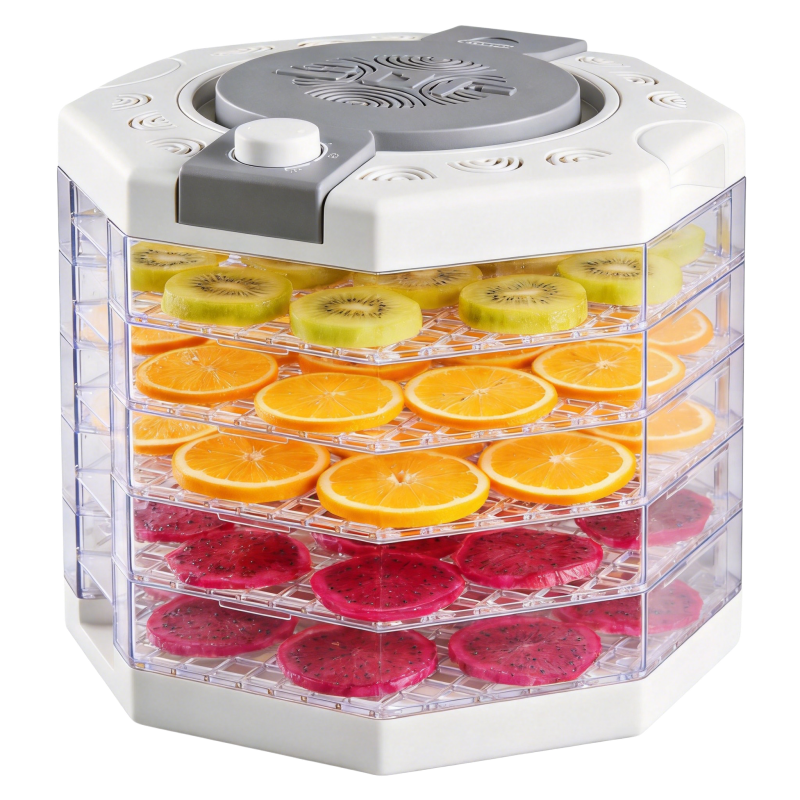
The sealer’s electricity is nearly free; its bags are not. Branded bags run $0.30–0.50 each, generic rolls cut that to $0.10–0.20, and chamber-sealer bags drop as low as $0.05–0.10 (EnergyBS, 2026). UK testing mirrors the spread: a 28 cm roll yields about 20 bags at roughly 52p each, while third-party rolls bring the unit cost down to 6–8p (KitchenDeals UK, 2026). Switching from branded to generic bags cuts ongoing sealing costs by 60–70 percent (EnergyBS, 2026). The dehydrator side of the ledger has no equivalent line: stainless trays and fruit-leather sheets are reused for years, leaving electricity — $0.30–2.00 per 10–12 hour batch — as the only running cost (LatestCost, 2026).
| Consumable | Typical unit cost | Source, year |
|---|---|---|
| Branded vacuum bags | $0.30–0.50 per bag | EnergyBS, 2026 |
| Generic roll bags | $0.10–0.20 per bag | EnergyBS, 2026 |
| UK third-party rolls | ≈6–8p per bag | KitchenDeals UK, 2026 |
| Chamber-sealer bags | $0.05–0.10 per bag | EnergyBS, 2026 |
| Dehydrator electricity | $0.30–2.00 per batch | LatestCost, 2026 |

A worked 50 kg example (derived estimate)
Spread across a full year, the per-kilogram gap narrows to pennies, and machine amortization becomes the biggest lever. The scenario below preserves 50 kg of surplus produce a year in 1 kg portions, amortizes each device over five years, and uses the bag, electricity and equipment figures cited above. It is a derived estimate, not a measurement: households that already own a freezer should count only the marginal bags against dehydrating, and bulk-bag pricing pushes the vacuum route lower. What the model shows is convergence — at 50 kg per year both methods land in the same $0.30–1.30 per kg band, so choice should hinge on shelf life and use case rather than running cost alone.
| Year-1 line item (50 kg preserved) | Vacuum sealing | Dehydrating |
|---|---|---|
| Consumables | 50 bags × $0.10–0.50 = $5–25 | $0 |
| Process electricity | <$1 (0.05 kWh/yr) | 10–15 kWh = $1.60–2.40 |
| Equipment amortized / 5 yrs | $10–40 per year | $20–60 per year |
| Storage energy | Freezer load, ongoing | $0, pantry |
| Year-1 total (est.) | ≈$16–66 | ≈$22–62 |
| Per kg preserved (est.) | ≈$0.32–1.32 | ≈$0.44–1.24 |
What independent comparisons say, and why they disagree
Published per-pound figures disagree by up to 2× in absolute terms, but the ranking is consistent. Both independent sources below rank drying cheaper than vacuum sealing per pound; the spread comes from different assumptions about equipment amortization windows, freezer inclusion and drying yields. Treat the ranges as bands, not points, and re-run them with your local electricity rate and bag prices before quoting one in product copy.
| Source, year | Drying / dehydrating | Vacuum sealing (with freezing) | Scope note |
|---|---|---|---|
| DishAlchemy, 2026 | $0.25–0.50 per lb | $0.30–0.60 per lb | Equipment, energy and consumables per batch |
| Yalla Calculator, 2026 | $0.60 per lb | $0.80 per lb | Generic preservation-cost model |
Shelf life decides the value of each kilogram
Cost per kilogram is only half the equation; how long the kilogram stays good decides the rest. Vacuum sealing extends typical storage 3–5 times over ordinary packaging (FreshLock, 2026), and vacuum-sealed meat holds up to three years in a freezer against 4–12 months in standard wrap (My Taste My Meal, 2026). Dehydrated goods reach 1–2 years of pantry storage without any cold chain (DishAlchemy, 2026). The safety asymmetry matters for messaging: low-oxygen packs do not kill bacteria, and fresh vacuum-packed food still requires refrigeration or freezing because of the botulism risk in anaerobic conditions (My Taste My Meal, 2026). Dehydrated food is genuinely shelf-stable only when its water activity stays below safe limits by product type — the thresholds are set out in our water-activity guide.
Which one should a brand source? Often both
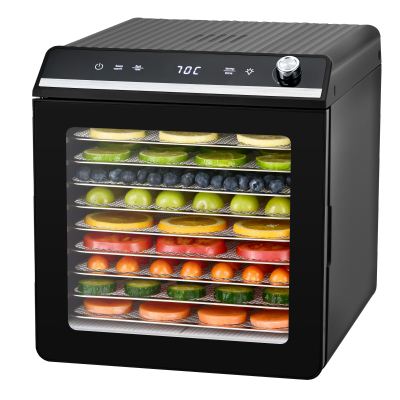
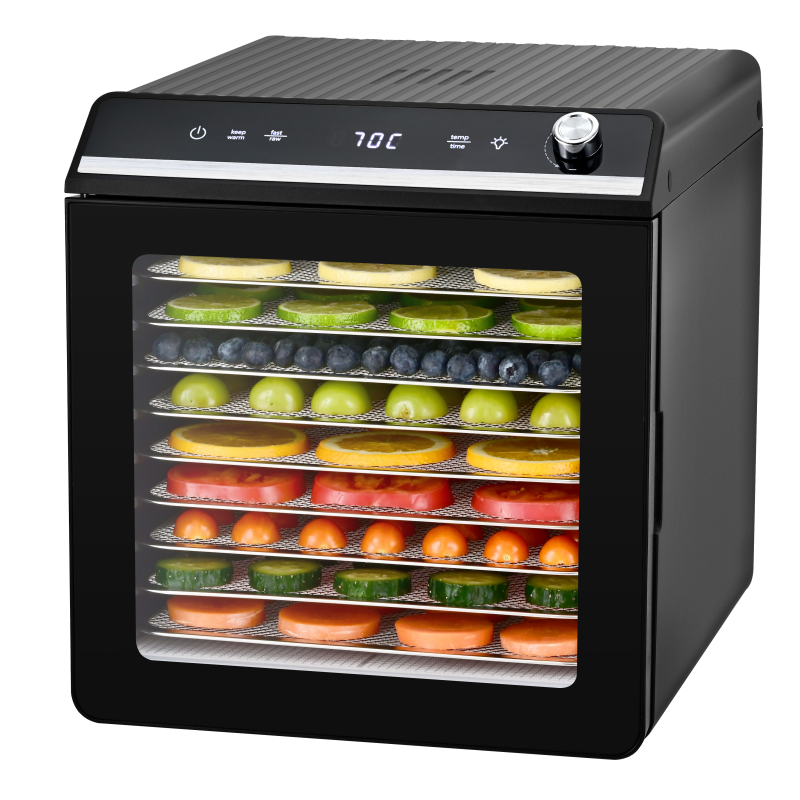
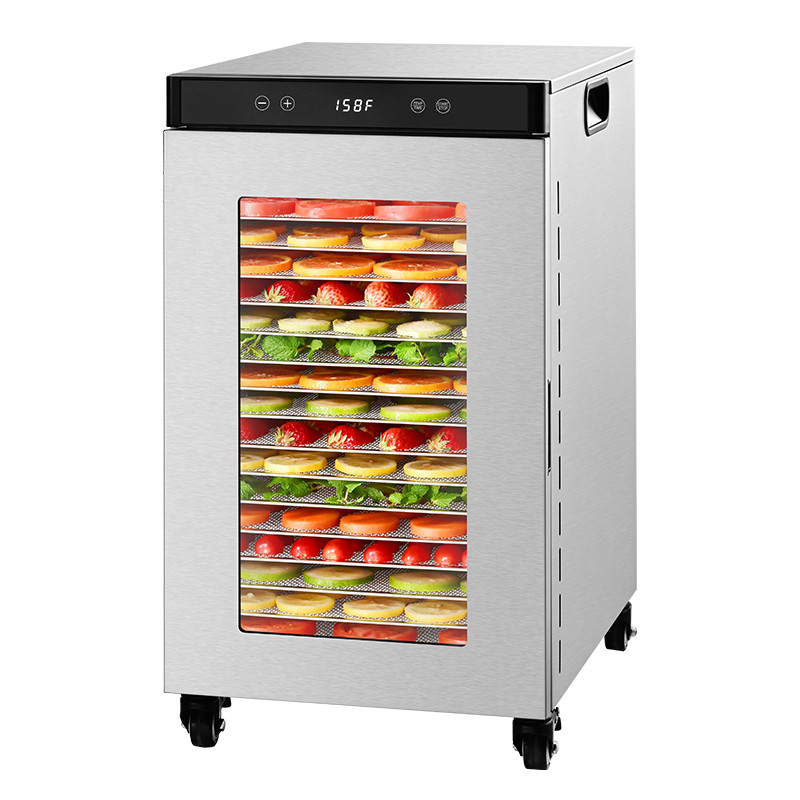
The two categories solve different consumer jobs, which is why Kangye Electric manufactures both under one roof. Vacuum sealers are small, light, low-ticket countertop devices: the Kangye KYS-960 draws just 130 W, reaches a vacuum of ≥50 kPa, seals a 30 cm bar, ships with five bags, and packs 3,051 units into a 20 ft container or 6,957 into a 40 HQ — container economics that make it an easy add-on SKU beside any freezer-oriented lineup. Dehydrators carry the premium end: the 10-tray KYS-315 (600–700 W, 48-hour timer) fills a 40 HQ with 1,235 units, and the commercial KYS-500A-R scales to 16–17 trays at 850–1,010 W for jerky and small-business channels. For deeper background, see our vacuum sealer technology explainer and the chamber vs external sealer comparison for business buyers. Kangye Electric, founded in 1989, runs a 150,000㎡ base with 200+ engineers and monthly capacity above 200,000 units under ISO 9001, with CE, GS, CB, ETL, LFGB and FDA certification coverage.
Planning a Preservation Line?
Kangye Electric builds dehydrators from 320 W compact units to 1,730 W commercial cabinets plus the KYS-960 vacuum sealer series, with published container quantities and CE/GS/CB/ETL/LFGB/FDA coverage under ISO 9001.
See the KYS-315 seriesFrequently asked questions
Which is cheaper per kg: vacuum sealing or dehydrating?
Dehydrating, on third-party per-pound figures: $0.25–0.50 against $0.30–0.60 (DishAlchemy, 2026) and $0.60 against $0.80 (Yalla Calculator, 2026). Our worked 50 kg example narrows the gap to near parity once machines are amortized, so consumable prices and local electricity rates decide the winner in practice.
Why do published cost comparisons disagree?
Scope. Some models amortize equipment over three years, others five; some include freezer electricity, others count only process energy; drying yield assumptions range from 12 percent for apple rings to 25 percent for vegetables. Always check which line items a figure includes before comparing.
Can vacuum-sealed food be stored at room temperature?
Only if it was already shelf-stable, such as dried goods, grains or coffee. Vacuum packaging removes oxygen but does not kill bacteria, and the anaerobic environment raises botulism risk for fresh or cooked food left unchilled (My Taste My Meal, 2026).
Do households and brands need both appliances?
Usually yes, because they preserve different things. Vacuum sealing protects frozen meat, cheese and bulk dry goods in seconds; dehydrating converts seasonal produce into lightweight shelf-stable snacks for pennies of electricity per batch. Retailers find the two categories cross-sell rather than compete.
Sources and data notes
Energy figures for dehydrator batches (1–7 kWh by food type) and the $0.16/kWh 2026 US residential rate are from our Kangye Lab Data article, which cites BestDehydrator (2026) and LatestCost (2026). Vacuum sealer power draw (80–150 W), per-cycle energy (≈0.0005 kWh), bag economics ($0.30–0.50 branded, $0.10–0.20 generic, $0.05–0.10 chamber, 60–70 percent generic savings, 0.05 kWh annual use) are from EnergyBS (2026) and KitchenDeals UK (2026). Per-pound preservation costs are from DishAlchemy (2026) and the Yalla Calculator (2026). Shelf-life figures (3–5× extension; frozen meat up to 3 years vs 4–12 months; botulism caution; dehydration 1+ year shelf-stable) are from FreshLock (2026), My Taste My Meal (2026) and DishAlchemy (2026). The storage-energy contrast is drawn from FarmstandApp (2026). The 50 kg worked example, all per-kilogram conversions, and the five-year amortization schedule are derived estimates calculated for this article from the cited inputs; they are labelled as estimates in the text and should not be quoted as measurements. KYS-960, KYS-315 and KYS-500A-R specifications and container quantities come from live Kangye Electric product data (2026) and are workshop-calibration figures.