Sourcing OEM Kitchen Appliances from China: A Step-by-Step Guide for B2B Buyers
China produces more small kitchen appliances than any other country on earth, and for good reason. The country exported USD 84.72 billion worth of small appliances in 2025 — up 14.6% year over year — with kitchen appliances contributing 42.3% of that total. Whether you are an e-commerce brand launching a private-label air fryer, a distributor expanding into food dehydrators, or a retailer sourcing commercial gas grills, understanding how to source OEM kitchen appliances from China is the single most important skill you can build. This guide walks you through every stage of the sourcing journey, from defining your product specification to negotiating contracts and clearing customs — with the practical details, data, and red flags that only come from years of working inside the industry.
Why China Remains the Global Sourcing Hub for Kitchen Appliances
China's dominance in kitchen appliance manufacturing is not accidental. It is the result of a decades-old supply chain ecosystem that no other country has been able to replicate at scale. The Pearl River Delta — anchored by production clusters in Shunde, Zhongshan, and Foshan — houses thousands of specialized factories within a 50-kilometer radius, covering everything from motors and heating elements to thermostats, PCBs, injection molds, and stainless steel sheets.
Industry data shows that Chinese manufacturers hold roughly 58% of the global mid-range appliance market (USD 50–120 price band), a share that has grown by 9 percentage points since 2022. Research firm iResearch projects China's small appliance exports will grow from USD 48.7 billion in 2024 to more than USD 82 billion by 2030, a compound annual growth rate of about 9.3%.
For B2B buyers, the implications are clear. Chinese factories offer:
- Factory-direct pricing — blenders at USD 8–15 and air fryers at USD 18–35 at standard MOQ, with deeper discounts above 5,000 units
- Complete supply chain integration — components, tooling, assembly, and packaging under one roof
- Certification readiness — CE, RoHS, UL, ETL, GS, and CB available across major product lines
- Flexible production runs — from trial orders of a few hundred units to full container loads
OEM vs ODM: Two Sourcing Models Every Buyer Should Understand
Before you contact a single supplier, you need to decide which manufacturing model fits your business. The two most common are OEM and ODM, and the distinction shapes everything downstream — your budget, your MOQ, your intellectual property protection, and your time to market.
OEM (Original Equipment Manufacturing) means the factory builds to your design. You own the product specification, the tooling, and the intellectual property, and you typically invest in molds and development. OEM offers maximum control and IP protection, but requires higher MOQs (commonly 1,000–3,000 units for new tooling) and a longer development cycle of 6–12 months.
ODM (Original Design Manufacturing) means you select an existing factory design and customize it — logo, packaging, colors, and select features. Because the tooling already exists, MOQs drop to 200–500 units, and production can start in as little as 4–12 weeks. Most imported small kitchen appliances — air fryers, dehydrators, vacuum sealers — start as ODM projects with private-label branding.
| Aspect | OEM | ODM |
|---|---|---|
| Design ownership | Buyer owns design and tooling | Factory owns base design |
| Upfront investment | High (design, molds, testing) | Low to moderate |
| Typical MOQ | 1,000–3,000+ units | 200–500 units |
| Time to market | 6–12 months | 4–12 weeks |
| IP protection | Strong (buyer-controlled) | Moderate (design shared) |
| Best for | Established brands with in-house R&D | Startups, distributors, e-commerce brands |
For a deeper comparison of all three models — including OBM — read our complete guide to OEM vs ODM vs OBM in kitchen appliance manufacturing.
Step 1 — Write a Precise Product Specification
The single biggest mistake new buyers make is approaching suppliers with vague requirements. Every week, factories receive inquiries like "I need a good air fryer" — and every week, those inquiries produce quotes that are impossible to compare. A precise specification is the foundation of accurate pricing and a smooth development cycle.
Your product brief should include at minimum:
- Electrical specifications — voltage and frequency for your target market (110V/60Hz for North America, 220V/50Hz for Europe), wattage, and plug type
- Materials and finishes — stainless steel grades (SUS304 for food contact), housing materials, and color options
- Functionality — required features, presets, controls, and display types
- Dimensions and capacity — tray count, liters, burners, or other capacity metrics
- Packaging — retail box design, gift box, or export carton requirements
- Certifications — the specific marks your market requires (CE, UL, ETL, GS, RoHS)
- Target price — your landed cost ceiling, so factories can propose realistic configurations
Working backward from your retail price is essential. If consumers in your market pay USD 99 for an air fryer, your factory cost ceiling — after shipping, duties, and margin — is roughly USD 30–35. Sharing this context with suppliers lets them propose the right motor, heating element, and control board for the budget instead of over-engineering your product.
Step 2 — Build a Qualified Supplier Shortlist
Once your specification is ready, the next challenge is separating real manufacturers from trading companies. Marketplaces like Alibaba and Made-in-China are useful starting points, but listings are often unverified and trading companies routinely masquerade as factories. A trading company can be a legitimate partner, but you should know who you are dealing with before you negotiate — because it changes your pricing, lead times, and quality risk.
Here is how to build a shortlist you can trust:
- Verify the factory claim — ask for the company's business license, factory exterior photos, and a live video walkthrough of the production line
- Check export experience — request shipping records, export documents, and client references from markets similar to yours
- Confirm certifications — ask for the actual certificate files and verify them with the issuing body; never accept logos alone
- Assess R&D depth — a true manufacturing partner has in-house mechanical, electrical, and firmware engineers, not just assembly staff
- Test responsiveness — how a supplier handles your technical questions during sourcing is a preview of how they will handle production issues later
Aim for a shortlist of 3–5 candidates. More than that spreads your evaluation too thin; fewer gives you no negotiation leverage.
Step 3 — Verify the Factory: Audits, Certifications, and Red Flags
For electrical appliances, supplier verification is not optional. A single compliance failure at the point of import can trigger a recall that costs far more than the entire order. Professional buyers use a combination of third-party audits and document verification before committing to production.
Third-party inspection companies — SGS, Bureau Veritas, Intertek, and TÜV among them — offer factory audits that verify production capacity, quality management systems, and compliance infrastructure. For kitchen appliances specifically, the most critical audit stations are the high-voltage leakage test and the grounding resistance test. Confirm these are integrated into the factory's automated assembly line, not performed selectively.
If you are considering a factory you cannot visit in person, request:
- A third-party audit report from the last 12 months (SGS/BV/Intertek/TÜV)
- Physical samples from the current production line, not pre-prepared showroom units
- Verified certification documents (UL/ETL/CE/CB) that match your target market's requirements
- A detailed Bill of Materials (BOM) and technical parameter sheet for review
Buyer's Warning
If a factory cannot or will not provide a detailed BOM, gives vague answers to precise engineering questions, has no export history to your target market, or quotes a price that seems too good to be true — walk away. A lower price almost always means cheaper components: aluminum-wire motors instead of copper, or non-certified plastics in food-contact parts.
Step 4 — Request Samples and Validate Performance
Never skip the sample stage. For kitchen appliances, samples let you evaluate build quality, test real functionality, verify that certification claims match the physical product, and assess packaging durability. A sample that fails basic testing before your order is placed is a bargain compared with discovering the problem after 5,000 units arrive at your warehouse.
When evaluating samples, pay attention to:
- Real-world testing — run the appliance through its full cycle: heat-up time, temperature accuracy, noise levels, and safety cut-offs
- Material verification — confirm food-contact surfaces match the specified grades (SUS304 stainless, BPA-free plastics)
- Label and marking check — voltage ratings, wattage, certification marks, and compliance labels must match your market's requirements
- Packaging assessment — drop-test the export carton and check the retail box artwork against your brand files
Remember that many Chinese manufacturers accept sample orders as small as 1–10 units. Kangye, for example, supports trial orders and rapid sample turnaround so buyers can validate quality before committing to bulk production. The sample phase is also the right time to lock down your golden sample — the physical reference against which every production unit will be compared.
Step 5 — Quality Control at Every Stage
Quality control for kitchen appliances should happen at multiple points, not just once at the end. A robust supplier runs three layers of in-factory QC, and you should insist on seeing evidence of each:
- IQC (Incoming Quality Control) — testing raw materials and components from sub-suppliers, such as copper purity in motors and the quality of plastic resin
- IPQC (In-Process Quality Control) — checks performed during assembly, including the high-voltage and grounding tests on the line
- FQC (Final Quality Control) — full functional testing of finished goods before packaging, typically 100% on safety-critical parameters
Beyond in-factory QC, serious buyers add a pre-shipment inspection (PSI). A third-party inspector — SGS, Bureau Veritas, Intertek, or TÜV — visits the factory before loading, checks a statistically sampled set of units against your golden sample, and verifies certification markings and labeling compliance. Reputable factories accept third-party PSI as a standard part of doing business; resistance to it is a warning sign. Industry-standard acceptance levels are typically AQL 2.5 for major defects and 4.0 for minor defects.
Step 6 — Certifications and Compliance for Your Target Market
Certification requirements vary sharply by market, and getting them wrong means goods stuck in customs — or worse, a recall. Before production starts, confirm exactly which marks your destination market requires and verify that your factory can deliver them.
| Market | Required Certification | Key Standard |
|---|---|---|
| European Union | CE, RoHS, ErP | EN 60335-1 / EN 60335-2-x |
| North America | UL or ETL, FCC | UL 60335 / CSA standards |
| United Kingdom | UKCA, CE | EN 60335 series |
| Australia / New Zealand | RCM, SAA | AS/NZS 60335 |
| Global (food contact) | LFGB, FDA | Food-grade material testing |
Two trends deserve special attention in 2026. First, energy efficiency rules are tightening: EU Ecodesign regulations that took effect in late 2025 impose new limits on standby power and material recyclability, directly affecting an estimated USD 3.2 billion of Chinese exports. Second, energy labels such as Energy Star in North America are increasingly expected by retail channels. When sourcing, ask your factory which efficiency classes they can certify — this can become a genuine product differentiator.
Reputable manufacturers hold valid certificates from third-party bodies such as BV, Intertek, TÜV, and Eurofins. Kangye's product range ships with CE, CB, GS, ETL, RoHS, LFGB, and FDA compliance, with certification files available for buyer verification before order placement.
Step 7 — Negotiate MOQ, Pricing, and Payment Terms
Negotiation in Chinese appliance sourcing is a structured process, not a haggle. Both sides have real constraints — your supplier has tooling amortization and production minimums; you have cash flow and inventory risk. The goal is a contract that protects both parties.
MOQ: Standard ODM products typically start at 200–500 units. Custom OEM products requiring new tooling usually require 1,000–3,000 units. If you are new to a category, negotiate a small trial order first, then scale. Many suppliers — Kangye included — accept trial orders of a few hundred units to validate the partnership before committing to large volumes.
Pricing: Always ask for a transparent breakdown: product cost, packaging cost, and logistics. Compare quotes at the same Incoterms — EXW (Ex Works), FOB (Free On Board), and CIF (Cost, Insurance, Freight) produce very different numbers. Volume tiers above 5,000 units typically unlock 5–10% price reductions.
Payment terms: The industry standard for first orders is 30% deposit with the balance before shipment (often against a copy of the bill of lading), paid via T/T bank transfer. Established relationships may move to 30/70 with credit terms. Letters of credit (L/C) are common for large orders. Be wary of suppliers demanding 50% or more upfront from a first-time buyer — that is not standard practice.
Lead time: Plan on 30–45 days from sample approval to first production run, plus 5–35 days of shipping depending on air or ocean freight. Build a buffer into your launch calendar for certification delays and holiday production pauses — Chinese New Year typically shuts factories for 2–3 weeks.
Step 8 — Logistics, Shipping, and Customs Clearance
Kitchen appliances are typically shipped by sea in full container loads (FCL) or less-than-container loads (LCL), depending on order volume. Air freight is a viable option for small, high-value orders or urgent replenishments, at 5–10 times the cost of ocean shipping.
Key logistics decisions to make before you place your order:
- Incoterms — FOB gives you control over freight and insurance; EXW is cheaper but pushes all logistics risk onto you; CIF suits first-time buyers who want the factory to handle shipping
- Consolidation — many suppliers accept mixed-container orders combining multiple SKUs, which reduces shipping costs and lets you test several products in one shipment
- Customs classification — verify the correct HS codes for your product category in advance; misclassification causes delays and unexpected duties
- Documentation — commercial invoice, packing list, bill of lading, and certificates of origin must be accurate and consistent across documents
For larger appliances such as commercial ovens and dishwashers, consider SKD (Semi-Knocked Down) shipping — shipping components unassembled to reduce import duties in high-tariff regions and reassembling at destination. This strategy is increasingly popular as tariff policies shift.
Red Flags: Warning Signs to Avoid
Years of sourcing experience condense into a short list of warning signs. If a supplier exhibits several of these, proceed with extreme caution — or walk away:
- They cannot or will not provide a detailed BOM or technical parameter sheet
- They give vague, non-technical answers to precise engineering questions — especially about voltage configuration for your market
- They have no verifiable export history to your target market
- Their price is dramatically below competing quotes
- They resist third-party inspection or pre-shipment testing
- They pressure you to pay more than 30% upfront before samples are approved
- Certification files are photos of documents, not verifiable certificates from issuing bodies
None of these red flags alone is disqualifying — but when several appear together, the risk compounds quickly. Trust is earned through documentation and inspection, not through promises.
Why Kangye Is a Trusted OEM Partner
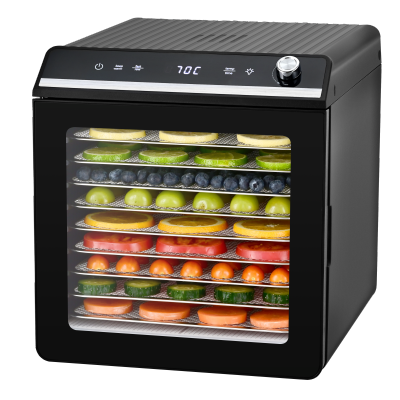
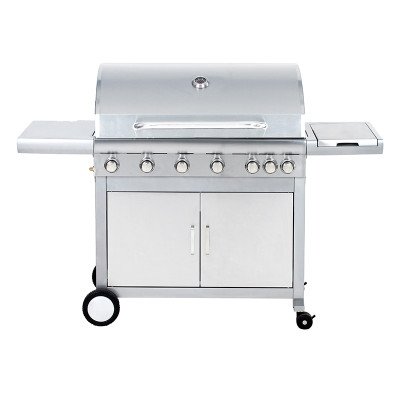
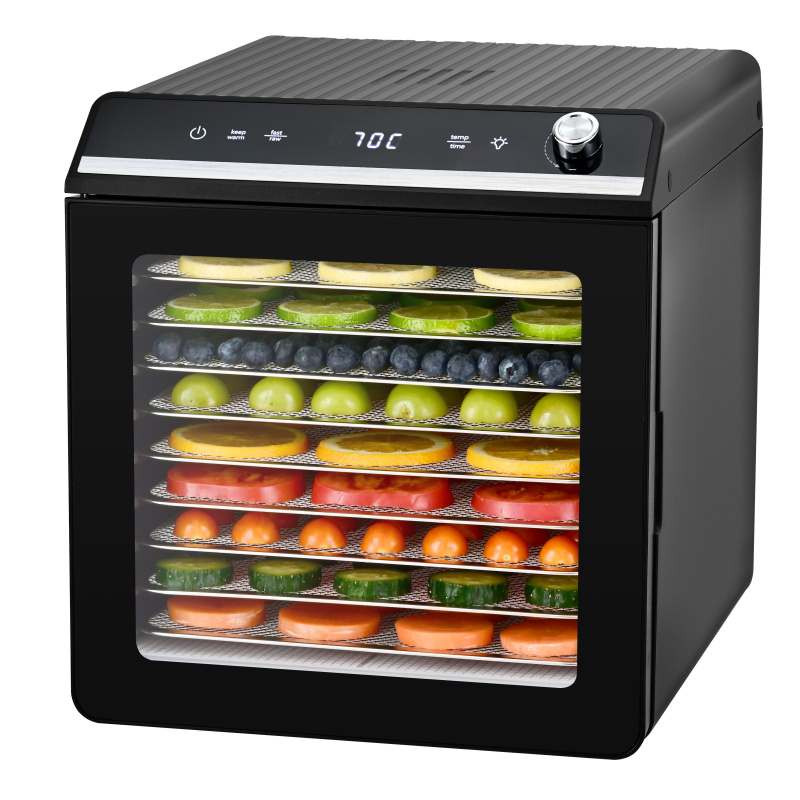
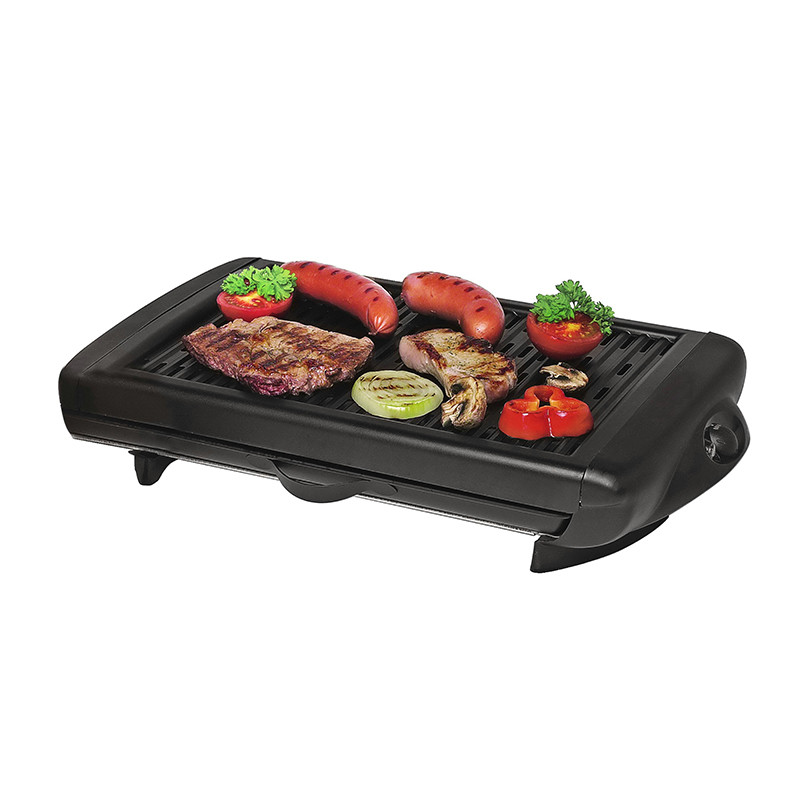
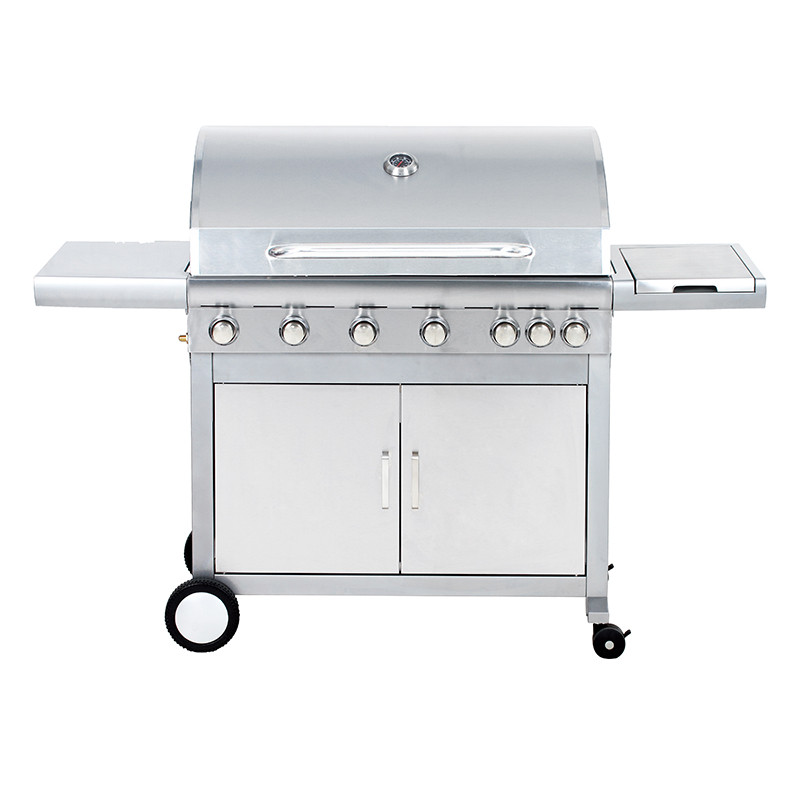
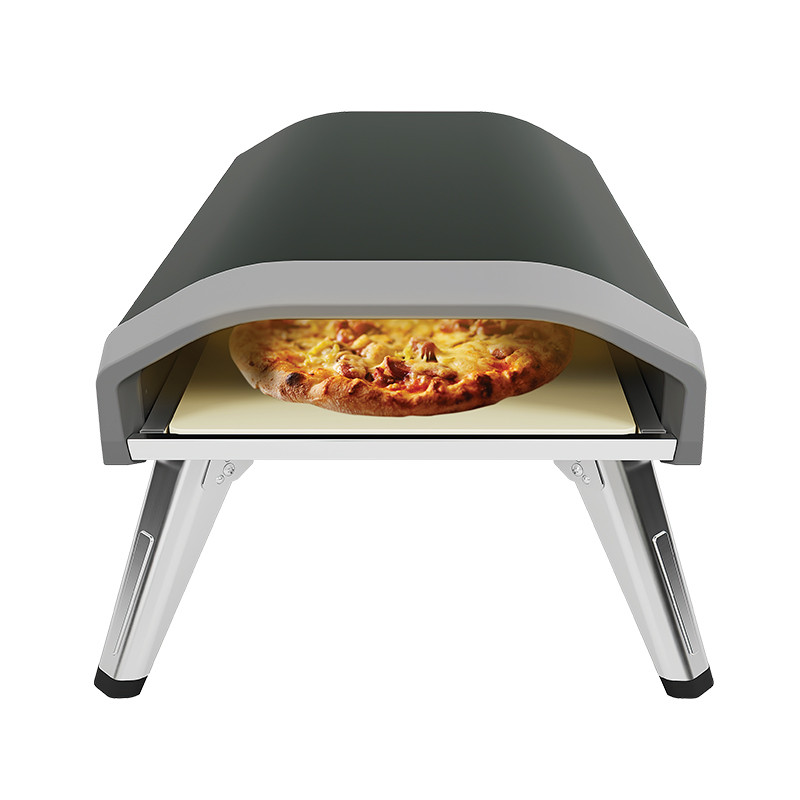
Kangye Electric Appliance is an OEM/ODM manufacturer based in Shunde, Guangdong — the heart of China's kitchen appliance industry. The company specializes in air fryers, food dehydrators, electric and gas BBQ grills, and pizza ovens, combining decades of manufacturing experience with modern production facilities and full international certification coverage.
What global buyers get when they partner with Kangye:
- Full OEM and ODM capability — manufacture to your exact specification, or private-label from a proven catalog of designs
- Global certification support — CE, CB, GS, ETL, RoHS, LFGB, and FDA across product lines, with documents available for verification
- Flexible MOQ — trial orders and scalable production from hundreds to tens of thousands of units
- Custom branding and packaging — logo printing, custom colors, voltage adaptation, and branded retail packaging
- Quality assurance — in-factory IQC/IPQC/FQC with third-party pre-shipment inspection accepted as standard
- Responsive communication — dedicated project management from specification review through production follow-up
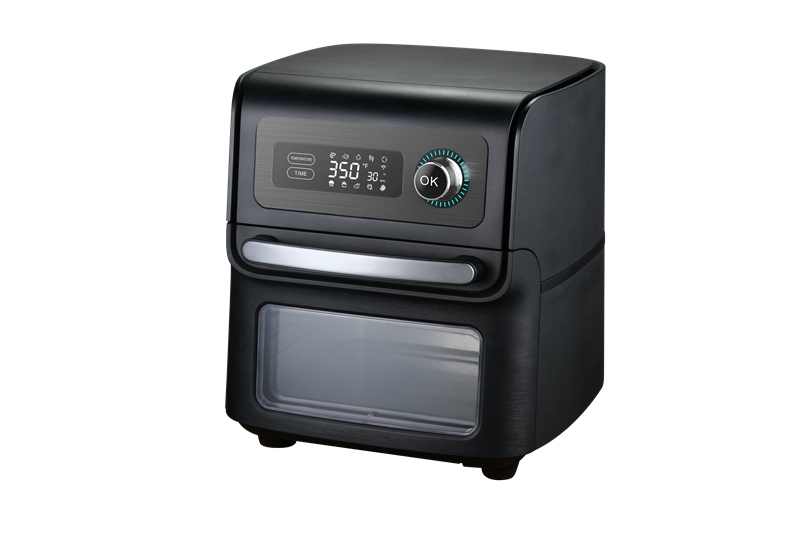
The KYS-116 16L air fryer oven is one of Kangye's most popular OEM/ODM platforms — a proven design ready for private-label customization, with digital control, eight preset functions, and 1800W of high-power performance. Explore the full Kangye product catalog or contact our team to discuss your sourcing requirements.
Frequently Asked Questions About OEM Sourcing
What is the difference between OEM and private label kitchen appliances?
OEM appliances are built to your exact design specification, giving you full product control — including tooling, patents, and design IP. Private label (typically ODM) uses an existing manufacturer design with your branding applied, which is faster and lower cost but leaves the base design with the factory.
What is the minimum order quantity for private label kitchen appliances from China?
Standard ODM products typically start at 200–500 units. Custom OEM products requiring new tooling generally require 1,000–3,000 units minimum. Many manufacturers offer smaller trial orders so buyers can validate quality before committing to bulk.
How much does it cost to source kitchen appliances from China?
Factory prices at standard MOQ range from USD 8–15 for blenders to USD 18–35 for air fryers. Volumes above 5,000 units unlock significantly better per-unit pricing. Always compare quotes at the same Incoterms and request a cost breakdown.
How long does it take to receive a custom appliance order from China?
A typical timeline is 30–45 days for first-run production after sample approval, plus 5–35 days of shipping depending on air or ocean freight. Add buffer time for certifications, packaging revisions, and Chinese New Year factory closures.
How can I verify a factory is a real manufacturer, not a trading company?
Request the business license, a live video walkthrough of the production line, export documents, and verifiable certification files. For high-value orders, commission a third-party audit from SGS, Bureau Veritas, Intertek, or TÜV, and order physical samples from the current production line.
Is it safe to source from China without visiting the factory?
Yes, provided you follow the verification protocol: physical samples, third-party inspection reports, verified certifications, and a pre-shipment inspection before loading. Many global buyers manage successful sourcing programs remotely with these safeguards in place.
Final Sourcing Checklist
Before you send your first inquiry — or before you sign your first production contract — run through this checklist. It condenses everything in this guide into one practical list:
Before You Inquire
- Product specification complete (voltage, materials, features, packaging)
- Target price and landed cost calculated
- Required certifications identified for your market
- Golden sample criteria defined
Before You Order
- Factory verified (license, video walkthrough, audit report)
- Certifications confirmed with issuing bodies
- Samples tested and golden sample approved
- MOQ, payment terms, and lead time agreed in writing
Before Shipment
- Pre-shipment inspection booked (SGS/BV/Intertek/TÜV)
- Incoterms and freight terms confirmed
- HS codes verified and documentation prepared
- Quality standards agreed against golden sample
Sourcing OEM kitchen appliances from China is a learnable, repeatable process. Define your specification, verify your factories, validate samples, control quality at every stage, and negotiate terms that protect both sides. With the right partner — like Kangye, with its Shunde-based manufacturing, full certification coverage, and flexible OEM/ODM programs — the process is not just manageable; it is a genuine competitive advantage. Start your sourcing journey today by sending us an inquiry with your product requirements.