Air Fryer Oven vs Basket Air Fryer: Which One Should You Source?
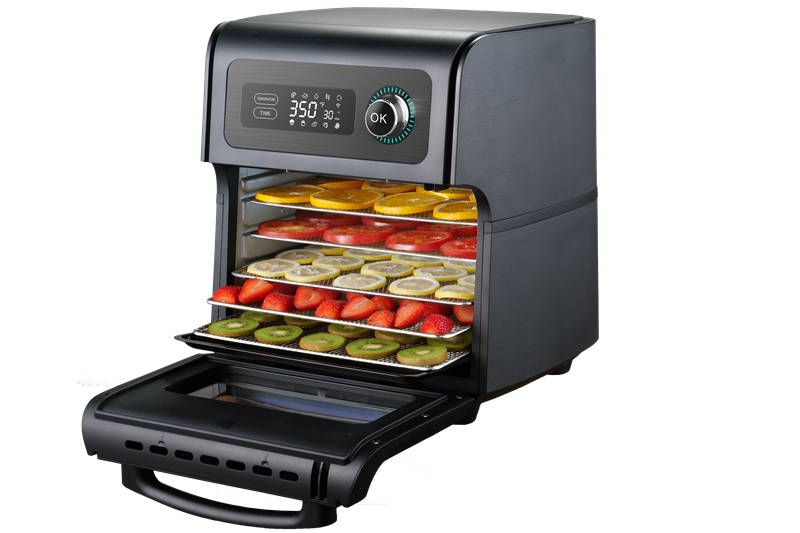
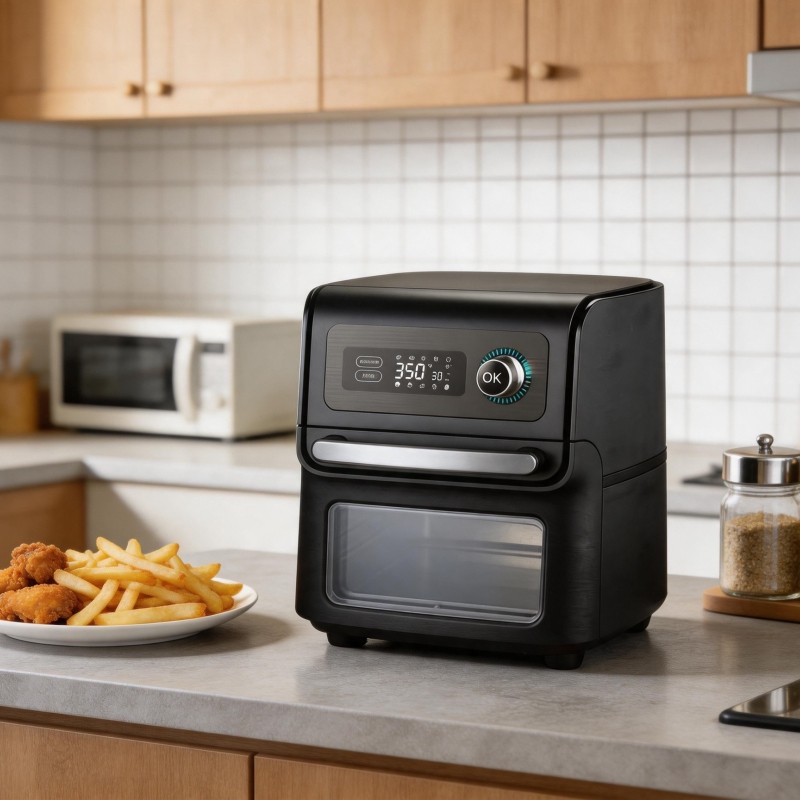
For buyers and brand owners deciding between an air fryer oven vs basket air fryer, the short version is this: basket units win on speed, crispness, and price for 1–2 person households, while air fryer ovens win on capacity, versatility, and the ability to replace multiple countertop appliances — especially in 16L-class formats that cook a full family meal in one pass. The two designs look similar from the front of the shelf, but they are engineered around different trade-offs: chamber volume, airflow intensity, heating-element layout, and cooking modes. This guide breaks down the real differences with performance, energy, and market data, then walks through what to verify when sourcing either format — including the specifications behind a 16L air fryer oven such as Kangye's KYS-116AK. If you are evaluating air fryer ovens for retail, private label, or an OEM program, this is also a sourcing primer: the same design decisions that separate a great oven-style unit from a mediocre one — airflow path, element count, digital control, and food-contact materials — are exactly the details you should confirm with your factory before committing to a container. Both formats cook with the same underlying physics: a heating element raises the temperature of air, and a fan circulates that hot air over food at high speed, driving the Maillard reaction that creates crisp, browned surfaces with little or no oil. The difference is geometry. A basket air fryer is a compact cylinder or drawer with the fan and element stacked directly above or behind the food, so airflow is intense and concentrated — think of it as a turbo-charged small convection chamber. An air fryer oven replicates a toaster oven: a horizontal rectangular cavity with elements on top (and often bottom), one or more racks, and a fan that moves air across the full chamber. That single architectural difference cascades into everything buyers care about: how much food fits, how evenly it cooks, which modes are possible, how fast it preheats, how much energy it draws, and how hard it is to clean. It also changes the supply chain: oven-style units need more sheet metal, better insulation, glass doors, and sometimes rotisserie motors, which raises BOM cost and factory complexity — one reason OEM buyers find a wider price gap between the formats than retail shelf prices suggest. Capacity is the most measurable difference. Basket air fryers typically hold 2–8 quarts (about 2–7.5L) and cook food in a single layer — stack food and you lose the airflow that makes air frying work. Oven-style air fryers range from roughly 10–26 quarts (10–25L) with multiple rack positions, letting you cook two trays at once or lay a whole chicken flat. A 16L air fryer oven such as the Kangye KYS-116AK sits at the practical sweet spot: it fits a 12-inch pizza, a whole chicken, or two levels of trays — roughly the batch capacity a 4–6 person household needs — while staying within typical countertop depth. For a family kitchen or a market where households cook multiple items per meal, the 16L class is often the difference between "air fryer as a side-dish machine" and "air fryer as the primary countertop cooker." That is precisely the positioning that has made oven-style units the faster-growing segment in the category — see the market data below. Independent tests consistently find that basket air fryers produce the crispiest results on small batches. The chamber is compact, the fan sits close to the food, and airflow is intense — testers at multiple outlets measured frozen fries done in about 12 minutes in a basket versus 16–18 minutes in an oven-style unit, with better browning on wings and breaded items. If crispness on fries and nuggets is the entire product story, a basket design is the more defensible choice. The oven format counters with three things a basket cannot do well. First, even cooking at scale: multiple heating elements and a larger chamber reduce hot spots, which matters for baking cakes, roasting vegetables, and cooking two different items on separate racks at once. Second, toasting and broiling: with top and bottom elements, an air fryer oven handles toast, bagels, and melted-cheese finishes that a single-element basket simply cannot do evenly — the fan in a basket can even blow light slices of bread around. Third, baking geometry: standard 9×9-inch pans and muffin tins fit in an oven cavity but not in a round basket. For brands selling into households that want one appliance to replace a toaster oven and an air fryer, the oven format is the honest recommendation. The engineering that separates a good air fryer oven from a cheap one is airflow management. High-velocity airflow across the full tray surface is what creates crisp exteriors in an oven format — the same principle our technical guide to the science of air frying explains in detail: a fan forces air through the heating element, and the heated air stream strips moisture from the food surface while driving the Maillard reaction. In a 16L unit, that means the element and fan assembly must be sized to move air across a much larger tray area than a basket ever sees — which is why wattage matters: a 16L air fryer oven needs roughly 1,600–1,800W to hold temperature with a full load, versus 1,200–1,500W for most baskets. Oven-style units with a bottom element (or true convection bake mode) also avoid the classic basket limitation of one-sided heating, which is why bakers and toaster-oven replacement buyers prefer them. Digital control matters here too: eight or more preset programs with a thermostat that cycles accurately — not just a mechanical timer and dial — is what makes a 16L air fryer oven consistent batch after batch. When sourcing, ask the factory for the element configuration (top + bottom vs top-only), fan CFM or airflow design, and the thermostat accuracy spec; these three items explain most performance differences between price points. Most of the health case for air frying applies to both formats, because both use rapid hot-air circulation instead of immersion in oil. Cleveland Clinic's registered dietitians note that air frying can cut calories from deep-fried foods by up to 80%, because it requires only about a tablespoon of oil, and that studies show acrylamide reductions of up to 90% versus deep frying — while honestly noting that low levels of acrylamide and cholesterol oxidation products still form in any high-heat cooking. Published food-science research (Santos et al., Deep or air frying?, 2017; Teruel et al., 2015) found air-fried French fries with roughly 70% lower fat content, better digestibility, and less vitamin C loss than deep-fried equivalents. Two honest caveats belong in any buyer's evaluation. First, an air fryer is only as healthy as the food put in it — it does not remove saturated fat from bacon or trans fats from processed wings. Second, temperature matters: a 2019 Korea Consumer Agency test of ten basket air fryers found four produced fries with acrylamide above EU reference levels when run above 200°C per instructions — a reminder that preset temperature accuracy is a real spec, not a marketing bullet. This is also why reputable OEM factories certify thermostats and test to standards like IEC 60335 rather than leaving temperature calibration to luck. Basket units typically draw less power (1,200–1,500W) and reach temperature faster, which makes them cheaper per small batch. An oven-style unit draws more (1,500–2,400W) and has a larger cavity to heat, so a single small batch costs a bit more — but if it replaces a toaster oven and shortens or eliminates main-oven use, the household math flips. At $0.12/kWh, a 1,800W 16L air fryer oven running a 25-minute cycle costs roughly $0.09; using a 2,400W full-size oven for the same task at 40 minutes costs about $0.32, and a deep fryer adds oil cost on top. Energy labeling is becoming a differentiator in retail, so sourcing units with efficient insulation and honest rated wattage is both a cost and a compliance decision. This is the basket format's clearest win. A basket air fryer has a removable, usually dishwasher-safe drawer that catches grease in one place; cleanup takes seconds. Air fryer ovens collect splatter across a wider interior — racks, crumb tray, glass door, and exposed top elements all need attention, and grease that carbonizes on elements is genuinely annoying to remove. Any brand positioning an oven-style product at families should treat easy-clean design (PFOA-free non-stick trays, removable crumb tray, dishwasher-safe racks) as a feature priority, because it is the most common negative review theme in the category. On durability, oven-style units tend to be sturdier overall — more metal, less plastic, and better insulation for thermal cycling — but the exposed heating elements and glass door add failure points. When sourcing, ask for element lifetime data, insulation class, and the certification package (IEC 60335-1/2-9, UL or equivalent for your target market), and check the hinge and door-seal quality on samples: they get the most mechanical abuse in real kitchens. Independent research firms put the global air fryer market at roughly $7–10 billion in 2026, growing at 8–9% CAGR toward $16–18 billion by the early 2030s (Future Market Insights; Persistence Market Research). Two details matter for sourcing decisions. First, basket models still lead category share — around 30% of product-type revenue per FMI, and over 54% of model-type share per PMR — which means baskets are the proven volume play. Second, the digital segment leads at about 62% of revenue, and multifunctional oven-style models are the fastest-moving premium tier, driven by kitchen-consolidation demand: consumers increasingly want one countertop appliance that air fries, bakes, toasts, and roasts. North America leads regional demand (~34–39% share), with Asia Pacific the fastest-growing region. For an importer or brand, the strategic read is straightforward: baskets defend the entry and mid price points, while 10–16L digital air fryer ovens capture the upgrade cycle and the toaster-oven replacement market. A lineup that carries both — as Kangye does with its Oven Style Air Fryer series alongside compact models — gives distributors a ladder of price points instead of a single SKU bet. Whether you order a 16L digital unit or a 4L basket, put these items on the factory checklist: For the broader sourcing process — factory audits, MOQs, mold and tooling, and quality control — our step-by-step guide to sourcing OEM kitchen appliances from China walks through the full journey, and our earlier air fryer buyer's guide compares oven-style and dual-zone basket configurations in more depth. The Kangye KYS-116AK is a 16L digital air fryer oven built around the trade-offs this guide covers: 1,800W of power matched to a 16L cavity, digital control with eight preset functions, and oven-style versatility that air fries, bakes, roasts, toasts, and reheats — enough capacity for a whole chicken, a 12-inch pizza, or two trays at once. It is the practical answer for families that want the crispness of air frying and the flexibility of a toaster oven in one countertop appliance. It depends on the household. Basket air fryers cook small batches faster and crispier and are easier to clean and cheaper. Air fryer ovens hold much more food, cook more evenly at scale, and replace a toaster oven with bake, broil, and toast modes. For 1–2 person households, a basket is usually the better buy; for families or anyone replacing multiple appliances, an oven-style 16L unit wins. A 16L unit typically fits a 12-inch pizza, a whole chicken, or two racks of trays — roughly enough for a 4–6 person family meal in one pass. That is roughly double the usable single-layer capacity of a 4–5 quart basket air fryer. Per batch, yes: it draws more wattage (1,500–2,400W vs 1,200–1,500W) and heats a larger cavity. But if it replaces a toaster oven or shortens full-size oven use, total kitchen energy can fall. At $0.12/kWh, a 25-minute 1,800W cycle costs about $0.09. Compared with deep frying, yes: air frying can cut calories by up to 80% and acrylamide by up to 90% in published studies, with about 70% less fat in French fries. It still forms some high-heat compounds, and the food you put in matters — an air fryer doesn't remove saturated fat from bacon. Basket models are the volume play — roughly 30%+ of category share and the proven entry price point. But digital oven-style units are the faster-growing premium tier and command higher ASPs. Many distributors carry both; if you start with one, match it to your market's household size and the shelf price you are targeting. Higher BOM: more sheet metal, better insulation, a glass door, top and bottom elements, often more trays and accessories, and digital controls. Basket units are simpler cylinders with a drawer. The price gap at retail ($80–$400+ vs $30–$200) reflects real manufacturing cost, not margin gouging. Planning to add air fryer ovens, basket air fryers, or a full countertop-appliance line to your product portfolio? Kangye is an OEM/ODM manufacturer of air fryers, food dehydrators, grills, pizza ovens, steam cookers, vacuum sealers, and pet appliances, with 35+ years of manufacturing experience and exports to 100+ countries. Contact our team to discuss samples, MOQs, certifications, voltage options, and private-label programs.Air Fryer Oven vs Basket Air Fryer: Which One Should You Source?
Two Designs, Two Engineering Philosophies
Capacity and Batch Size: The Case for 16L-Class Ovens
Spec
Basket Air Fryer
Air Fryer Oven (16L class)
Typical capacity
2–8 quarts (2–7.5L)
10–26 quarts (10–25L)
Batch style
Single layer; shake or toss midway
Two racks; flat foods, whole chicken, pizza
Household fit
1–2 people
4–6 people / family meals
Cooking modes
Air fry (some add roast/reheat)
Air fry, bake, toast, broil, roast, reheat — often 8+ presets
Typical wattage
1,200–1,800W
1,500–2,400W (KYS-116AK: 1,800W)
Preheat speed
2–3 minutes (small chamber)
3–5 minutes (larger chamber)
Typical price band
$30–$200
$80–$400+
Cooking Performance: An Honest Comparison
How Air Fryer Ovens Achieve Even Heat: Elements, Convection and Airflow
Health and Nutrition Evidence: What the Science Actually Says
Energy Use and Operating Cost
Cleaning, Maintenance and Durability
Market Data: Why the Oven Segment Is the Growth Story
What to Verify When Sourcing an Air Fryer Oven
Featured Product: Kangye KYS-116AK 16L Air Fryer Oven
Frequently Asked Questions
Is an air fryer oven better than a basket air fryer?
How much food can a 16L air fryer oven hold?
Does an air fryer oven use more electricity than a basket air fryer?
Are air-fried foods actually healthier?
Which format should a brand source first?
Why do air fryer ovens cost more than basket models?
Key Takeaways for Buyers