Food Dehydrator vs Air Fryer: Nutrient Retention, Texture and Energy Compared
Food Dehydrator vs Air Fryer: Nutrient Retention, Texture and Energy Compared
A food dehydrator and an air fryer are not interchangeable. A dehydrator removes moisture at low temperatures to preserve food for months, while an air fryer cooks quickly with intense hot air for crisp, low-oil meals. Choose a dehydrator for nutrient retention, shelf-stable batches and jerky; choose an air fryer for speed, crispness and everyday cooking. For importers and brands, they are complementary categories rather than substitutes, and the data below shows exactly where each one wins.
- Nutrient retention: dehydrators dry at roughly 95 to 135 °F, which preserves heat-sensitive vitamins better than air-frying temperatures (CookCube, 2026); one 2026 manufacturer analysis puts vitamin and mineral retention at up to 90% (Septree, 2026)
- Texture: dehydrators give chewy, leathery, evenly dried results; air fryers give crispy exteriors with moist interiors and can case-harden food during long drying
- Energy: air fryers draw 1,400 to 1,800 W in short bursts; dehydrators draw 300 to 600 W for hours, and dedicated units use about one-third the energy of an air fryer over a 10-hour drying cycle (HomeTechVista lab measurements, 2026)
- Jerky safety: meat must reach 160 °F (poultry 165 °F) before or during drying, per USDA FSIS guidance
- For sourcing teams: the two products solve different consumer jobs, so the strongest appliance portfolios carry both
Two Appliances, Two Different Jobs
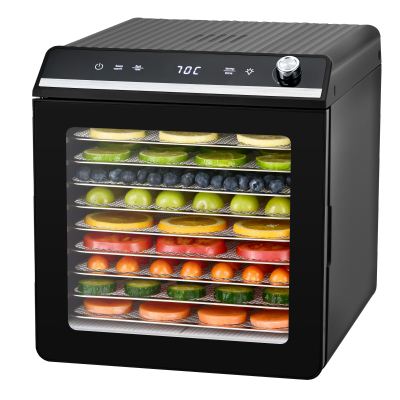
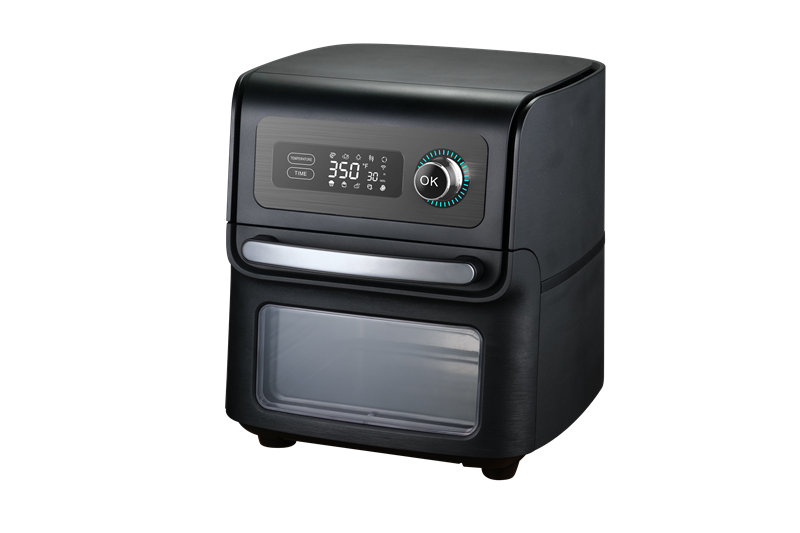
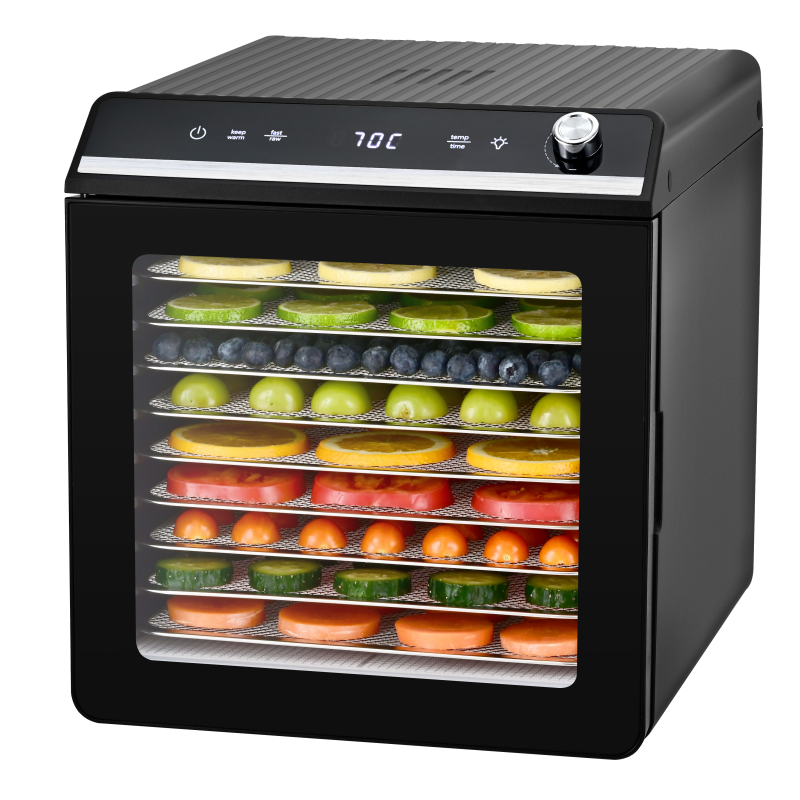
A dehydrator is a preservation tool. It circulates warm air across stacked trays at low, controlled temperatures, typically 95 to 165 °F, pulling moisture out over four to forty-eight hours until the food is shelf-stable without refrigeration (CookingDiff, 2026). An air fryer is a fast-cooking tool: it pushes 180 to 400 °F air around a small chamber to crisp surfaces in ten to thirty minutes, imitating deep-frying with little or no oil. The engineering overlap is real, because both use a fan and a heating element, but the operating points barely intersect. A detailed look at the air side is in our guide to how air fryer ovens work, and the physics of slow moisture removal is covered in the science behind food dehydration.
Nutrient Retention: Why Low and Slow Wins on Vitamins
For preserving vitamins in fruit and vegetables, the dehydrator has a clear edge. Heat-sensitive nutrients such as vitamin C degrade rapidly at air-frying temperatures, while dehydrators operate at 105 to 135 °F for fruit, low enough to maintain the nutritional density of the original produce (CookCube, 2026). A 2026 manufacturer-side analysis reaches the same conclusion, estimating that dehydrators retain up to 90% of vitamins and minerals, and notes that their low temperatures also suit raw-food diets (Septree, 2026). Higher heat also accelerates oxidation when airflow is not strictly temperature-controlled, which further erodes nutrient content in air-fried fruit (CookCube, 2026).
The air fryer keeps one genuine health claim of its own: it cuts added oil by up to 80% compared with deep-frying, which lowers fat and calorie intake in fried-style dishes (Septree, 2026). Its short cooking times also limit how long food is exposed to heat at all. So the honest framing for brands is this: the dehydrator wins the preservation-nutrition contest, while the air fryer wins the everyday low-oil-cooking contest. A dehydrator-vs-oven comparison for shoppers who already own a conventional oven is covered in food dehydrator vs oven drying.
Texture: Chewy and Leathery Versus Crispy Outside
Texture is where the two appliances produce visibly different food from identical raw material. A dehydrator's combination of steady low heat and uniform airflow removes moisture evenly, producing pliable, leathery apple slices or jerky that bends without snapping. An air fryer's high-velocity hot air does the opposite on long runs: the surface dries and hardens quickly while the interior stays moist, a failure mode known as case hardening that traps moisture inside the food (CookCube, 2026). Case-hardened jerky is not just a quality problem; the trapped moisture creates a food-safety risk during storage.
That risk connects to a hard regulatory line. USDA FSIS guidance requires meat to be heated to an internal temperature of 160 °F, and poultry to 165 °F, before or during drying to eliminate pathogens such as E. coli and Salmonella. Quality dehydrators reach this with a dedicated meat preset, and air fryers can only substitute if they have a true dehydrate mode that holds at least 160 °F for six or more hours at low fan speed (CookCube, 2026). Buyers comparing products should treat that setting as a specification item, not a nice-to-have; our food dehydrator buying guide lists the control features that matter.
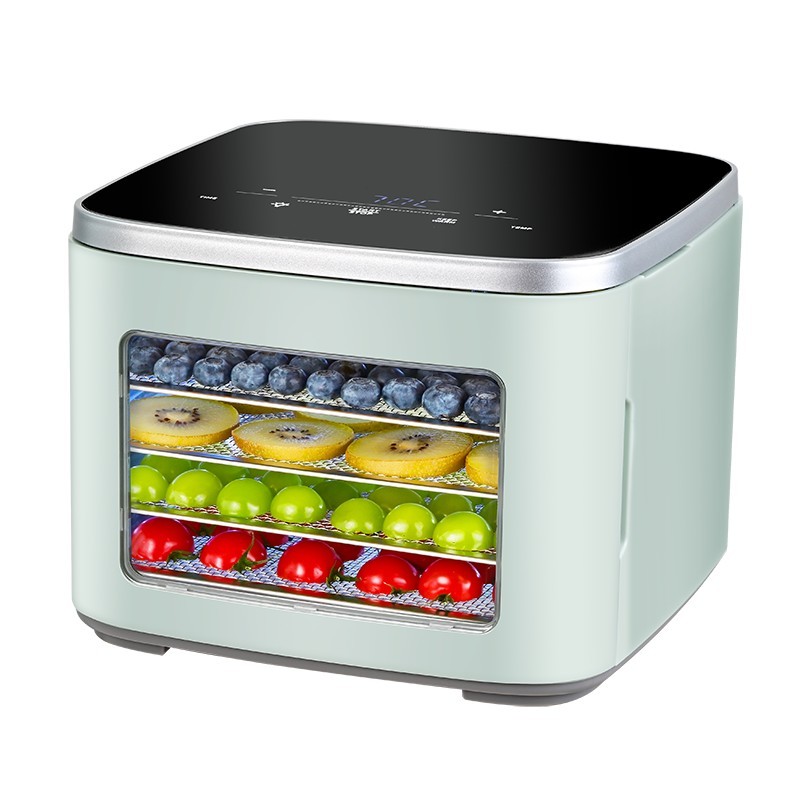
Energy Compared: Low Wattage for Hours or High Wattage for Minutes
Energy comparisons trip over one nuance: wattage tells you the draw per hour, but the job tells you the duration. Air fryers pull 1,400 to 1,800 W for ten to thirty minutes, so a typical air-fryer session consumes about 0.5 kWh (KitchenWink, 2026). Dehydrators pull only 300 to 600 W, but they run four to twelve hours per batch, so a full cycle can total several kilowatt-hours. The fair comparison is energy per unit of output, and on that basis the dedicated dehydrator wins decisively for preservation work.
| Metric | Food Dehydrator | Air Fryer |
|---|---|---|
| Typical wattage | 300 to 600 W (up to 1,000 W commercial) | 1,400 to 1,800 W |
| Temperature range | 95 to 165 °F (35 to 75 °C) | 180 to 400 °F |
| Typical cycle time | 4 to 12 hours (up to 48 h timer) | 10 to 30 minutes |
| Measured 10-hour drying cycle | 0.58 to 0.69 kWh (Nesco, Excalibur, Presto units) | 1.92 kWh (1,600 W combo unit, low-fan mode) |
| Energy cost per cycle at $0.15/kWh | about $0.09 to $0.10 measured; up to $0.75 at nameplate draw | about $0.29 for the 10-hour combo cycle; about $0.08 per 20-minute session |
| Best energy role | large, shelf-stable batches at low cost per kg | quick, small-batch snacks and meals |
Wattage and range rows: KitchenWink 2026, Septree 2026, CookingDiff 2026, CookCube 2026. Measured-cycle row and the ~$42-per-year saving for households drying ten hours per week: HomeTechVista laboratory measurements, 2026, at $0.15/kWh. Cost rows are derived from published wattage and U.S. average residential rates.
The headline number from 2026 lab testing is stark: a dedicated dehydrator finished the same ten-hour apple-slice cycle at 0.58 to 0.69 kWh, while a 1,600 W air-fryer combo needed 1.92 kWh, roughly three times the energy, because its heating element cycles on and off aggressively to hold temperature (HomeTechVista, 2026). Nameplate-based estimates land in the same territory: a 500 W dehydrator running ten hours consumes about 5 kWh, or roughly $0.75 per batch at $0.15/kWh (KitchenWink, 2026). For a brand's product copy, the defensible claim is simple: low wattage plus full trays makes the dehydrator the cheapest way to preserve food per kilogram, while the air fryer is the cheapest way to cook a single snack.
Which One Should Your Brand Source? Often, Both
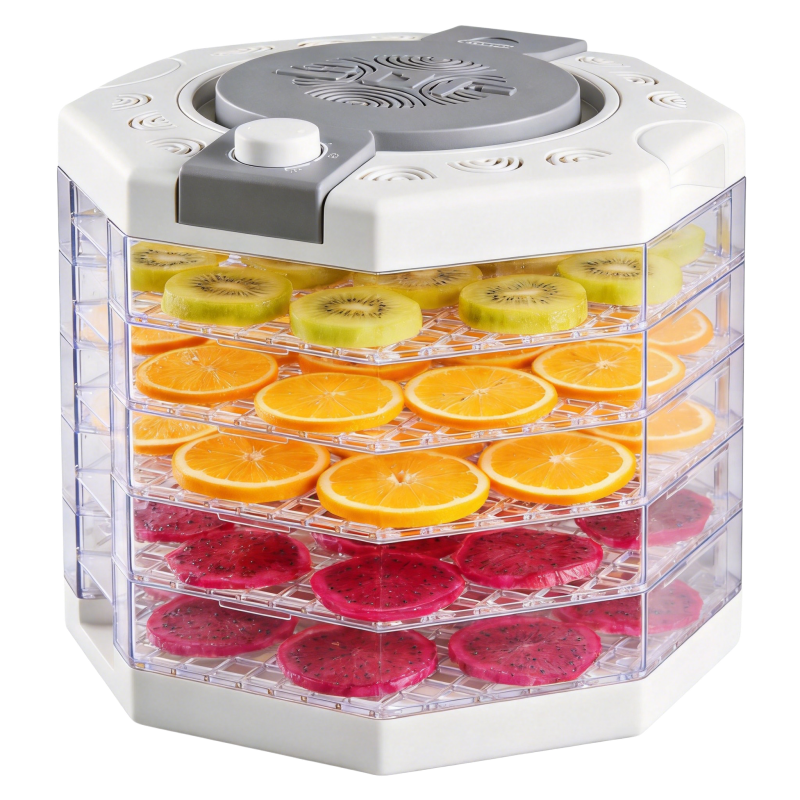
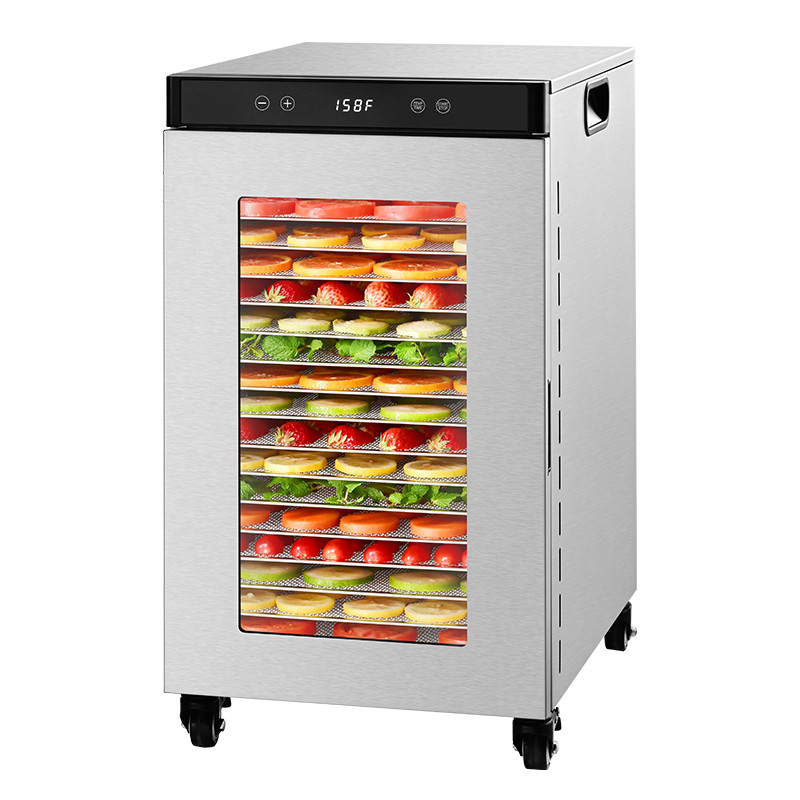
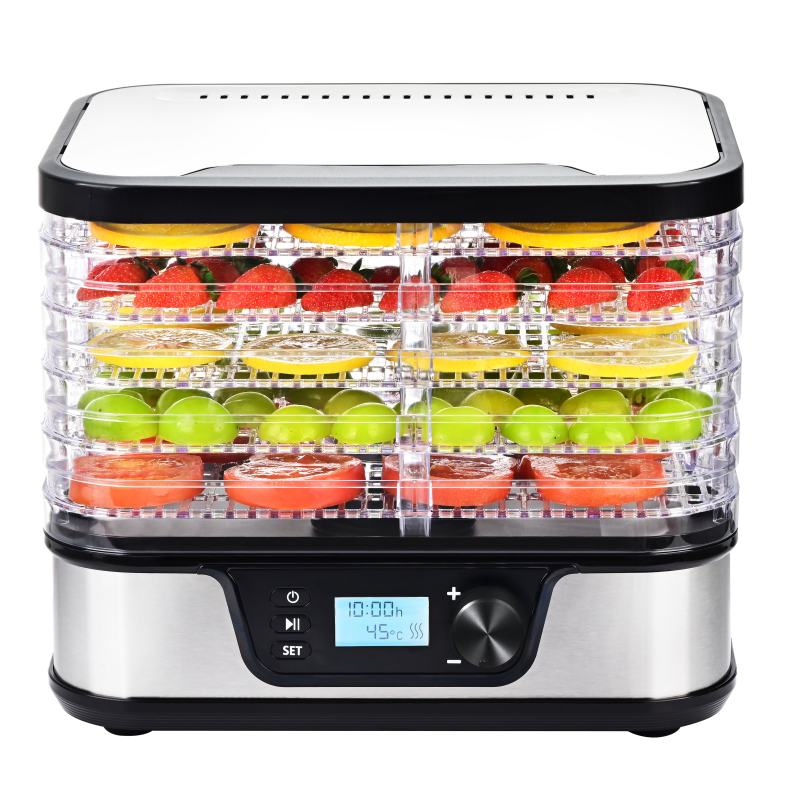
Because the two products solve different consumer jobs, the sourcing question is usually not dehydrator versus air fryer but how the two fit a portfolio. Air fryers ride a large, competitive market where differentiation comes from capacity, presets and oven-style formats. Dehydrators ride the food-preservation trend, where buyers pay premiums for tray count, stainless construction, precise 35 to 75 °C control and long 48-hour timers, features documented across the Kangye Electric range from 320 W compact units to 850 to 1,010 W commercial machines. Kangye Electric manufactures both categories under one roof at a 150,000 square meter base with a monthly capacity above 200,000 units, supported by ISO 9001 quality systems and certification schemes including CE, GS, CB, ETL, LFGB and FDA.
For teams planning a mixed container, category economics also differ: compact dehydrators ship in the thousands of units per 40 HQ container, while air fryer ovens fill containers far faster. That container arithmetic directly shapes MOQ planning, which we break down by category in our 2026 OEM MOQ guide.
Frequently Asked Questions
Can an air fryer replace a food dehydrator?
Only for small, occasional batches. Air fryers can dehydrate if they have a dedicated low-fan dehydrate mode, but their small basket limits volume and their high-velocity airflow risks case hardening. For jerky, the unit must hold at least 160 °F for six or more hours to meet USDA guidance; otherwise a dedicated dehydrator is the safer tool (CookCube, 2026).
Which appliance keeps more nutrients in dried fruit?
The dehydrator. Drying fruit at 105 to 135 °F preserves heat-sensitive vitamins such as vitamin C, while air-frying temperatures degrade them faster (CookCube, 2026). One 2026 analysis estimates dehydrators retain up to 90% of vitamins and minerals (Septree, 2026), though exact retention varies by food and cycle.
Which one costs less to run?
It depends on the job. A 20-minute air-fryer session uses about 0.5 kWh (KitchenWink, 2026), cheaper than any drying cycle. But per kilogram of preserved food, the dehydrator wins: dedicated units measured 0.58 to 0.69 kWh per 10-hour cycle versus 1.92 kWh for an air-fryer combo, saving about $42 per year at ten hours of weekly use (HomeTechVista, 2026).
What should importers check when sourcing both categories?
For dehydrators: temperature span down to 35 °C, timer length, heating position and tray material. For air fryers: wattage, preset count and chamber capacity. Then confirm certifications for the target market and per-model container loads to plan MOQ. Our buying guide walks through the dehydrator checklist in detail.
Sources and Data Notes
- CookCube, "Is an Air Fryer Same as a Dehydrator?", 2026: 1,500 to 1,800 W air fryer draw versus 500 W dehydrators; vitamin C degradation at air-frying temperatures; case-hardening risk; 160 °F for six or more hours as the jerky threshold.
- Septree, "Dehydrator vs Air Fryer: Which One Is Best for Your Kitchen?", 2026: dehydrator 300 to 600 W versus air fryer 1,400 to 1,800 W; up to 90% vitamin and mineral retention; air fryer oil reduction up to 80%; temperature and cycle comparisons.
- CookingDiff, "Dehydrator vs Air Fryer: Which Is Better for Dehydrating Foods?", 2026: dehydrator operating range 95 to 165 °F versus air fryer 180 to 400 °F; capacity and energy-efficiency framing.
- KitchenWink, "Does a Dehydrator Consume a Lot of Electricity?", 2026: typical 400 to 600 W draw; 500 W x 10 h = 5 kWh, about $0.75 per batch at $0.15/kWh; air fryer about 0.5 kWh per 20-minute use.
- HomeTechVista, "Most Energy-Efficient Dryers for Home Kitchens", 2026: laboratory measurements of 0.58 to 0.69 kWh per 10-hour cycle for dedicated dehydrators versus 1.92 kWh for a 1,600 W air-fryer combo; estimated $42 per year saving at 10 h/week and $0.15/kWh.
- USDA FSIS, jerky and dried meat safety guidance: heat meat to 160 °F internal temperature (165 °F for poultry) before or during drying.
- Kangye Electric product specification sheets, 2026: KYS-329 (320 to 380 W), KYS-315 (600 to 700 W), KYS-500A/R (850 to 1,010 W), 35 to 75 °C digital control, 48-hour timers, container-load data.
Industry ranges are cross-verified from independent comparison and testing content published in 2026; measured-cycle figures come from third-party laboratory testing and will vary with model, load and ambient conditions. Kangye figures reflect company-published specification sheets. Confirm final specifications for your target market with the Kangye Electric team before ordering.