Food Dehydrator vs Oven Drying: Which Method Gives Better Results?
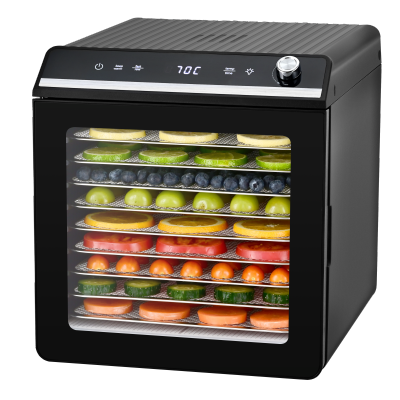
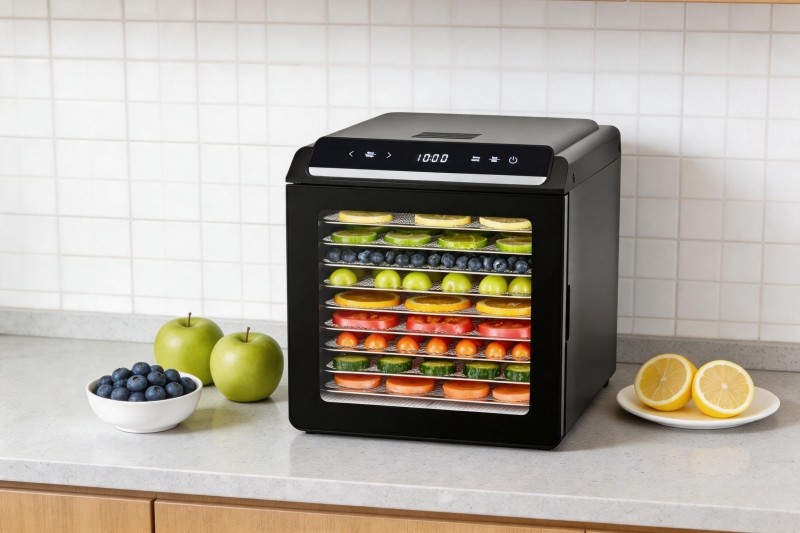
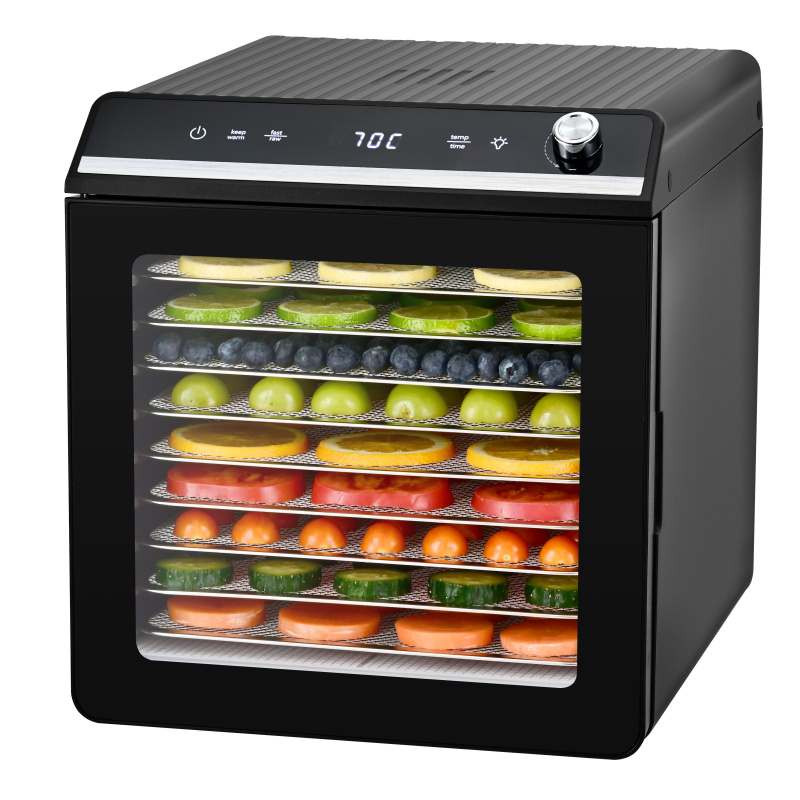
The honest answer: for anything beyond an occasional small batch, a dedicated food dehydrator produces better results than an oven — faster, safer, more energy-efficient, and with more consistent texture and nutrient retention. Ovens can technically dry food, but their minimum temperature usually sits at 150–170°F (65–77°C), above the 95–140°F (35–60°C) window where most fruits, vegetables, and herbs should be dried. That temperature mismatch causes case hardening, nutrient loss, and uneven results. This guide compares the two methods head-to-head with real temperature, cost, and timing data, then shows you what to look for when sourcing a dehydrator — whether for a home kitchen or a private-label brand. If you are evaluating food dehydrators as a buyer, importer, or brand owner, this comparison is also a sourcing primer: the same engineering factors that make dehydrators beat ovens — precise low-temperature control, airflow design, tray capacity, and timer accuracy — are exactly the specifications you should verify with your factory before placing an order. Dehydration is a low-temperature process. According to Penn State Extension, oven drying only works if the appliance can maintain about 140°F (60°C) — the sweet spot for most foods. The problem is that most residential ovens have minimum settings between 150°F and 200°F (65–93°C), and many "Keep Warm" modes bottom out around 170°F (77°C). A good electric food dehydrator gives you digital control in precise increments across this whole range. Kangye's dehydrator family, for example, spans 35–75°C with 48-hour timers — a range that covers herbs, fruit, vegetables, and jerky from one unit. An oven simply cannot do this without constant door-propping, an external thermometer, and manual tray rotation. When an oven runs too hot, food develops a hard, dry exterior while the inside stays moist — a condition called case hardening. The sealed shell traps moisture, creating anaerobic conditions where mold and bacteria can grow. Kansas State University Extension warns that case-hardened food may look dry on the surface but spoil within weeks, posing a real food safety risk. Oven-dried apple slices and jerky are the most common casualties: they come out darker, tougher, and often still damp in the center. A dehydrator's low, stable heat with continuous airflow dries food evenly from the surface inward, avoiding case hardening entirely. This is the single most important quality difference between the two methods — and it is also why serious home preservers and jerky producers consistently choose a dedicated machine. The oven looks "free" because you already own it, but the electricity bill tells a different story. Ovens draw 2,000–5,000W; dehydrators draw roughly 300–700W. At typical US rates of about $0.12/kWh, the cost difference is dramatic. Oven-dried jerky costs roughly four times more than dehydrator-dried jerky in electricity alone. A $75–$150 entry-level dehydrator typically pays for itself in energy savings after 30–40 lbs of processed food — about one summer's garden surplus or ten batches of jerky. If you dehydrate more than a couple of times a month, the oven is quietly costing you money. Dehydrators are built around airflow: a dedicated fan moves warm, dry air horizontally across stacked trays, pulling moisture away from every surface at once. Ovens rely on passive convection, and once you prop the door open to vent moisture, you also let heat escape — which is why oven drying typically takes 2–3 times longer and needs tray rotation every 30–60 minutes. Independent side-by-side tests found that ovens finish some foods faster (one New Zealand test showed the oven 10% quicker on average) but produce inconsistent batches: banana chips overcooked, light kale leaves blown into clumps by the fan, and hotter spots scorching edges. The dehydrator won on consistency, supervision-free operation, noise, and kitchen heat. For commercial or private-label production — where every batch must look identical — consistency is non-negotiable. Heat-sensitive vitamins — especially vitamin A and vitamin C — degrade rapidly above 140°F (60°C). Running a dehydration cycle at 150–170°F in an oven measurably reduces nutrient content compared with a dehydrator holding 120–140°F. Flavor compounds are equally fragile: high heat volatilizes the aromatic molecules that give dried herbs, mushrooms, and fruit their concentrated taste, producing a dull, cooked flavor instead of the bright, sweet concentration that low-temperature drying preserves. This is why serious mushroom enthusiasts, for example, dry shiitake and morels at 110–125°F rather than the 150–170°F an oven forces on them — the umami difference is noticeable. Colorado State University Extension's tested guidance for mushrooms is 140°F for 8–10 hours, which a temperature-accurate dehydrator can hold for the entire cycle without intervention. A standard dehydrator stacks 4 to 10+ trays, letting you process several pounds in a single cycle. An oven fits one or two baking sheets, which means multiple 8–12 hour cycles for the same yield. For anyone preserving a garden harvest, making jerky weekly, or launching a snack brand, capacity is the difference between a weekend project and a full-time chore. Kangye's lineup spans compact 4-tray home units up to 20–22-tray commercial dehydrators — see our commercial food dehydrator buying guide for a capacity-by-business breakdown. Being fair to the oven: if you dehydrate less than three times a year, want to test a recipe before buying equipment, or only need a single small batch, the oven is a workable stopgap — provided you prop the door open, use an external oven thermometer, and rotate trays diligently. Herbs and small quantities of low-risk foods can turn out acceptably. The trade-offs are time, energy, attention, and the case-hardening risk described above. But for regular batches, food safety, consistency, or any commercial intent, a food dehydrator is the right tool. This is not a marketing claim — it is the conclusion of extension-service guidance and repeated side-by-side tests: the oven is not a shortcut, it is a workaround. Whether you are buying for home use or sourcing for your brand, verify these specifications before you commit: For a deeper dive into the engineering, read our guide to food dehydrator heating technologies and the science of food dehydration. If you are choosing between home models, our home food dehydrator selection guide walks through tray count, heating type, and power. And for market context, see the global food dehydrator market outlook. The Kangye KYS-315 10-Tray Food Dehydrator is a workhorse for both home and light-commercial use: 600–700W of even heat, digital 35–75°C temperature control, a 48-hour timer with auto shut-off, and BPA-free stainless steel racks. It dries fruit, vegetables, herbs, and jerky in consistent, case-hardening-free batches — exactly the low-temperature precision that ovens cannot match. Technically yes, but it is risky. USDA guidance for jerky requires reaching a safe internal temperature (160°F for beef) before drying, and most ovens cannot hold the 140–165°F drying band without constant monitoring. Above that range, you get case hardening — a dry exterior with moisture trapped inside, which is exactly the condition food-safety experts warn about. A dehydrator holds the required temperature steadily for the full 8–12 hour cycle, which is why jerky makers overwhelmingly prefer them. A typical 600W dehydrator costs roughly $0.29–$0.58 per batch at $0.12/kWh, while an electric oven (2,000–5,000W) costs $1.32–$6.60 for the same batch — a 3–4x penalty. Over regular use, a dehydrator typically pays for itself in electricity savings within 6–12 months. Two reasons: high oven heat (150°F+) caramelizes and darkens sugars, and it volatilizes aromatic flavor compounds. Low-temperature dehydrator drying (120–140°F for fruit) preserves both color and concentrated sweetness. Vitamin A and C also degrade faster above 140°F. 120–140°F (50–60°C) is the standard band for most vegetables — low enough to preserve color and nutrients, high enough to remove moisture in 6–12 hours. Slice uniformly (about 6mm / 1/4 inch) so trays finish at the same time. Usually yes, by 2–3x, because a dehydrator's built-in fan continuously removes moisture while holding a stable low temperature. Ovens lose heat every time you open the door to vent steam, stretching drying time. Some foods (like fruit leather) can dry faster in a hot oven, but at the cost of quality and consistency. Planning to add food dehydrators to your product line or private-label program? Kangye is an OEM/ODM manufacturer of food dehydrators and a full range of kitchen and pet appliances, with certification-ready compliance packages. Contact our team to discuss samples, MOQs, voltage options, and customization.Food Dehydrator vs Oven Drying: Which Method Gives Better Results?
The Critical Difference: Temperature Control
Safe Dehydration Temperature Ranges
Case Hardening: The Food Safety Risk of Oven Drying
Energy Costs: The 3–4x Penalty of Using Your Oven
Appliance
Power Draw
Jerky Batch (~4 hrs)
Apples (~8 hrs)
Food Dehydrator
~600W
~$0.29
~$0.58
Electric Oven (door propped open)
2,000–5,000W
$1.32–$3.30
$2.64–$6.60
Drying Time and Uniformity: Airflow Decides
Nutrient and Flavor Retention
Capacity and Batch Size
When Is an Oven Good Enough? An Honest Assessment
What to Look for When Choosing a Food Dehydrator
Featured Product: Kangye KYS-315 10-Tray Food Dehydrator
Frequently Asked Questions
Can I use my oven to make beef jerky instead of buying a dehydrator?
How much electricity does a food dehydrator use compared with an oven?
Why does oven-dried fruit look darker and taste less sweet?
What is the best temperature to dehydrate vegetables?
Do dehydrators really dry food faster than ovens?
Key Takeaways for Buyers