Chamber vs External Vacuum Sealer: Which Is Right for Your Business?
Quick Answer: Which Vacuum Sealer Type Fits Your Business?
Chamber vacuum sealers place the entire bag inside a sealed chamber and evacuate the whole chamber before sealing, which lets them handle liquids, hit near-absolute vacuum, and use cheap smooth bags — at the price of a bigger footprint and a higher initial investment. External vacuum sealers clamp the bag mouth, suck air out through the open end, and cost far less up front, but they require embossed bags, reach lower vacuum levels, and struggle with anything wet. This guide compares the two systems across the metrics that actually decide a business purchase — vacuum depth, liquid capability, bag cost per cycle, throughput, maintenance, and total cost of ownership — and closes with a decision matrix for restaurants, butchers, central kitchens, and brands sourcing commercial vacuum sealers.
Key takeaway: the choice is not "better vs worse" — it is "which failure mode can your business afford?" A chamber machine costs more today but pays back through cheaper bags, liquid handling, and higher throughput within 6 to 12 months at moderate volume. An external sealer is the rational entry point for dry-goods-only, low-volume, or space-constrained operations. Understanding the engineering behind each type turns a price decision into a profitability decision.
How Chamber and External Vacuum Sealers Actually Work
Both machines remove oxygen from a package, but they do it through fundamentally different physics — and that difference cascades into every other spec on the datasheet.
| Mechanism | Chamber Sealer | External (Suction) Sealer |
|---|---|---|
| Package position | Entire bag sits inside a sealed chamber | Bag stays outside; only the mouth is clamped |
| Evacuation | Air removed from chamber and bag simultaneously | Pump draws air through the open bag end |
| Sealing moment | Seal bar fires while chamber is still under vacuum | Seal fires after evacuation, at atmospheric pressure |
| Bag requirement | Smooth pouches (no texture needed) | Embossed or channel bags that keep an air path open |
| Typical vacuum level | Up to -0.99 bar (near absolute vacuum) | -0.6 to -0.8 bar (home); ~-0.95 bar (pro) |
Because a chamber machine evacuates the space around the bag as well as the bag itself, the pressure inside and outside the pouch equalizes during the cycle. That single design choice is why chamber sealers can package soups, sauces, and marinades without liquid being dragged into the vacuum pump, and why they can use inexpensive smooth pouches. An external sealer, by contrast, needs the bag's interior texture to act as a wicking channel so air can travel from the far end of the pouch to the pump — which is exactly why embossed bags cost more and why liquids break the process.
For the deeper science of how evacuation and heat sealing create an airtight package, our vacuum sealer technology guide walks through the full cycle step by step.
Vacuum Depth: What the Numbers Really Mean for Shelf Life
Vacuum depth is measured as the residual pressure inside the package, and it directly controls how much oxygen remains to feed spoilage organisms. Atmospheric air holds about 21% oxygen; vacuum packaging typically brings residual oxygen down to 0.1–1%. The difference between machine types is meaningful:
- External sealers: consumer-grade units reach about -0.6 to -0.8 bar; professional external models push toward -0.95 bar, still leaving more residual air in textured-bag channels.
- Chamber sealers: typically achieve -0.99 bar, approaching the practical limit of vacuum packaging — a fuller oxygen purge and a tighter, more consistent seal.
The practical consequence is measured in shelf life, not marketing language. Based on USDA/FSIS guidance and professional food-safety references, refrigerated vacuum-packed beef or lamb lasts roughly 10–14 days versus 3–5 days unpackaged; raw poultry moves from 1–2 days to 5–7 days; cooked meats from 3–5 days to 10–14 days; hard cheese from 1–2 weeks to 4–8 weeks. Frozen, vacuum-sealed red meat extends from about 6 months to 2–3 years. These are conservative figures — actual results depend on starting quality, hygiene, and holding temperature below 4°C (40°F).
Honest framing: vacuum packaging does not sterilize food, and a deeper vacuum does not automatically make food safer. Removing oxygen suppresses aerobic spoilage bacteria, mold, and fat oxidation, but it creates an anaerobic environment where Clostridium botulinum — a dangerous pathogen — can grow if temperature control fails. The cold chain below 4°C remains the only real safety barrier, which is why regulators in the EU (NVWA) and the US (FDA) treat vacuum-packed perishables as a cold-chain-critical process. We cover this in detail in the food-safety section below.
For a fuller breakdown of how reduced oxygen extends the shelf life of different foods — and the biology behind it — see our science of vacuum sealing and food preservation article.
Liquid Handling: The Capability That Divides the Two Types
This is the single most common reason a business outgrows an external sealer. If your product line includes soups, stocks, sauces, marinades, brined vegetables, cured meats, seafood with purge, or any item that releases juice under vacuum, an external suction machine will repeatedly fail at the same point: liquid is drawn toward the pump before the seal fires, contaminating the sealing area, producing weak or leaky seals, and eventually damaging the pump. The workaround — freezing the product solid before packing — adds a step, a freezer, and a delay that commercial kitchens rarely tolerate.
Chamber machines solve this by equalizing pressure across the bag wall: with the chamber already under vacuum, there is no pressure gradient pulling liquid toward the seal bar. Professional-grade units add liquid-control features — sensors that detect evaporation and advance the cycle to sealing before overflow reaches the pump. This is why chamber vacuum sealers are the standard in commercial kitchens: they reliably package the wet, saucy, high-moisture products that define professional food service.
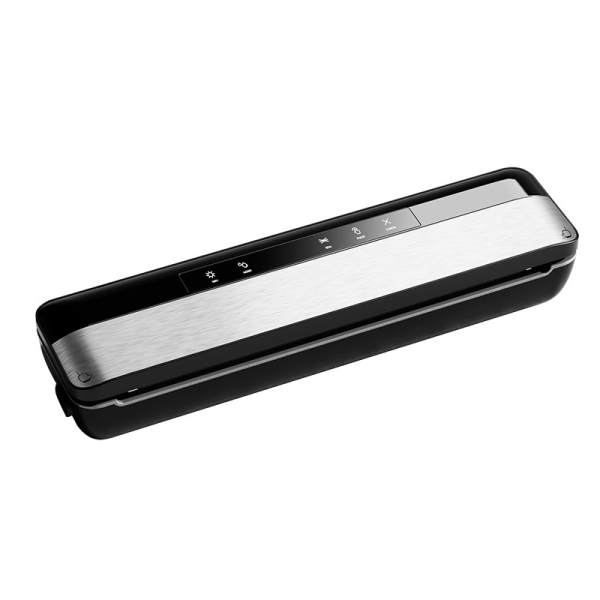
That does not mean external sealers are obsolete. For dry solids — coffee, nuts, dried fruit, jerky, dehydrated snacks, spices, hardware, electronics — an external sealer delivers a perfectly adequate vacuum with a fraction of the cost and footprint. The key is matching the machine to the wettest product you will ever seal, not the average one.
Bag Costs and Consumables: The Hidden Operating Expense
Upfront machine price gets all the attention, but the consumable line is where the two types diverge most dramatically over a year of operation. The engineering reason is simple: external sealers require embossed (textured) bags, whose channels keep the air path open during suction; chamber sealers accept smooth pouches, which are cheaper to manufacture.
| Cost Driver | External Sealer | Chamber Sealer |
|---|---|---|
| Bag type required | Embossed / channel bags | Smooth pouches |
| Typical bag cost | ≈ $0.15 per bag | ≈ $0.05 per bag |
| Cost per 500 bags/day | $75/day | $25/day |
| Annual difference (500/day) | ≈ $18,250 more for the external machine per year | |
Industry estimates put the savings from switching to chamber-style smooth pouches at up to 80% of bag cost. A central kitchen packing 500 ready-to-eat meals a day would save roughly $50 per day — about $18,250 per year — enough to pay for a high-quality chamber machine within months, not years. Even a modest operation packing six pouches a day can save roughly $1,000 a year in bags alone. This is the arithmetic that reframes the "expensive" chamber machine as the cheaper long-term choice.
Cycle Speed and Throughput: Bags per Hour in Real Operations
Throughput compounds the consumable advantage. A typical chamber cycle runs 20 to 60 seconds depending on pump capacity and chamber size — but because multiple bags can be loaded per cycle and sealed simultaneously, the output per hour multiplies:
- Industrial chamber systems reach 800–1,200 sealed items per hour, roughly three times the throughput of a single external sealer.
- Double-chamber machines alternate loading and sealing between two chambers, eliminating idle time between cycles — the most common upgrade for growing production lines.
- External sealers process one bag at a time, with each cycle requiring manual bag alignment against the nozzle — slower per bag and more dependent on operator skill.
For a butcher packing large dry cuts, an external machine's open workspace may still win on ergonomics. For a café batching liquid sauces, a chamber machine's enclosed control is non-negotiable. The right question is not "which type is faster" but "which type matches the peak workflow of your busiest hour."
Footprint, Price and Maintenance: The Total Cost of Ownership
Beyond the purchase price, four costs decide the real economics: space, energy, consumables, and maintenance.
| Factor | External Sealer | Chamber Sealer |
|---|---|---|
| Typical purchase price | $150 – $400 (commercial) | $400 – $2,000+ (countertop to floor) |
| Footprint | ~16–20 in wide, 8–12 in deep | ~20–24 in wide, 18–22 in deep, 12–15 in tall (countertop); larger floor models |
| Build | Often plastic components | All-stainless-steel construction standard in commercial models |
| Maintenance | Seal-strip and gasket replacement | Pump oil changes (oil-sealed pumps), chamber cleaning, seal strips |
| Consumable cost per bag | Higher (embossed bags) | Lower (smooth pouches) |
The honest trade-off: chamber machines demand more bench space and a maintenance routine (particularly oil changes for oil-sealed pumps, typically every few months depending on duty), while external machines are compact enough to live in a drawer and require almost no maintenance beyond cleaning and seal-strip replacement. For operations with fewer than 50 bags per day of dry product, an external sealer remains the rational starting point — the payback math simply does not favor a chamber machine at that volume. For any operation that expects growth, handles moisture, or runs more than a few hundred bags a week, the chamber machine's lower consumable cost and higher throughput typically offset the higher initial price within 6 to 12 months.
When you evaluate electrical requirements for either type — voltage, frequency, and power ratings that vary by destination market — our electrical ratings guide covers the specs that matter for import and compliance.
Food Safety: Cold Chain, Botulism Risk and Compliance
Vacuum packaging is a preservation technique, not a sterilization process, and regulators treat it accordingly. Three rules define safe operation for either machine type:
- Cool before packing. Never vacuum-pack warm product. Professional guidance (NVWA) requires cooling hot food from 70°C to 21°C within two hours, then to 4°C within four hours, before evacuation. Warm product raises in-bag temperature, promotes condensation, and creates conditions where anaerobic pathogens can multiply.
- Respect the cold chain. FDA food-code guidance flags Clostridium botulinum growth risk above 3.3°C in reduced-oxygen packaging; EU NVWA standards require storage below 4°C. The refrigerator is the safety barrier — the vacuum bag is not.
- Set vacuum level by product. Use ~99% vacuum for meat and firm vegetables; reduce to 80–90% for soft products like tomatoes and fish to avoid crushing them against the bag.
Compliance obligations extend beyond the machine. In the EU, food-contact plastics fall under Regulation (EU) 10/2011; in the US, packaging materials must meet FDA 21 CFR food-contact requirements, and vacuum-packed ready-to-eat products sold commercially may require validated process and HACCP records. Two 2026 regulatory signals matter to buyers: the EU Packaging and Packaging Waste Regulation (PPWR) is phasing in PFAS limits with a full ban on PFAS in food-contact packaging effective August 12, 2026, and the US FDA Food Traceability Rule has its compliance date extended to July 20, 2028, tightening recordkeeping for certain vacuum-packed foods. For the full certification and documentation picture across destination markets, our 2026 export compliance guide is the reference.
Market Data: Why Vacuum Packaging Is a Growth Category
The numbers explain why this decision is worth getting right. Commercial vacuum packaging equipment is a steadily growing market, driven by shelf-life extension, food-safety regulation, and automation:
| Market Metric | Data | Source |
|---|---|---|
| Commercial automatic vacuum packaging machines | 2025 $929M → 2032 $1.44B, CAGR 6.5% | PW Consulting, 2026 |
| Commercial vacuum sealer market | 2025 $2.47B → 2032 $3.59B, CAGR 5.5% | GII Research, 2026 |
| Vacuum packaging machinery (all types) | 2025 $4.13B → 2032 $6.18B, CAGR 5.9% | pmarketresearch, 2026 |
| Chamber machines' share of vacuum packaging machinery | 40.0% in 2025 (largest type segment) | pmarketresearch, 2026 |
| Food & beverage application share | 60% of vacuum packaging machinery demand | pmarketresearch, 2026 |
| US packaged meat using vacuum technology | ≈ 70% of packaged meat products | Industry analysis, 2026 |
| US ready-meal producers using chamber machines | > 41% | Global Growth Insights, 2026 |
Regional demand concentrates in Asia-Pacific (~41%), Europe (~29%), and North America, and the US market alone operates 36,000+ food-processing facilities and 16,000+ meat and poultry plants. For importers and private-label brands, the takeaway is that vacuum sealers are not a commodity — they are a category with rising commercial demand, a clear chamber/external product split, and growing regulatory complexity that favors manufacturers with real compliance infrastructure.
Decision Matrix: Which Business Should Buy Which Machine
| Business Profile | Recommended Type | Key Reason |
|---|---|---|
| Small café / restaurant, low volume, mostly dry goods | External sealer or small tabletop chamber | Budget-friendly, compact footprint, adequate for low daily volume |
| Butcher shop / seafood market (medium volume, juicy products) | Tabletop or floor chamber sealer | Handles purge and liquids; lower bag cost at volume |
| Central kitchen / ready-meal producer (high volume, sauces) | Chamber sealer (single or double) | Liquid capability, 800–1,200 bags/hr class throughput, big consumable savings |
| Sous vide restaurant / cook-chill operation | Chamber sealer | Consistent low-oxygen packs, no bag flotation, repeatable sealing |
| Dehydrated snacks / dry-goods producer | External sealer (or chamber if scaling) | Dry product suits suction design; lowest entry cost |
| Retail / e-commerce packer, few bags per day | External sealer | Minimal investment until volume justifies a chamber unit |
If your product line includes liquids or any moist item, the chamber machine is the defensible choice; if you seal dry solids at low volume, the external machine is the rational one. Businesses that plan to grow should buy the type their next-year volume demands — because the bag-cost and throughput math only improves as volume rises.
Sourcing Considerations for OEM Buyers
For brands importing vacuum sealers, the type decision sits inside a broader sourcing decision. Five points separate a reliable supplier from a cheap one:
- Certification stack per model: CE/GS/ETL for electrical safety, RoHS/REACH for chemicals, and LFGB/FDA declarations for food-contact materials — verified per model, not per factory.
- Dual-voltage flexibility: models configurable for 120V/60Hz (North America) and 220–240V/50–60Hz (EU/Asia) reduce SKU complexity and inventory risk.
- Pump quality and service life: the pump is the heart of any vacuum sealer; ask for pump brand, duty rating, and maintenance intervals before committing to a container order.
- Modes that match your market: dry/moist/seal/pulse modes expand usable product ranges; pulse mode specifically protects delicate items and is a legitimate differentiator in retail.
- Bag supply: OEM partners that can also supply compatible pouches simplify the consumable line and protect your margin story.
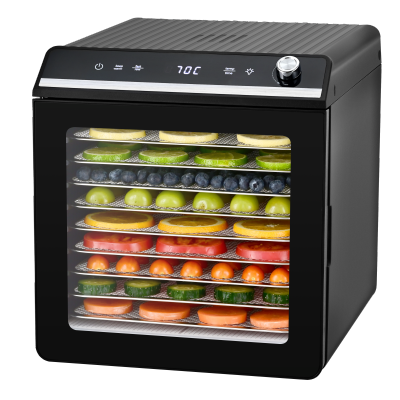
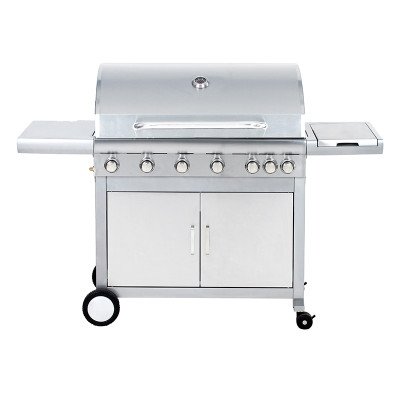
Kangye, the manufacturer behind this guide, is an OEM/ODM appliance factory in Guangdong, China, with 35+ years of manufacturing experience and exports to 100+ countries. Our catalog spans food dehydrators, BBQ grills, pizza ovens, air fryers, steam cookers, vacuum sealers, indoor electric grills, and pet feeders and fountains. For the end-to-end process of factory selection, sampling, and payment terms, our OEM sourcing guide is the deeper reference.
Featured Product: Kangye KYS-960 Series Vacuum Sealer
Featured Product: Kangye KYS-960 Series — Compact External Vacuum Sealer
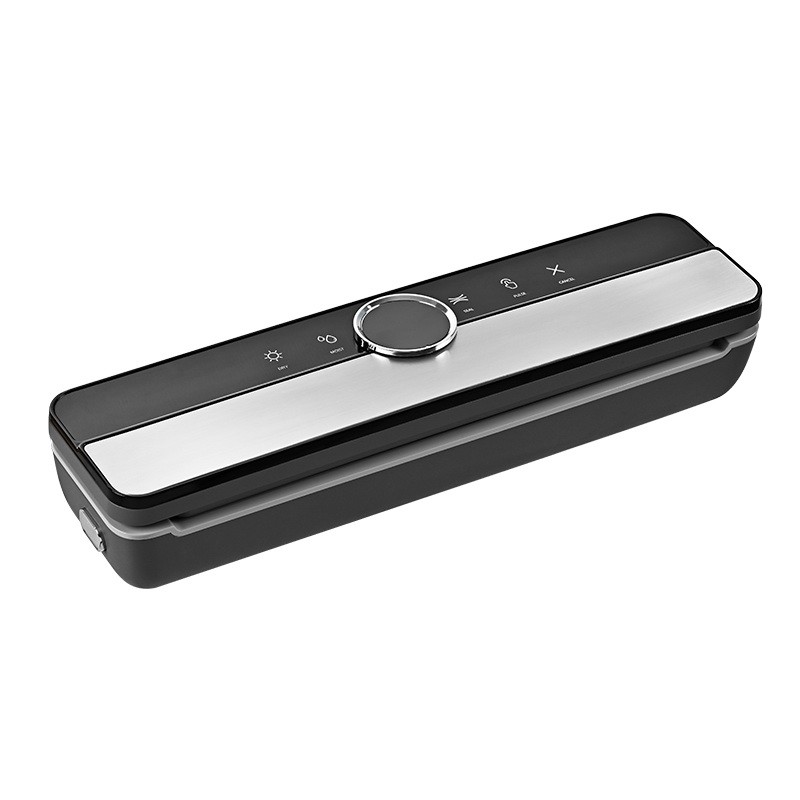
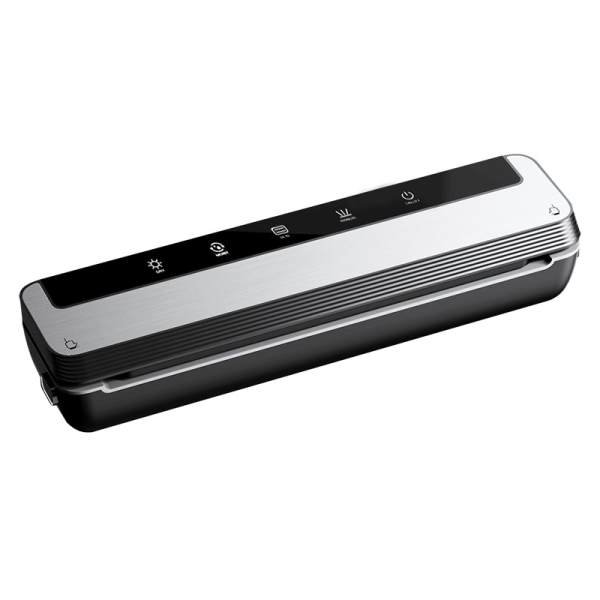
The KYS-960 Series is a compact automatic external vacuum sealer that fits the dry-goods and low-volume profiles in this guide: a 130W motor delivering ≥50 kPa vacuum in an 8.5-second rapid cycle, with a 30 cm sealing length and four modes — Dry / Moist / Seal / Pulse — for flexible packaging of snacks, dried foods, coffee, and delicate items.
- 130W, 220–240V 50/60Hz or 120V 60Hz — dual-voltage ready for export
- 8.5s rapid vacuum; 30 cm max sealing length
- Dry / Moist / Seal / Pulse modes — pulse protects delicate foods
- Compact 393 × 100 × 80 mm footprint; includes 5 vacuum bags
- MOQ: 3,051 pcs / 20GP; 6,102 pcs / 40GP; 6,957 pcs / 40HQ
Kangye's full vacuum sealer program also supports OEM/ODM customization — brand colorways, panel labels, packaging, and certification packages — so the same platform can serve retail brands, distributors, and commercial-equipment lines. For a broader look at what to check when sourcing any vacuum sealer, our vacuum sealer sourcing guide for professionals covers feature-by-feature selection.
FAQ: Chamber vs External Vacuum Sealer, Answered
Can an external vacuum sealer handle liquids like soups and marinades?
In practice, no. During suction, liquid is drawn toward the nozzle, contaminating the sealing area and pump and producing weak seals. The common workaround — freezing the product solid before packing — adds cost and a step that commercial kitchens rarely accept. Liquid packaging is the defining capability of a chamber vacuum sealer.
Is a chamber vacuum sealer harder to operate than an external one?
Quite the opposite. Chamber machines are extremely easy to use: place the bag in the chamber, close the lid, and press start — the seal fires automatically under vacuum. External sealers require manual bag alignment against the suction nozzle, and improper positioning causes weak seals or liquid ingress. The real barriers to chamber machines are size and price, not complexity.
Why are chamber sealer bags cheaper than external sealer bags?
External sealers need embossed (textured) bags whose channels keep an air path open during suction; the embossing process and thicker material make them more expensive — roughly $0.15 per bag versus about $0.05 for smooth chamber pouches. At 500 bags a day the difference is about $18,250 per year in favor of the chamber machine.
Does vacuum sealing make food safe forever?
No. Vacuum packaging suppresses aerobic spoilage organisms and oxidation but does not sterilize food, and it creates anaerobic conditions where Clostridium botulinum can grow above about 3.3°C. Cold-chain discipline below 4°C is the only real safety barrier — treat the vacuum bag as a quality and waste tool, never as a substitute for temperature control.
When should a business choose an external sealer over a chamber machine?
When you seal only dry solids, run low volume (under ~50 bags a day), have tight upfront budget, or cannot spare bench space for a chamber unit. External sealers are compact, inexpensive, and perfectly adequate for dry-goods packaging — they are the rational entry point until volume or moisture justifies a chamber machine.
Can I source a vacuum sealer line under my own brand?
Yes. OEM/ODM manufacturers like Kangye (Guangdong, China; 35+ years; exports to 100+ countries) build private-label vacuum sealers with brand colorways, panel labels, packaging, dual-voltage configurations, and per-model certification packages — including food-contact declarations for the bags and accessories that ship with the unit.
Summary: Chamber vs External — The Decision in One Paragraph
Summary: the chamber vs external vacuum sealer decision comes down to liquid capability, vacuum depth, consumable cost, and throughput. Chamber machines handle wet products, reach ~-0.99 bar, cut bag costs by up to 80%, and scale to 800–1,200 bags per hour — at the price of a larger footprint and a higher initial investment that typically pays back in 6–12 months at moderate volume. External sealers are cheaper, compact, and fine for dry goods and low volume, but they require embossed bags, reach lower vacuum, and fail on liquids. For restaurants, butchers, central kitchens, and sous vide operations, the chamber machine is the defensible standard; for dry-goods producers, retailers, and first-time buyers, the external sealer remains the rational entry point. And for brands sourcing either type, per-model certifications, dual-voltage options, and pump quality separate reliable suppliers from the rest.
- Buy on wettest product, daily volume, and growth plan — not on sticker price.
- Remember the cold chain is the safety barrier, never the bag.
- Verify per-model CE/GS/ETL, RoHS/REACH, LFGB/FDA before container orders.
- Pair vacuum sealing with dehydration for the strongest shelf-life and waste-reduction story in the kitchen.
Sourcing a vacuum sealer line — external or chamber — for your brand? Kangye is an OEM/ODM manufacturer based in Guangdong, China, with 35+ years of manufacturing experience and exports to 100+ countries. Our product line covers food dehydrators, BBQ grills, pizza ovens, air fryers, steam cookers, vacuum sealers, indoor electric grills, and pet feeders and water fountains. Contact our team to discuss MOQs, dual-voltage configurations, certification packages, and private label programs for your market.