Fall and Holiday Season Kitchen Appliance Sales: What Importers Should Prepare
Quick Answer: How Should Importers Prepare for Fall and Holiday Kitchen Appliance Sales?
Importers should treat the fall and holiday season — roughly October through December, anchored by Black Friday and Cyber Monday — as the single largest sales window of the year for kitchen appliances, and reverse-engineer every upstream decision from it: product selection, factory orders, production lead times, ocean freight, compliance testing, and promotional pricing. The National Retail Federation (NRF) forecast holiday retail sales of $1.01–1.02 trillion for November–December 2025, up 3.7–4.2% year over year, and small kitchen appliances historically spike to their annual search and sales peak in December as consumers buy gifts and upgrade kitchens before holiday cooking. Because production in China runs 35–60 days, ocean freight adds 25–40 days to the US West or East Coast, and port congestion spikes in late fall, a unit that must sit on a US shelf by mid-October needs its purchase order placed no later than late August — which is exactly where importers should be right now.
Key takeaway: the holiday kitchen appliance season is not a November problem — it is an August–September sourcing problem. The retailers that sell out in December ordered in August. Product choice, compliance, price points, and container planning all have hard deadlines months before the first Black Friday doorbuster, and importers who miss the window are left paying air freight or watching competitors take the shelf space.
Why Q4 Is the Kitchen Appliance Super-Season
The fourth quarter concentrates more kitchen appliance demand than any other period, and the reasons are structural, not accidental. First, holiday gifting: countertop appliances — air fryers, food steamers, electric grills, mixers, and coffee machines — are consistently among the most-wanted practical gifts for families, young adults, and first-time homeowners. Second, holiday cooking: Thanksgiving and Christmas put enormous pressure on kitchen capacity, so households buy larger steamers, extra grills, and multi-cookers to expand what one oven can do. Third, weather and home time: as temperatures drop, families cook indoors more, which lifts demand for indoor electric grills and steam cookers; and in warmer climates, fall tailgating and outdoor entertaining keep outdoor grills selling deep into the fourth quarter.
Search data confirms the pattern. Accio's analysis of "small kitchen appliances" search interest shows demand reaching its annual peak (index 100) in December 2025, while "smart home appliances" peaked at 57 in the same month — a reminder that practical, giftable, mid-price countertop appliances, not just premium smart devices, carry the holiday volume. SaleHoo's market insights show kitchen gadgets and small appliances peaking in December, with demand in the $20–90 price band for gadgets and $40–130 for coffee makers and small appliances — price points that support both impulse buys and considered holiday purchases. In short, if you sell kitchen appliances into North America or Europe, Q4 is not one sales event among many; it is the event.
The 2026 Holiday Season in Numbers
Here is what the data says about the size and shape of the fall and holiday window importers are planning against. These figures come from the National Retail Federation (NRF), NRF/CNBC Retail Monitor, Circana, and market research tracked through mid-2026:
| Metric | Data Point | Source |
|---|---|---|
| US holiday retail sales (Nov–Dec 2025) | $1.01–1.02 trillion, +3.7–4.2% YoY | NRF forecast |
| Average household holiday spend (2025) | $890.49 (2nd highest ever); ~$628 on gifts | NRF / Prosper Insights & Analytics |
| Consumers starting shopping before November | 42% | NRF / Prosper survey |
| Consumers doing most shopping on Thanksgiving weekend | 63% (up from 59%) | NRF / Prosper survey |
| Consumers planning to shop online | 55% (top channel) | NRF / Prosper survey |
| Consumers expecting prices to rise on tariffs | 85% | NRF / Prosper survey |
| Global small kitchen appliances market (2026) | $65.46B → $84.63B by 2031 (CAGR 5.27%) | Industry research via Accio |
| US electronics & appliance stores, Nov 2025 | +1.01% YoY; core retail +4.66% YoY | NRF/CNBC Retail Monitor |
Two numbers deserve special attention from importers. The first is 85% of consumers expecting higher prices because of tariffs — this is the pricing environment your landed-cost and MAP strategy has to survive. The second is the market-size trajectory: the global small kitchen appliance market is projected to grow from about $65.46 billion in 2026 to $84.63 billion by 2031 (CAGR 5.27%), with the growth concentrated in the same categories that dominate holiday gifting. Both trends point the same way: demand is expanding, price sensitivity is high, and differentiation matters more than ever. Our 2026–2027 US kitchen appliance market guide digs deeper into the macro picture.
The 2026 Shopping Calendar: Key Dates and What They Mean for Stock
Holiday retail runs on a fixed calendar, and each date shifts demand in a predictable way. For 2026, the key windows are:
| Event | 2026 Dates | Typical Discount Depth | Implication for Importers |
|---|---|---|---|
| Prime Big Deal Days | October (2-day event) | 15–25% | First Q4 demand test; previews holiday pricing; early sell-through signal |
| Black Friday | Nov 27 | 30–50% | Deepest discounts of the year; countertop appliances are traffic drivers |
| Cyber Monday | Nov 30 | 20–30% | Online-only depth on electronics-adjacent items (multi-cookers, sous vide) |
| Christmas gifting peak | Dec 1–24 | Full price + bundles | Highest unit velocity; gift packaging and "stocking stuffer" SKUs matter |
| Boxing Day / post-Christmas | Dec 26 – Jan | 20–35% | Clearance and gift-card redemption; second (smaller) demand wave |
Tracked price data supports the calendar: BuyWhere's 12-month price history across 296M+ products shows Black Friday 2026 (Nov 28–Dec 5) as the annual low for most small kitchen appliances — a Ninja Foodi 8-quart pressure cooker with air fryer dropped to $139 (30% off $199), a Vitamix A3500 to $499 (23% off), and a Cuisinart 14-cup food processor to $129 (35% off). Prime Day in July delivered the year's second-best prices. The practical takeaway: retailers will demand aggressive cost from suppliers on exactly these categories, weeks before the first promotion runs — if your landed cost cannot support a 30% street discount, you either lose the promotion slot or eat the margin.
One more calendar note: with 42% of consumers starting before November and 63% concentrating on Thanksgiving weekend, the "holiday season" now effectively runs from mid-October to Christmas Eve. Stock that lands after Thanksgiving weekend misses the peak; stock that lands before mid-October carries the whole window.
Which Kitchen Appliance Categories Carry the Holiday Volume
Not all appliances sell equally in Q4. The categories that consistently drive holiday volume — and that importers should weight their container plans toward — are:
- Air fryers and air fryer ovens — the perennial holiday hero, driven by gifting and New Year health resolutions; search interest peaks every December (Accio).
- Electric food steamers and multi-tier steam cookers — holiday cooking capacity: a 3-tier steamer cooks vegetables, seafood, and dumplings simultaneously, freeing oven space for the turkey; health-oriented gifting keeps the category climbing.
- Indoor electric grills — winter grilling without braving the cold; smokeless-positioned models are a top holiday gift for apartments and condos.
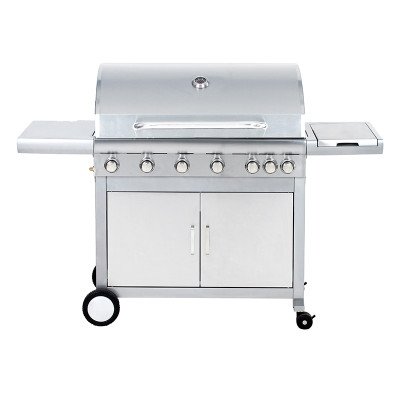
- Outdoor electric grills — tailgating and fall entertaining extend the outdoor cooking season well into Q4, especially in the South and Southwest.
- Coffee machines, multi-cookers, and stand mixers — premium gift items where Black Friday drives the year's deepest discounts (KitchenAid, Breville, Ninja all hit annual lows in November).
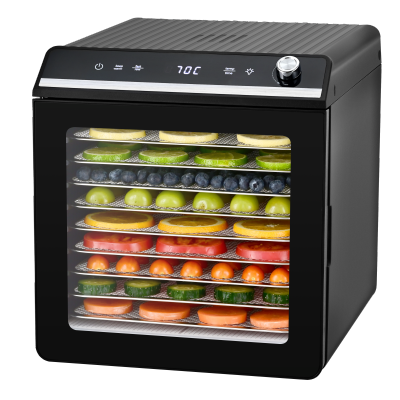
- Health-oriented appliances — food dehydrators and air fryers ride the "healthy holiday" narrative; NIQ data shows 74% of consumers lean toward health-focused features in tech products.
Notice that two of Kangye's featured holiday lines — the KYS-203A outdoor electric grill and the KYS-303A 3-tier electric food steamer — sit squarely in these categories: one for fall entertaining and tailgating, one for holiday cooking capacity and health gifting. The category-level logic matters more than individual models: pick lines that serve at least two holiday drivers (gifting + cooking + health), and you diversify your Q4 risk.
The Sourcing Timeline: Working Backward from the Shelf
This is the section that pays for the whole article. A kitchen appliance built in Guangdong, China, does not teleport to a US shelf. The realistic lead-time chain for a typical OEM/ODM order is:
| Step | Typical Duration | Notes |
|---|---|---|
| Sample approval / pre-production | 1–2 weeks | Gold samples, packaging artwork, label compliance review |
| Production (standard order) | 35–45 days | Kangye standard lead time; 45–60 days for custom molds or first ODM runs |
| QC inspection + loading | 3–5 days | Pre-shipment inspection (PSI) before container loading |
| Ocean freight, China → US West Coast | 18–25 days | East Coast typically 30–40 days via Panama; carrier delays in Q4 add 1–2 weeks |
| US customs clearance | 3–7 days | Customs exams, FDA sampling for food-contact items, documentation holds |
| Distribution to retail | 3–10 days | Warehouse receipt, QC, slotting, ship to stores or FBA |
Add the optimistic chain: 7 + 35 + 4 + 20 + 4 + 5 = 75 days from PO to shelf — and that assumes no holidays, no port congestion, and no customs delays. Working backward from a mid-October shelf date: order in late July to early August. Working backward from a comfortable November 1 inventory position: order by late August. The market consensus among sourcing guides — including the seasonal guidance published by appliance OEMs and wholesale distributors — is that Q4 stock must be booked by late August to mid-September at the latest, and ideally earlier for first-time orders with new suppliers. Air freight as a rescue option costs 3–5× ocean rates per unit and erases the margin on exactly the price-promoted items retailers are demanding. Our step-by-step OEM sourcing guide covers the procurement process in full.
Compliance, Certification, and Packaging Checks to Run Now
The holiday window is also the compliance deadline window — and the cost of failure is not a fine, it is a recalled product during peak sales. Before you commit container space, verify four things:
- Market certifications — UL/ETL for North America (or CSA), CE/GS for Europe, plus FCC for wireless or electronics-adjacent features. Certification testing adds 4–8 weeks, so a unit ordered in September with un-tested compliance is a January product. Kangye's 35+ years of manufacturing includes certification packages (CE, GS, ETL, CB, BSCI, RoHS, REACH, LFGB, FDA, SAA) across its lines.
- Voltage and plug configuration — 120V/60Hz for North America, 220–240V/50Hz for Europe; the plug type and wattage labeling must match the destination market. Our electrical ratings guide explains why this single spec determines market fit.
- Tariff classification and landed cost — confirm the HS code, duty rate, and any Section 301 tariff exposure before pricing; the tariff environment has been volatile, and 85% of consumers already expect prices to rise. Our tariff and trade policy guide tracks the current landscape.
- Gift-ready packaging — holiday buyers frequently gift without extra wrapping; retail-ready cartons with clean graphics, correct warning labels, and multilingual instructions (English/Spanish/French for North America) reduce returns and support the "shelf-ready" requirements many retailers enforce.
Compliance is the most unforgiving deadline in the chain because it cannot be compressed — a certification file is not a sample you can courier. Start it in parallel with sample approval, not after production. Our export compliance guide is the deeper reference for the certification matrix and documentation package.
Inventory and Pricing Strategy for the Holiday Window
Once the product and timeline are locked, the remaining decisions are commercial. Three principles hold across the holiday appliance market:
- Plan for 30–50% promotional depth — Black Friday street discounts of 30–50% are the market standard (PerkCalendar, BuyWhere price tracking), so your cost structure must tolerate a 30% off-shelf price and still clear a margin. If it cannot, you are not buying the product — you are buying shelf space.
- Weight your SKU mix toward the proven holiday drivers — air fryers, steamers, multi-cookers, and indoor grills — and keep a small "hero SKU" with an aggressive price to pull traffic, supported by higher-margin companions. Private-label operators can execute this mix without paying brand premiums; our private label guide walks through the brand-side playbook.
- Be honest about demand risk — over-ordering on a hot category leaves you holding containers in January, when appliance demand drops to its annual trough (February–March). The rational hedge is a mid-sized first order with a confirmed reorder option, not a maximum-size bet. Note the structural trend in China's own market: 2026 H1 kitchen small appliance retail fell 4.8% in value and 14.6% in volume while average price rose 11.5% — the global market is shifting from "sell more units" to "sell better units," and holiday buyers increasingly want quality, energy efficiency, and multifunction at a fair price (Gen X shoppers, the highest-spending demographic, prioritize durability and energy savings, 79%).
On the promotional calendar, hold some inventory for the post-Christmas wave: Boxing Day and January clearance capture gift-card redemption and New Year health-resolution buyers, at 20–35% discounts. A December sell-out is a good problem; a mid-December sell-out with six weeks of demand ahead is a missed-forecast problem.
Featured Products: Kangye KYS-203A Outdoor Electric Grill & KYS-303A 3-Tier Electric Food Steamer
Featured Products: KYS-203A Outdoor Electric Grill & KYS-303A 3-Tier Food Steamer
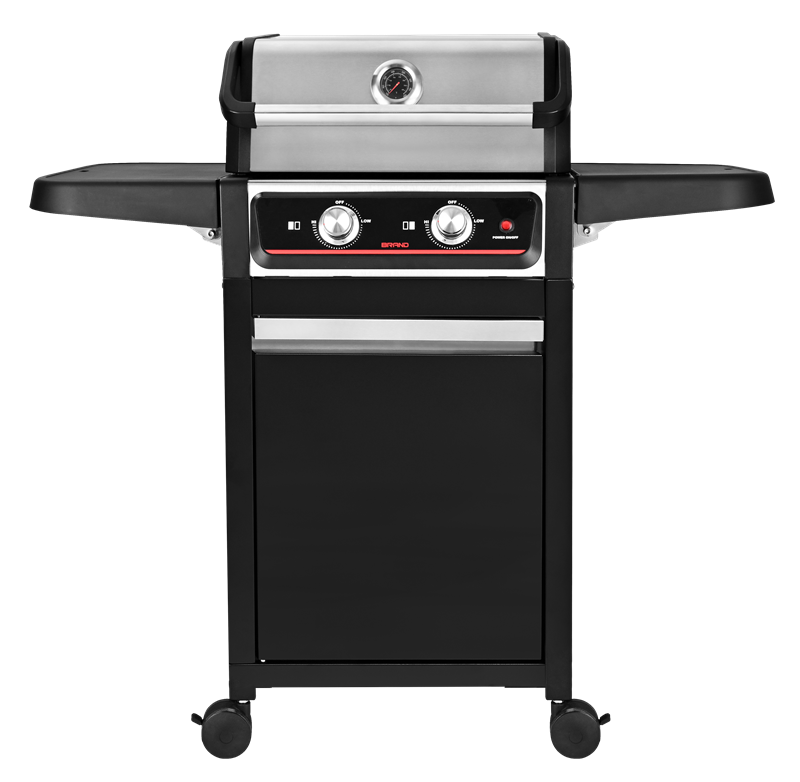
The KYS-203A outdoor electric grill is built for the fall tailgating and holiday entertaining season: 1600–3000W power (120V or 220–240V options), an adjustable 100–330°C temperature range for everything from low-and-slow to a proper sear, and a 1750 cm² grilling surface with a stainless steel lid, folding side tables, locking casters, and an enamel drip plate. No propane tank, no flare-ups from gas — just plug-and-grill versatility that suits patios, balconies, and campsites.
- 1600–3000W; 100–330°C adjustable temperature control
- 1750 cm² grilling area; stainless steel lid
- Folding side tables + locking wheels; enamel drip plate
- Electric — no gas, suitable for decks and apartments
- MOQ from 155 pcs (20GP); OEM/ODM ready
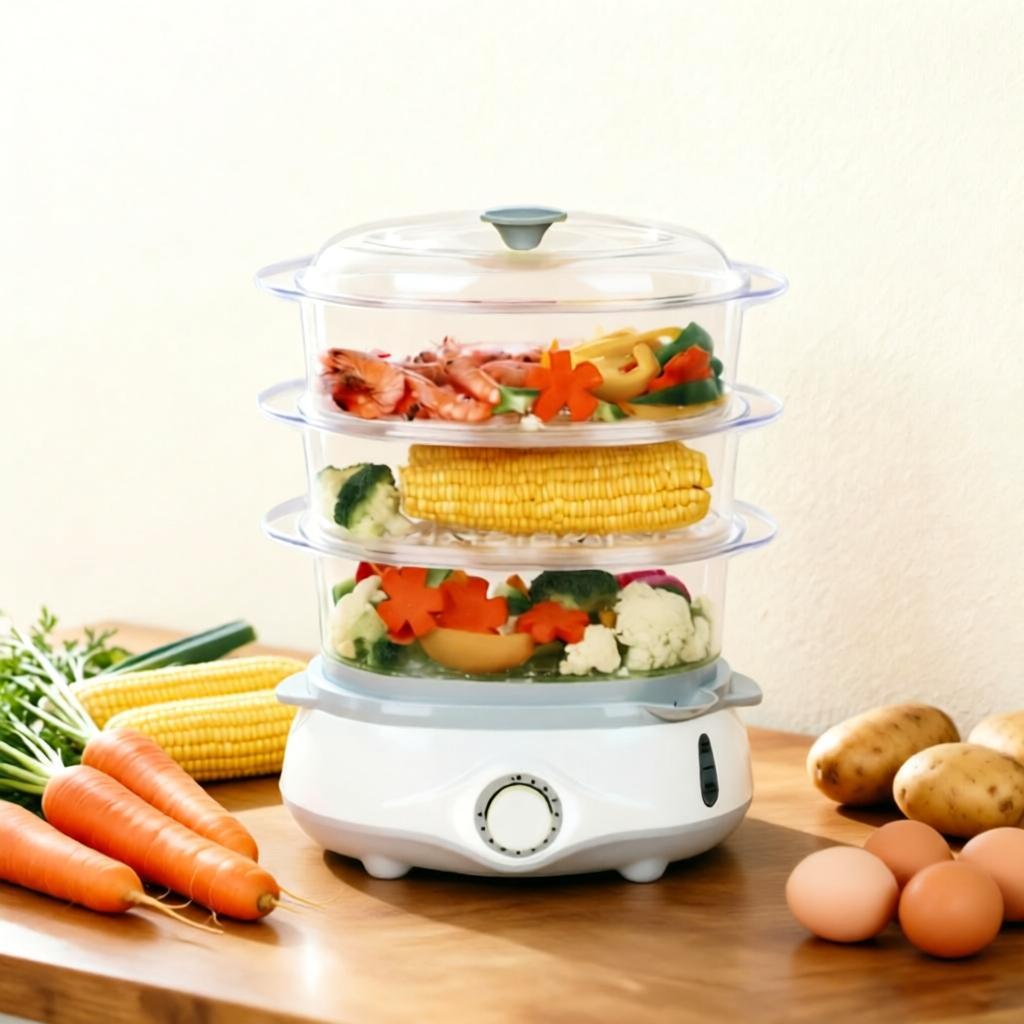
The KYS-303A 3-tier electric food steamer (11L) is the holiday-cooking workhorse: three stacked tiers let a family cook vegetables, seafood, eggs, and dumplings simultaneously — freeing oven space for the turkey — with a 60-minute timer and auto shut-off for safety. It runs on 840–1000W (220–240V) or 800W (120V) and measures a compact 330 × 235 × 420 mm, fitting tight counters. BPA-free food-contact materials and a transparent design make it a health-conscious gift that also happens to be one of the most used appliances in the kitchen during November.
- 3 tiers / 11L capacity — whole-holiday-meal cooking
- 60-minute timer with auto shut-off
- 840–1000W (220–240V) / 800W (120V) options
- Compact 330 × 235 × 420 mm; BPA-free materials
- MOQ from 1,428 pcs (20GP); private label ready
FAQ: Fall and Holiday Kitchen Appliance Sales, Answered
When should I place my Q4 appliance order with a Chinese factory?
Work backward from a mid-October shelf date: sample approval (1–2 weeks) + production (35–45 days standard, 45–60 days custom) + ocean freight (20–40 days depending on coast) + customs and distribution (1–2 weeks) totals roughly 75–100 days. In practice that means ordering by late July to late August for a comfortable holiday inventory position; first-time orders with a new supplier should be earlier.
Which kitchen appliances sell best during the holidays?
Air fryers and air fryer ovens, multi-tier electric food steamers, indoor electric grills, coffee machines, and multi-cookers lead holiday volume — all driven by gifting, holiday cooking capacity, and health resolutions. Search interest for small kitchen appliances peaks in December every year, and Black Friday price data shows the deepest discounts concentrated in exactly these categories.
How much discount do retailers demand at Black Friday?
Tracked price histories show typical street discounts of 30–50% on small kitchen appliances at Black Friday, with Prime Day (July) at 25–45% and Cyber Monday at 20–30%. Your landed-cost structure should tolerate a 30% off-shelf price and still clear margin, or the promotional slot goes to a competitor.
What certifications do I need before selling kitchen appliances in the US or EU?
For North America, UL or ETL (plus FCC for electronics); for the EU, CE with GS as a quality differentiator, plus RoHS/REACH material compliance and food-contact compliance (LFGB or FDA) for anything touching food. Certification testing typically takes 4–8 weeks and cannot be compressed, so start it during sample approval — not after production.
Should I worry about tariffs when pricing holiday inventory?
Yes. Confirm your HS code, duty rate, and any Section 301 exposure before pricing, because the tariff environment has been volatile and 85% of US consumers already expect prices to rise. Lock landed cost early, and keep the tariff classification file with your compliance package.
What can an OEM/ODM partner do to help me prepare for the holiday season?
A good partner compresses the risky parts of the timeline: parallel certification support, pre-shipment inspection before loading, dual-voltage and plug options matched to your market, private-label packaging and retail-ready cartons, and honest production scheduling that protects your Q4 slot. Kangye, an OEM/ODM manufacturer in Guangdong, China with 35+ years of experience exporting to 100+ countries, schedules Q4 holiday production from August to keep containers on the water before the fall congestion.
Summary: The Holiday Season Is Won in August
Summary: the fall and holiday kitchen appliance season is the largest, most predictable demand window of the year — US holiday retail is forecast near $1 trillion+, small kitchen appliance search peaks every December, and Black Friday discounts of 30–50% define the commercial game. For importers, the leverage point is timing: a 75–100 day lead-time chain means Q4 stock must be ordered by late August, with compliance, certifications, voltage, tariffs, and gift-ready packaging all locked in parallel. Choose categories that serve multiple holiday drivers (gifting, cooking capacity, health), weight your SKU mix toward proven winners, and keep a mid-sized first order with reorder option to avoid January overstock. The retailers who win December ordered in August — and so should you.
- Order Q4 stock by late August to mid-September at the latest (75–100 day chain).
- Focus on air fryers, steamers, indoor grills, and multi-cookers — the proven holiday drivers.
- Build cost structure that survives 30–50% promotional depth.
- Start certifications and tariff classification during sample approval, not after production.
- Keep a post-Christmas wave (Boxing Day + New Year) in the inventory plan.
Planning your fall and holiday kitchen appliance program? Kangye is an OEM/ODM manufacturer based in Guangdong, China, with 35+ years of manufacturing experience and exports to 100+ countries. Our product line covers outdoor and indoor electric grills, 3-tier food steamers, food dehydrators, BBQ grills, pizza ovens, air fryers, vacuum sealers, and pet feeders and water fountains — with dual-voltage options, certification packages (CE, GS, ETL, CB, RoHS, REACH, LFGB, FDA, SAA), private label programs, and production slots scheduled now for Q4 delivery. Contact our team to lock in container space and lead times before the fall rush.