Home / All / Buyer's Guide / Private Label Kitchen Appliances: The Complete Guide for Brands
Private Label Kitchen Appliances: The Complete Guide for Brands
Aug 16,2026
Quick Answer: Is Private Label the Right Model for Your Kitchen Appliance Brand?
Yes — for most importers and online sellers in 2026, private label is the fastest route from "no product" to "own brand." The evidence is now overwhelming: US store brands reached a record 23.8% unit market share in the first half of 2026 (Circana/PLMA), private label commands about 28.5% of kitchen tools and gadgets sales on Amazon (Simporter), and in Europe's largest appliance markets private label already holds 39-51% of retail sales. A private label program means you sell a factory-built appliance under your own brand name — with your logo, packaging, colors, and certifications — while the manufacturer handles engineering, production, and compliance. This guide walks through the business model, the market data, the OEM vs ODM decision, the customization levers, the honest risks, and a step-by-step sourcing checklist for brands entering the category in 2026.
Key takeaway for brands: the 2026 private label playbook is not "slap a logo on a white box." It is a four-part system — product category selection, factory partnership model (OEM vs ODM), brand customization depth, and a verified compliance stack — executed with a manufacturer that can do all four under one roof. Brands that treat private label as a pure price play lose to discounters; brands that treat it as a differentiation play win.
Why Private Label Is Winning in 2026: The Market Data
Private label's rise is no longer a recession footnote — it is a structural reset in consumer behavior. The data from the first half of 2026 is unusually consistent across the US and Europe:
Record US store brand share: store brand unit sales rose 0.2% while national brands declined 0.5% in the six months ending June 14, lifting private label unit share to an all-time high of 23.8%, according to PLMA's midyear report based on Circana data. In 166 food categories and 164 nonfood categories tracked, 52% and 39% respectively recorded private label unit growth. Pet care led all departments at +4.8%.
Loyalty is collapsing: the share of consumers who say they only buy national brands fell from 21% to 10% in under a year, and more than 90% of shoppers changed their behavior because of rising costs, per a Zappi survey. Nearly 70% of consumers would accept fewer options in exchange for lower prices.
Europe is even further ahead: private label already accounts for 51% of grocery retail sales in Switzerland, 44% in Spain, 42% in the UK, and 39% in Germany, with Western European markets averaging 35-45% (Wonnda, 2026). Small kitchen appliances are one of the fastest-growing private label categories within those markets — Germany alone generates about 20.8% of European kitchen appliance revenue.
Online, private label is a leader: in the kitchen tools and gadgets category, private label holds a dominant 28.5% market share with an "A" grade for momentum, ahead of OXO (15.2%) and Cuisinart (10.8%) — while Amazon captures about 28.7% of the channel, making marketplace-first brands the fastest path to scale (Simporter, April 2026).
Health and value are the twin demand drivers: NIQ reports 74% of consumers lean toward tech products with health-focused functions and 44% buy appliances specifically for healthier cooking — a structural tailwind for categories like air fryers, food dehydrators, steam cookers, and indoor electric grills.
Market Signal
2026 Data
Source
What It Means for Private Label
US store brand unit share
23.8% (record high)
PLMA / Circana, H1 2026
Retailers will keep opening shelf space to own-brand appliances
US dollar share
21.2%
PLMA / Circana
Value positioning is accepted at scale; premium tiers now feasible
National-brand-only shoppers
21% → 10% in 1 year
Zappi
Consumers are willing to switch — the door is open for new brands
Private label share, kitchen tools & gadgets
28.5%
Simporter, Apr 2026
Small appliances follow the same trajectory on marketplaces
European private label share (CH/ES/UK/DE)
51% / 44% / 42% / 39%
Wonnda, 2026
European importers should plan own-brand lines from day one
The practical read: the window for launching an own-brand kitchen appliance line has never been wider — consumer trust in store and marketplace brands is at an all-time high, and the manufacturing supply chain in Guangdong, China, is built to deliver small-batch, customized, certified product. For the broader demand context, our 2026-2027 US kitchen appliance market analysis breaks down category-level growth for importers.
Private Label vs White Label vs OEM vs ODM: Definitions Every Brand Must Know
Before contacting factories, brands need precise vocabulary — the four terms are often used interchangeably, but they describe very different levels of commitment and control:
Model
What You Get
Level of Control
Best For
Private label
An existing product with your brand: logo, packaging, manual, sometimes color/panel customization
Brand control; product is fixed or lightly customized
Fastest launch for marketplaces, retailers, and catalog brands
White label
A generic, unbranded product you brand yourself (often the same product sold to many brands)
Minimal — identical hardware to competitors
Testing a category cheaply before committing to customization
OEM (Original Equipment Manufacturing)
Factory builds your design/spec: your tooling, your BOM, your certification
High — you own the design and the intellectual property
Brands with engineering capability or a truly differentiated product
ODM (Original Design Manufacturing)
Factory's proven design with deep customization: colors, panels, presets, features, packaging
Medium-high — shared design ownership, exclusive variants possible
Most private label brands: differentiation without a full engineering team
For a deeper breakdown of the ownership and risk trade-offs between these models, our OEM vs ODM vs OBM guide is the definitive reference. The short version: most 2026 private label programs start as ODM with exclusive branding, then migrate to true OEM once sales volume justifies tooling investment.
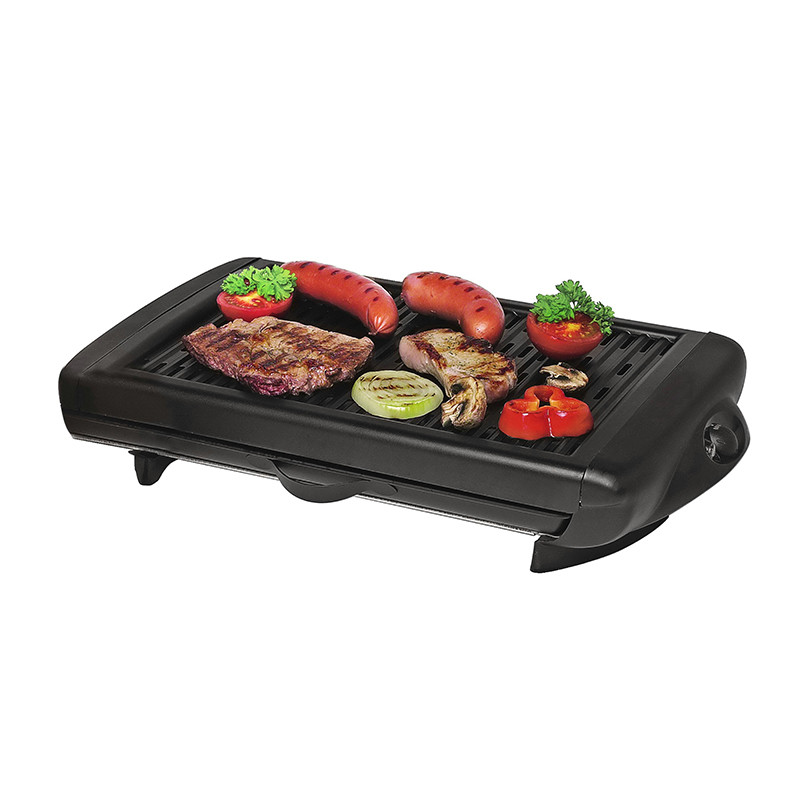
A private label ready appliance: the KYS-868 indoor electric grill with five-level temperature control, removable non-stick plate and detachable drip tray. View product details →
Step 1: Choose Your Category and Positioning
The data above points to which categories reward private label entry in 2026. Health-driven, countertop-format appliances with repeat-purchase accessory potential are the sweet spot — the same categories that dominate marketplace bestseller lists:
Air fryers and air fryer ovens — the strongest small-appliance category; larger-capacity digital and multi-function models are the growth tier.
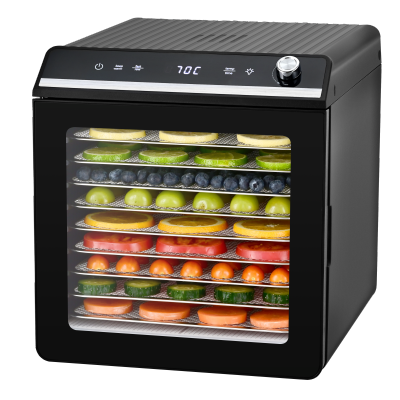
Food dehydrators — a health-food and pet-treat crossover category with strong private label density and simple certification paths (household electrical + food-contact).
Indoor electric grills — smokeless, low-odor cooking is a top marketplace search driver; five-level temperature models like the KYS-868 give brands a defensible spec story.
Steam cookers and multi-cookers — multifunctional space-saving products growing faster than single-function models.
Pet appliances — the fastest-growing private label department in US retail (+4.8% unit growth); smart feeders and fountains are premium-entry categories.
Positioning rule for 2026: do not enter on price. NIQ's data shows North America's small appliance market is roughly flat in value terms for 2026 — the growth is in features, health positioning, and design. A private label brand wins by picking one defensible spec story (for example, "five-level temperature control with a removable non-stick plate and detachable drip tray") rather than by undercutting a branded equivalent by $5.
Step 2: Select the Right Manufacturing Partner
Your factory partner determines 80% of your private label program's success. The screening criteria that matter most for appliance brands:
Category depth: choose a manufacturer whose core lines match your target category — a dehydrator specialist or grill specialist beats a generalist on engineering, tooling, and compliance documentation.
OEM + ODM capability: confirm the factory can do everything from exclusive ODM variants (color, panel, presets, packaging) to full OEM (your tooling, your BOM). A 35+ year manufacturer with exports to 100+ countries — like Kangye, based in Guangdong, China — has the mold history and certification library to prove it.
Certification library: request copies of CE, GS, ETL, UL, CB, RoHS, REACH, LFGB/FDA certificates up front. Certifications are the difference between a $1,500 sample order and a $30,000 failed market entry.
Factory audit evidence: for a full checklist on verifying production lines, quality systems, and social compliance, our step-by-step OEM sourcing guide walks through factory selection, sample management, and payment terms end to end. The Shunde manufacturing landscape analysis explains why Guangdong clusters deliver the component supply chain private label needs.
Production environment at a Guangdong OEM/ODM factory — the compliance and quality backbone of a private label program.
Step 3: Define Your Customization Depth
Customization is where private label stops being "white label" and becomes a brand. In 2026, buyers increasingly expect the factory to handle a full customization stack — and flexible manufacturers treat it as standard:
Customization Lever
Typical Options
Impact on Lead Time / Cost
Branding
Logo on unit, control panel, carton; embossed or printed
Exclusive model numbers, features, or configurations
Higher — requires MOQ commitment for exclusivity
The 2026 trend: light customization is the entry ticket, exclusive variants are the moat. Marketplace data shows generic white label products compete almost entirely on price and star rating; exclusive variants with a defensible spec story sustain premium pricing. Many private label programs start with an exclusive model number on a proven ODM platform — the same product architecture that has passed certification and field testing, with your brand's panel, color, and presets.
Step 4: Lock Down Compliance and Certification Before You Commit
Certification is the highest-stakes step in a private label appliance program, and the one where new brands make the most expensive mistakes. The rule is simple: the certification must match the destination market, and the manufacturer must already hold it or commit to obtaining it before production.
North America: UL or ETL for electrical safety, FCC for any radio/connected modules, FDA or LFGB food-contact documentation for surfaces touching food. Energy-efficiency rules (US DOE, ENERGY STAR where applicable) apply to some categories.
European Union: CE (LVD + EMC + RoHS), REACH chemical compliance, WEEE registration, and food-contact compliance under EU 1935/2004 or national standards like LFGB. The EU's PFAS restrictions on non-stick coatings are raising the compliance cost floor in 2026 — verify coating materials with your factory.
Other regions: GS (Germany), CB scheme (global), SAA/RCM (Australia/NZ), PSE (Japan), BIS (India) — each market has its own stack. A manufacturer exporting to 100+ countries should be able to show which certificates exist per model.
Brand liability: as the brand owner, your name is on the product. Insist on a certificate matrix per model and per destination market, and review it with your own compliance advisor for the first program.
Two of our existing guides cover this ground in depth: our 2026 export compliance guide maps the full regulatory landscape, and our electrical ratings guide explains why voltage/frequency mismatches cause returns and failures — a common private label pitfall when the same SKU is sold across markets.
Step 5: Pricing, MOQ, and Container Economics
Private label profitability is decided before production starts — in the MOQ, carton dimensions, and container load numbers. Work these three numbers with the factory before signing anything:
MOQ realism: appliance MOQs are typically container-based or per-model commitments. For example, the KYS-868 indoor electric grill packs 1,534 pcs per 20GP and 2,920 pcs per 40GP — a real MOQ conversation starts around one 20GP for a first program, with smaller trial quantities available for new partnerships.
Landed cost math: FOB price + freight + duties + certification amortization + packaging design = your true unit cost. Use the tariff guidance in our tariffs and trade policy analysis to model 2026 duty exposure for each destination.
Retail margin structure: retail margins in small appliances run roughly 38-43% at retail and 45-50% at brand level (Simporter) — meaning a private label price band can undercut national brands by 20-30% while still funding marketing and returns.
Lead time planning: standard OEM/ODM programs run 35-45 days production after sample approval; customized variants (new colors, panel tooling, certification) add weeks. Seasonal categories (holiday sales, summer grilling) need reverse-scheduled order dates — our OEM manufacturing process guide details the timeline from design to container loading.
Pricing reality check: private label works when your landed cost leaves room for a 20-30% retail discount vs national brands and a healthy margin for you. If the math only works at maximum volume, the program is too fragile — negotiate MOQ flexibility, carton optimization, and freight consolidation with the factory before committing.
The Featured Product: A Complete Private Label Platform — KYS-868 Indoor Electric Grill
Featured Product: Kangye KYS-868 Indoor Electric BBQ Grill
The KYS-868 is an example of a private label ready platform: a 1350W smokeless indoor electric BBQ grill with five-level adjustable temperature control, a removable non-stick plate, and a detachable drip tray. It runs on 220-240V/50-60Hz (1200-1400W) or a 120V/60Hz 1120W variant for North America, measures a compact 510×260×90mm, and packs 1,534 pcs per 20GP / 2,920 pcs per 40GP.
1350W smokeless indoor electric grilling — the top marketplace search category
5-level temperature control with removable non-stick plate and detachable drip tray
EEAT means being honest about the downsides. Private label kitchen appliances have real failure modes — know them before you commit:
You own the quality reputation. When a unit fails, the customer blames your brand, not the factory. Insist on IQC/IPQC/FQC reporting, pre-shipment inspection, and a spare-parts commitment from the manufacturer — and budget a returns/replacement line item.
Certification cost and time are yours. Even when the factory holds certificates, adding a new model or destination market can cost thousands of dollars and months of testing. Front-load the certificate matrix conversation before sampling.
White label commoditization is real. The same ODM platform may be sold to multiple brands. Without exclusive variants or strong content/marketing, you compete on price against your own manufacturer's other customers. Negotiate exclusivity in writing for your model number and design elements.
Inventory risk is yours. MOQs measured in thousands of units mean dead stock is expensive. Start with a trial order, validate sell-through, then scale container volumes — the same discipline a factory audit would recommend.
Regulatory change is continuous. 2026 has brought PFAS restrictions on non-stick coatings in the EU and ongoing tariff policy shifts in the US. Build a compliance review into every seasonal reorder cycle, not just the first program.
None of these risks are disqualifying — they are manageable with the right partner and process. But brands that skip the risk conversation often pay for it in the first reorder. The balanced view: private label delivers higher margins, brand equity, and pricing control than reselling; it demands more discipline in certification, quality, and inventory management than white label.
What is the difference between private label and white label appliances?
White label means selling a generic, unbranded product under your name — the hardware is identical to what competitors sell. Private label is broader: it includes branding plus customization such as exclusive colors, control panel design, presets, packaging, and potentially exclusive model numbers. In practice, most appliance brands use the terms loosely; what matters is the customization depth you negotiate with the factory.
What is the realistic MOQ for a private label appliance program?
Appliance MOQs are typically container-based or per-model commitments. As a reference, the KYS-868 indoor electric grill loads 1,534 pcs per 20GP and 2,920 pcs per 40GP. A first program commonly starts at a trial quantity (samples plus a partial container or small order), then scales to full container volumes once sell-through is proven. New partnerships often negotiate trial quantities; every program should confirm MOQ in writing before sampling.
Do I need my own certifications, or does the factory provide them?
Both, layered. The factory should hold the base certification library (CE, GS, ETL, UL, CB, RoHS, REACH, LFGB/FDA) for its models — that is non-negotiable screening criteria. As the brand, you need to confirm those certificates match your exact model and destination market, and you may need to fund new testing for customized variants or new markets. Budget certification verification into every program.
Can I get exclusive branding and design on an existing product?
Yes — that is the standard ODM model. Factories offer exclusive colorways, logo placement, control panel labels, presets, and packaging on proven platforms. For true exclusivity (a model number only you can sell), negotiate it explicitly; manufacturers usually require an MOQ commitment for exclusivity because it removes the product from their open catalog.
How long does a private label program take from first contact to container?
Typical timeline: 1-2 weeks for quotes and samples, 2-4 weeks for sample approval and customization confirmation, then 35-45 days for standard production (45-60 days for customized variants or new certification work). Reverse-schedule from your retail season: for a holiday Q4 launch, production should start by August-September; for summer grilling categories, production by March-April.
Is private label worth it compared to just reselling branded products?
For most importers and marketplace sellers, yes — the unit economics favor it. Retail margins in small appliances run roughly 38-43% and brand-level margins 45-50%, and private label pricing can undercut national brands by 20-30% while funding marketing. The trade-offs are real: certification responsibility, inventory risk, and quality reputation are all yours. Brands that treat private label as a system — not a logo stamp — consistently out-earn pure resellers.
Summary: The 2026 Private Label Kitchen Appliance Playbook
Summary: private label kitchen appliances are at a structural inflection point — US store brand unit share hit a record 23.8% in H1 2026, private label holds 28.5% of kitchen tools sales online, and European private label share runs 39-51% in major markets. The winning playbook has five steps:
Pick a health-driven, countertop category with a defensible spec story (air fryers, dehydrators, indoor electric grills, steam cookers, pet appliances).
Choose an OEM/ODM manufacturer with category depth and a certification library — not a generalist.
Define customization depth and exclusivity before sampling — logo alone is not a moat.
Verify the compliance stack per destination market and budget for variant testing.
Model MOQ, container economics, and landed cost with margin headroom, and start with trial volume.
Brands that execute this playbook with a factory that can deliver customization, compliance, and consistent quality under one roof are positioned to capture the same private label momentum that is reshaping grocery and marketplace retail worldwide.
Planning to launch a private label kitchen appliance line? Kangye is an OEM/ODM manufacturer based in Guangdong, China, with 35+ years of manufacturing experience and exports to 100+ countries. Our product line covers food dehydrators, BBQ grills, pizza ovens, air fryers, steam cookers, vacuum sealers, indoor electric grills, and pet appliances. Contact our team to discuss MOQs, customization options, certification packages, and private label programs for your brand.
Since its establishment in 1989, Kangye Electric Appliances has always focused on the research and development and manufacturing of kitchen appliances and outdoor cooking utensils.