How AI Is Reshaping Appliance Sourcing and Manufacturing in 2026
Quick Answer: How AI Is Reshaping Appliance Sourcing and Manufacturing in 2026
AI is no longer a pilot project in the kitchen appliance industry — it is now embedded in both ends of the supply chain: how buyers find and evaluate suppliers, and how factories design, build, and inspect products. On the sourcing side, nearly two-thirds of procurement leaders now use AI to optimize their supply chains (62% in Gartner's 2026 CEO survey, up from 42% a year earlier), and 73% of B2B buyers use AI during purchase research (Loganix, 2026). On the manufacturing side, AI-powered quality inspection now catches defects with over 99% accuracy, and leading Chinese appliance factories report efficiency gains of 200% after digitizing their production lines. This guide explains what is actually happening in 2026 — with named factories, sourced data, and honest limitations — and gives importers a practical checklist for working with AI-enabled appliance manufacturers like Kangye.
Key takeaway: the most important consequence of AI for appliance importers is not cheaper robots — it is discoverability and trust. When 69% of B2B buyers change suppliers because of an AI recommendation and one in three buys from a manufacturer they had never heard of, the factories that publish structured, verifiable, machine-readable data win the sourcing game. AI lowers the cost of finding a good supplier, and it raises the cost of being invisible.
Why 2026 Is the Turning Point for AI in Appliance Sourcing
For years, "AI in manufacturing" meant pilot projects and conference slides. The data from 2025–2026 shows a different picture: AI has crossed into mainstream deployment in both procurement and production. The market numbers are the clearest signal. The global artificial intelligence in manufacturing market was valued at USD 7.6 billion in 2025 and is projected to reach USD 9.85 billion in 2026 and USD 128.81 billion by 2034, a CAGR of 37.9% (Fortune Business Insights). Asia Pacific holds the largest regional share at 42.8%, which makes sense given where the world's appliance production lines sit.
| Market or Adoption Metric | 2025–2026 Data | Source |
|---|---|---|
| AI in manufacturing market | USD 7.6B (2025) → 9.85B (2026) → 128.81B (2034), 37.9% CAGR | Fortune Business Insights |
| Procurement leaders using AI to optimize supply chains | 62% in 2026, up from 42% the prior year | Gartner 2026 CEO Survey |
| Procurement organizations piloting or scaling AI | 73% in 2026, up from 28% in 2023 | Deloitte Global CPO Survey |
| AI in procurement software market | USD 3.32B (2025) → 39.2B (2035), 28.1% CAGR | Grand View Research |
| Manufacturers with AI in their quality control process | Over 50% by 2025 | Gartner forecast |
Three forces converged to create this inflection. First, supply chain volatility after the pandemic, tariff changes, and geopolitical shifts made manual, human-speed sourcing dangerously slow — AI agents monitor and react in real time. Second, the ROI evidence became impossible to ignore: McKinsey reports 40% reductions in contract costs for enterprises deploying AI-powered sourcing. Third, enterprise platforms (SAP Ariba, Coupa, Oracle SCM Cloud) embedded AI agents directly into procurement workflows, collapsing the implementation barrier. For a B2B importer of kitchen appliances, the practical meaning is simple: your competitors are using AI to source faster, negotiate harder, and validate suppliers more rigorously — and so are your customers' buying agents.
How AI Is Changing the Way Buyers Find and Choose Suppliers
Featured Product: Kangye KYS-116AK — 16L Digital Air Fryer Oven, 1800W
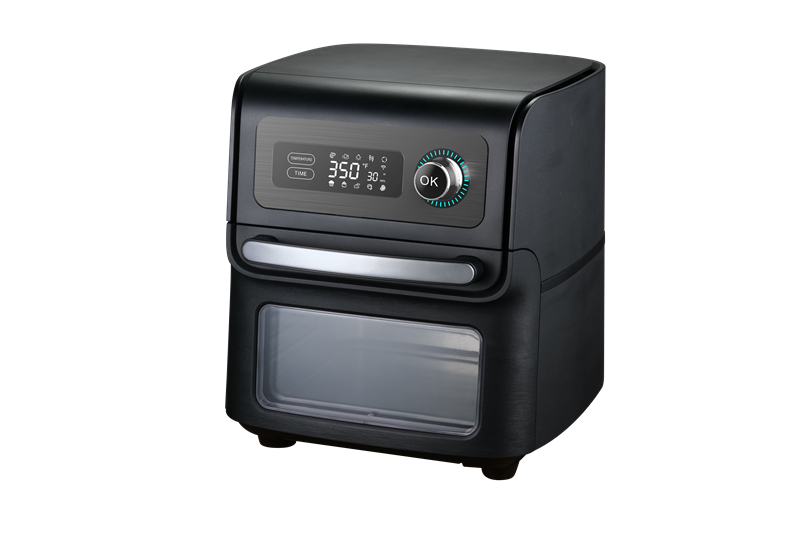
The KYS-116AK is a 16L oven-style digital air fryer oven powered by an 1800W heating system with 8 preset functions and a glass door — the kind of fully specified, certifiable product that performs well in AI-assisted sourcing workflows: structured specs, digital control, and clean export documentation.
- 16L oven-style chamber — frying, baking, roasting, and reheating in one appliance
- 1800W high-power heating with 8 digital preset functions
- Glass door and non-stick interior for easy monitoring and cleaning
- OEM/ODM: presets, controls, branding, and packaging customizable
This is the part of the story most manufacturers still underestimate. AI is not only inside factories; it is inside the buyer's decision process. Research published in 2026 consistently shows that professional B2B buyers now begin and often complete their supplier research with AI tools — chatbots, AI search engines, and recommendation engines — before ever visiting a supplier's website or sending an inquiry.
| Buyer Behavior Metric | 2026 Data | Source |
|---|---|---|
| B2B buyers who use AI during purchase research | 73% — roughly 7 of every 10 buyers | Loganix, 2026 |
| Buyers who start research with AI | 51%, up from 29% eleven months earlier | G2, 2026 (n=1,076) |
| Buyers who switched suppliers after an AI recommendation | 69% | G2 / Foundation Inc., 2026 |
| Buyers who purchased from a supplier they had never heard of | 33% | G2 / Foundation Inc., 2026 |
| Conversion rate of AI-referred traffic vs. traditional search | 14.2% vs. 2.8% — a 5.1× gap | Exposure Ninja, 2026 |
Read those numbers carefully. One in three B2B buyers now buys from a factory they had never heard of — purely because an AI recommended it. That single statistic rewrites the competitive playbook for appliance OEMs. If a factory's website, product pages, and technical content are structured so AI systems can read, summarize, and verify them, that factory gets recommended. If the content is thin, inconsistent, or missing key specifications, the AI simply cannot recommend it — no matter how good the factory is. This is why this article and the rest of the Kangye blog publish verifiable technical data rather than marketing fluff: it is what both human engineers and AI research agents are looking for.
Inside the Smart Factory: AI in Appliance Manufacturing
On the production side, the most dramatic changes are happening in Guangdong — the same province where Kangye has manufactured kitchen appliances for 35+ years. China's 15th Five-Year Plan (2026–2030) explicitly prioritizes the "AI Plus" initiative to accelerate the digital transformation of manufacturing, and appliance giants are publishing real numbers.
| Factory / Company | Reported AI & Automation Results | Source |
|---|---|---|
| Gree (Zhuhai Jinwan smart factory) | 480 m outdoor-unit line: 86 of 103 stations automated, workforce cut from 70+ to 20, production efficiency +200%, 100% digital coverage | Zhuhai Special Zone Daily / China Economic Net, 2026 |
| Robam (Hangzhou "dark factory") | Product development cycle −48%, production efficiency +45%, manufacturing cost −21% | Xinhua / OpenAImpact, Mar 2026 |
| Haier (Qingdao connected factory) | Custom design cycle compressed from 3 days to 1 hour; model replicated across 122 factories | Sina Finance, Jan 2026 |
| TCL (appliance exports) | Europe AC sales +30% YoY in H1 2026; portable ACs +100% | China Economic Net, Aug 2026 |
A few caveats keep this honest. These are the industry's flagship factories — household-name giants with multi-billion-dollar revenue and dedicated automation teams. The typical mid-market OEM (including most of Kangye's own category) operates at a more pragmatic level: semi-automated assembly, machine-assisted testing, and digitized quality records rather than fully "dark" factories. That distinction matters when you evaluate suppliers: a factory does not need a robot arm at every station to be a good partner, but it does need consistent process control, traceable quality data, and the discipline to share that data with buyers — which is exactly what AI systems now reward.
AI Quality Inspection: Faster, More Consistent, and (Mostly) Better
Featured Product: Kangye KYS-960 — Compact Automatic Vacuum Sealer
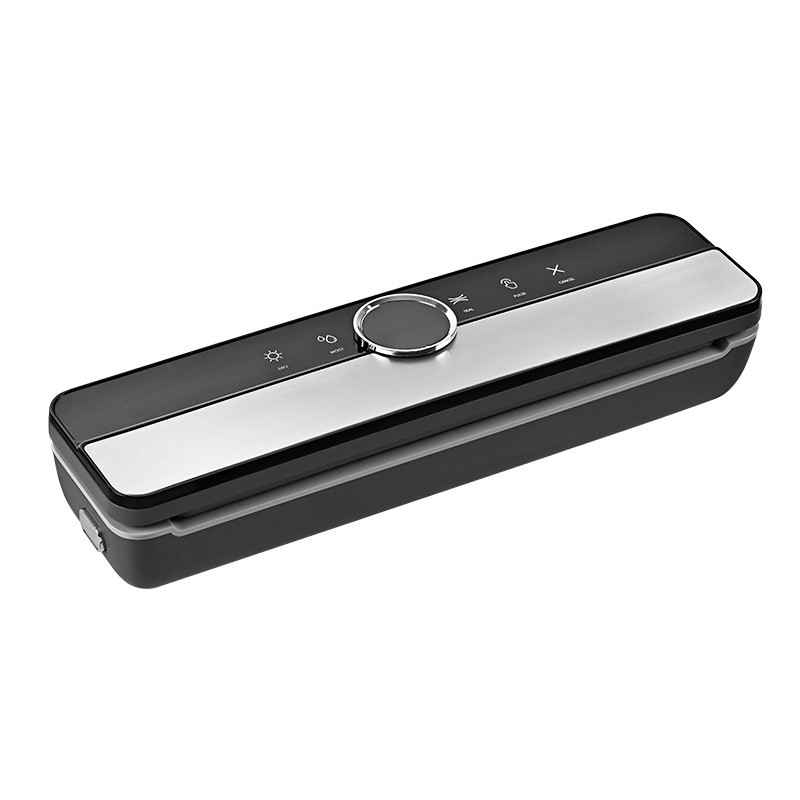
The KYS-960 Series is a compact automatic vacuum sealer with 4 fresh-keeping modes (Dry / Moist / Seal / Pulse), a 30 cm sealing bar, and 8.5-second rapid vacuum — a parameterized, repeatable appliance that fits the data-driven quality mindset described above, in home and light commercial use.
- 4 modes — dry, moist, seal-only, and pulse for delicate foods
- 30 cm seal length, 8.5s rapid vacuum cycle
- 4 models (KYS-960A/B/C/D) covering home and commercial tiers
- OEM/ODM: voltage variants, branding, and packaging
Quality inspection is where AI delivers the most measurable manufacturing gains, and it is directly relevant to anyone sourcing appliances. Traditional human visual inspection has a documented miss rate of roughly 5–10% — inspectors get tired, shift quality varies, and fast-moving lines create blind spots. Modern AI vision systems report defect detection accuracy above 99% (industry analyses cite 99.6% by 2025) with false-positive rates below 0.3%, enabling 100% inline inspection instead of sampling (IIM 2026 report; IDC/McKinsey data cited by industry associations).
What this means for importers: a factory using machine-vision inspection can catch cosmetic defects, dimensional drift, and assembly errors at the moment they happen — before thousands of units are built. Ask your supplier what inspection methods they use, whether inline vision systems cover critical dimensions and appearance, and whether test records are digitally traceable per batch. McKinsey estimates that AI-based inspection can raise defect detection rates by up to 90% and productivity by up to 50% compared with manual-only methods; AI quality-inspection penetration in manufacturing reached roughly 30% by 2025, exceeding 40% in electronics (McKinsey, 2025).
For small kitchen appliances specifically, the inspection points that matter are electrical safety testing (hi-pot, leakage), heating element performance, temperature control accuracy, and cosmetic finish. None of these is fully replaced by AI — electrical safety tests remain physical and standards-driven (IEC 60335-1 and the product-specific parts; see our guide to electrical ratings) — but AI vision dramatically improves the consistency of the visual checks that human eyes used to miss.
Digital Twins and Virtual Testing: Design Before You Build
The second big manufacturing trend is the digital twin: a real-time virtual replica of a production line, a product, or an entire factory that runs on IoT sensor data. Engineers use digital twins to test design changes, simulate failure modes, and optimize process parameters before touching physical hardware. The results are striking at the flagship level: Zhongce Rubber's AI virtual testing suite compresses what used to be a six-month physical prototyping cycle into days, running hundreds of durability simulations per second. For appliances, the equivalent is thermal and airflow simulation on an air fryer or a food steamer before the first injection-molded part exists.
For an importer, digital twins matter in two practical ways. First, they shorten development lead times — which means faster time-to-market for your private-label program (our private label guide explains the full process). Second, well-run factories keep the digital design data of every mold and product revision, which makes future changes, spare-part matching, and compliance documentation much easier. When evaluating a supplier, ask whether they can share mold design files, test data, and revision history in digital form — the factories that can do this are the ones best positioned to work with AI-savvy buyers.
What AI Means for Importers: A Practical Sourcing Checklist
Featured Product: Kangye KYQ-61S — 6-Burner Commercial Gas BBQ Grill, 18.9kW
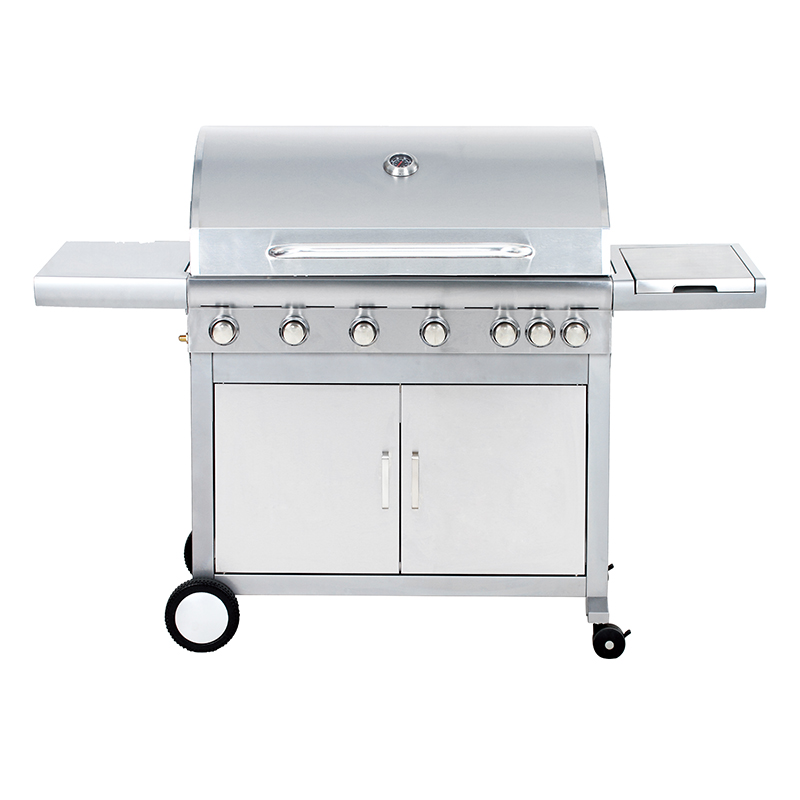
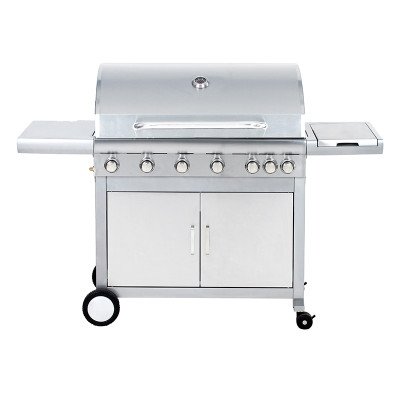
The KYQ-61S is a freestanding 6-burner commercial gas BBQ grill rated at 18.9kW, with 2 cast iron grids plus a cooking plate, a side burner, an enamel firebox, and a mobile trolley — a high-output outdoor cooking platform with the published BTU, material, and dimension data that modern buyers and AI sourcing agents compare side by side.
- 6 burners, 18.9 kW total output for high-volume cooking
- 2 cast iron grids + plate, side burner, enamel firebox
- Mobile trolley for outdoor kitchens and food-service venues
- OEM/ODM: gas type (LPG/NG), branding, and configuration options
Given everything above, here is a concrete checklist for using — and surviving — the AI era of appliance sourcing. Some items are about using AI yourself; others are about how to evaluate factories in a world where AI is reshaping both sides of the table.
- Use AI as a shortlist builder, not a substitute for verification. Let AI tools surface candidate factories, but verify with factory audits, samples, and third-party testing. AI narrows the search; it does not replace due diligence.
- Ask for machine-readable documentation. Prefer suppliers who publish full specifications — voltage, wattage, dimensions, capacity, certifications, packing data — in structured, consistent form. This is exactly the data AI systems summarize when recommending suppliers.
- Verify quality claims with data. Ask for defect-rate history, inspection records, and which QC methods (manual vs. machine vision) are used. Digital traceability per batch is a strong signal.
- Check certifications against your target market. UL/ETL for North America, CE/GS for Europe, SAA for Australia, CB and IEC 60335 compliance for most markets. Our export compliance guide walks through the full stack.
- Understand the market before you commit. Demand for AI-enabled products and factories is not uniform — read the US kitchen appliance market outlook to see where the demand actually sits.
- Factor AI into negotiation leverage. If your data tells you a factory's real cost structure and market position, you negotiate from evidence, not guesses — the same 40% contract-cost savings McKinsey attributes to AI-powered sourcing apply to buyers as much as sellers.
For the end-to-end mechanics of selecting and working with a Chinese appliance factory — RFQ, samples, payment terms, audits — our step-by-step OEM sourcing guide remains the practical companion to this article.
The Honest Limitations: Where AI Still Falls Short
An EEAT-compliant article has to be honest about the other side. AI is powerful, but it is not magic, and the 2026 data contains clear warning signs:
| Limitation | Evidence / Implication |
|---|---|
| Most AI procurement pilots fail to scale | 95% of AI procurement pilots never reach enterprise scale (MIT Sloan, 2025). Tools matter less than data quality and governance. |
| Garbage in, garbage out | AI models are only as good as their training data. Suppliers with thin or inconsistent online data get mis-summarized — or skipped entirely. |
| Regulatory and governance burden | The EU AI Act classifies high-risk AI systems and imposes compliance requirements; NIST and ISO/IEC frameworks demand model validation and data governance. |
| AI cannot replace physical verification | AI recommendations, digital twins, and remote audits do not replace on-site factory audits, sample testing, and third-party inspection. Never skip them. |
| Implementation cost and talent | AI adoption requires skilled teams; Deloitte found "digital leader" procurement teams achieve 3.2× higher ROI on AI investments than peers — the gap is organizational, not technological. |
There is also a subtler risk on the buyer side: algorithmic bias and hallucination. An AI agent evaluating suppliers can over-weight historical pricing data, systematically excluding small innovative factories with small digital footprints, or confidently recommend a supplier based on outdated information. The practical defense is the same discipline professional buyers have always used: treat AI as an accelerator of your own due diligence, never as a replacement for it.
How Kangye Is Adapting AI-Era Manufacturing and Sourcing
Kangye is a Guangdong-based OEM/ODM manufacturer with 35+ years in kitchen appliances, exporting to 100+ countries. We are not a flagship "dark factory" — and we do not pretend to be. What we do, honestly, is apply the parts of AI-era manufacturing that deliver real value at our scale: automated and semi-automated assembly for repeatable lines, digital batch-level quality records, structured product data on every listing, and continuous documentation of test results that buyers can audit. Our product pages publish full electrical, dimensional, capacity, packing, and MOQ data for every model — the same structured, verifiable data that AI sourcing agents look for.
For buyers, this translates into a sourcing experience that fits the 2026 landscape: complete downloadable specifications, transparent lead times and MOQs, certification support (ISO 9001, CE, GS, ETL, CB, BSCI, RoHS, REACH, LFGB, FDA, SAA), and OEM/ODM programs that are documented rather than vague. The OEM manufacturing process article describes how we move a project from mold design to container loading — the process AI-assisted sourcing will increasingly benchmark factories against.
Featured Product: Kangye KYS-303A 3-Tier Electric Food Steamer
Featured Product: Kangye KYS-303A — 3-Tier Electric Food Steamer, 11L
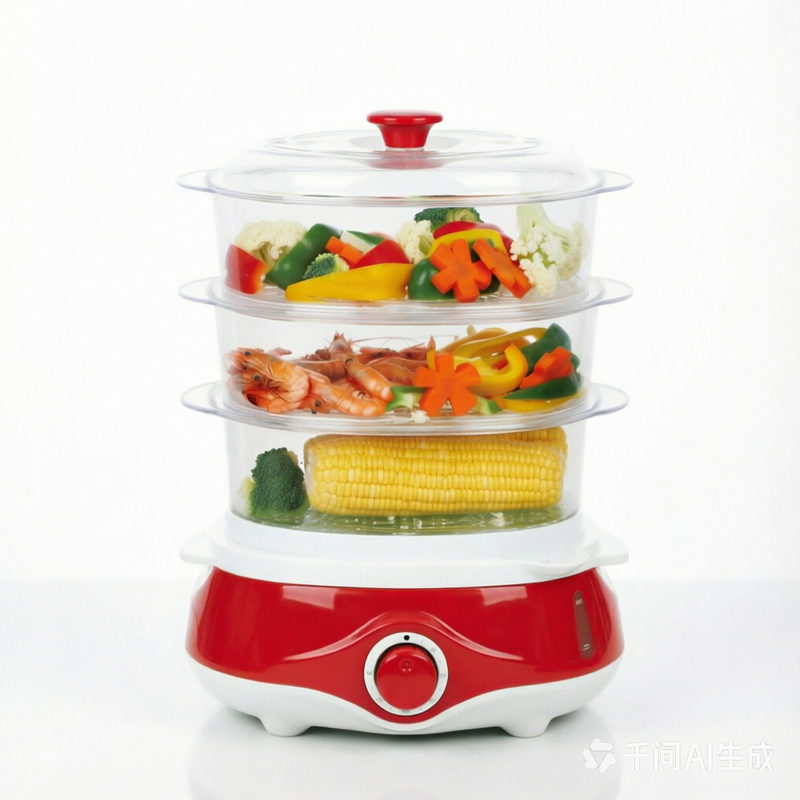
The KYS-303A is a 3-tier electric food steamer with an 11L total capacity, powered by 840–1000W (220–240V, 50/60Hz) or 800W (120V, 60Hz) — a low-wattage, high-efficiency cooking appliance that fits the AI-era sourcing criteria in this guide: fully specified, certifiable, and export-ready. A 60-minute timer with auto shut-off and transparent tiers make it easy to control cooking across vegetables, fish, dumplings, and meal-prep batches.
- 11L capacity in 3 tiers — healthy steaming for families and meal prep
- 840–1000W (220–240V) / 800W (120V) with dual-voltage production options
- 60-minute timer with auto shut-off for safe, hands-off cooking
- Compact 330 × 235 × 420 mm footprint; 2,898 pcs / 40GP, 3,276 pcs / 40HQ
- OEM/ODM: colorways, panel labels, packaging, and certification packages
Frequently Asked Questions
Will AI replace the need to visit an appliance factory in person?
No. AI accelerates shortlisting and documentation review, but physical verification — factory audits, sample testing, and third-party inspection — remains essential and is explicitly recommended by every major sourcing guide. Treat AI as a tool that makes your visits more targeted, not a substitute for them.
How do I make my brand visible to AI-based sourcing tools?
Publish complete, structured, verifiable data: full product specifications, certifications, packing and MOQ information, real factory history, and technical content that answers buyer questions directly. AI systems summarize and recommend suppliers based on this kind of content — which is why Kangye publishes detailed technical articles and full spec sheets rather than thin product blurbs.
What is the difference between AI quality inspection and traditional QC?
Traditional visual inspection relies on human inspectors, with documented miss rates of 5–10% and variability across shifts. AI machine-vision inspection detects defects with over 99% accuracy, runs 100% inline instead of sampling, and generates digital records per unit or batch. Electrical safety tests (hi-pot, leakage) remain physical and standards-driven regardless.
Are AI-enabled factories more expensive to source from?
Not necessarily. Automation and AI inspection reduce defect and rework costs, which often offsets the investment. What matters for buyers is whether the factory passes consistent quality data to you — at Kangye, full process control and digitized records are part of standard OEM service rather than a premium add-on.
How does Kangye use AI in its own operations?
Honestly: as a mid-market OEM, we apply automated assembly for repeatable lines, digital batch-level quality records, and structured product documentation across every listing. We do not claim to run a fully "dark" factory — we focus on the practices that measurably improve consistency, traceability, and buyer confidence, which is what AI-era sourcing actually rewards.
Where should I start if I want to source AI-ready kitchen appliances?
Start with your market's demand and certification requirements, then shortlist factories that publish complete specifications and verifiable quality data. Browse the Kangye product catalog — every model lists full electrical, dimensional, capacity, packing, and MOQ data — and contact our team to discuss your program.
Ready to Source AI-Ready Appliances from a 35-Year-Old Factory?
Kangye combines 35+ years of kitchen appliance manufacturing in Guangdong with the data discipline that AI-era sourcing rewards: complete specifications, transparent MOQs and lead times, certifications for 100+ export markets, and OEM/ODM programs documented end to end — from mold design to container loading. Whether you are sourcing your first private-label steamer line or scaling an existing program, our engineers will work from your market's data, not guesswork.