Home / All / Buyer's Guide / How to Audit an Appliance Factory: A Buyer's Step-by-Step Checklist
How to Audit an Appliance Factory: A Buyer's Step-by-Step Checklist
Sep 8,2026
How to Audit an Appliance Factory: A Buyer's Step-by-Step Checklist
An appliance factory audit is the single most effective due-diligence step a buyer can take before committing to a supplier, yet it is also the step most often rushed or skipped. Industry analyses attribute roughly 73% of supply-chain disruptions to supplier quality issues, and fixing a quality problem after shipment costs an estimated 4–10× what it costs to catch at the factory. For kitchen appliances — which carry mains electricity, heating elements, food-contact surfaces and, in many markets, mandatory certification — the cost of an audit mistake shows up in failed customs inspections, product recalls and damaged brand trust. This checklist gives importers a staged, verifiable framework for auditing a small-appliance factory in China — or any appliance factory — from desk-based verification before you travel to on-site production, quality-system and social-compliance checks, and the pre-shipment inspection that closes the loop on every order.
Key takeaway: an appliance factory audit is a staged process matched to the size and risk of your order. For a first order under roughly US$20,000 on a low-risk product, a document review and factory profile check may be enough; for a first order above US$50,000, or for any compliance-sensitive appliance category, a full on-site technical and social audit before production — plus an AQL-based pre-shipment inspection on every repeat order — is the industry-standard level of diligence. Audit early, audit honestly, and treat a report with zero non-conformances as a reason for suspicion rather than relief.
Why the Appliance Factory Audit Matters More in 2026
Kitchen appliances are not a commodity category you can qualify on price sheets alone. They combine high-voltage circuitry, heating elements that run hot for thousands of hours, food-contact plastics and coatings, and — increasingly — wireless modules and connected features that bring a new layer of cybersecurity and radio regulation. Every one of those layers is a place where a factory can quietly substitute materials, cut a test, or skip a documented procedure to win a lower quote. The audit exists to find those gaps before your container is loaded, not after your customers report them. Roughly 48% of global TIC services now originate in the Asia-Pacific region, where most appliance manufacturing happens, and sourcing analyses cite industry-average defect rates around 3.5% for "Tier 2" factories versus below 0.8% for well-audited Tier 1 facilities. Most technical recalls in digital appliances trace back to component-level substitution — poor-quality capacitors or MOSFETs on a printed circuit board — that a visual walkthrough alone will never catch. An appliance factory audit checklist built around these failure modes is your defense.
This article is written from the perspective of an OEM/ODM manufacturer that welcomes audits — Kangye has been manufacturing in Guangdong, China for more than 35 years and exports to 100+ countries — precisely because we believe the audit is a tool for good buyers and good factories to find each other. For the broader context on why supplier selection starts before any audit, our earlier guides on sourcing OEM kitchen appliances from China and OEM vs ODM vs OBM cover the commercial structure behind the factory visit.
Step 1: Choose the Right Audit Type for Your Stage
"Factory audit" is an umbrella term for several exercises that answer different questions, and running the wrong one wastes money. Buyers most often confuse an audit — which assesses a supplier's systems and capability — with an inspection — which checks whether one batch of finished goods matches the approved sample. Before booking an audit, decide which type answers the question that is actually worrying you:
Audit / Check Type
What It Answers
Typical Duration
Common Frameworks
Entity verification (desk check)
Is this a real, licensed manufacturer with the legal scope to make my product?
Hours
Business license against the national credit registry; export license; address
Manufacturing capability / technical audit
Can this plant make my product at my volume with the right equipment and process?
1–2 days on site
ISO 9001-aligned custom checklists
Quality system audit (QMS)
Are documented IQC/IPQC/OQC procedures actually followed, calibrated and traced?
1–2 days
ISO 9001, IATF-style process auditing
Social compliance audit
Do labour practices and working conditions meet ethical and retailer standards?
1–3 days, private worker interviews
amfori BSCI, Sedex SMETA, SA8000, WRAP
Environmental audit
Is waste, chemical handling and emissions managed legally?
1–2 days
ISO 14001, ZDHC-style chemical checks
Pre-shipment inspection (PSI)
Does this specific finished batch match the approved sample within agreed AQL limits?
Per batch, 1 day
ISO 2859-1 / ANSI Z1.4 attribute sampling
Sequencing matters as much as thoroughness. A pragmatic sourcing roadmap runs entity verification early to filter out trading companies; a capability plus quality audit before the first production order once the supplier is shortlisted; a social compliance audit when your retailer or compliance program requires one; and a pre-shipment inspection on every order thereafter. Running an expensive full audit on a factory that will not survive an earlier desk check wastes money — and skipping the desk check can mean paying to audit a plant your counterparty does not even own.
Step 2: Desk-Based Verification Before You Travel
Before any flight is booked, verify the supplier's legal identity remotely — it is cheap, fast and disqualifying. Ask for, and then independently verify, the following documents:
Business license and unified social credit code. Cross-check the company name, legal representative and registered address against the National Enterprise Credit Information Publicity System (China's official company registry). Mismatched names, a different address from the one on your correspondence, or a business scope that excludes manufacturing are immediate red flags.
Export license and customs registration. Confirm the entity is legally registered to export the category you are buying.
Ownership and plant status. Ask whether the factory building is owned or leased, how many years the company has operated, and request recent factory photos and a video walkthrough. A company that cannot show a real production floor on video is usually not a manufacturer.
Existing certificates and reports. Collect copies of ISO 9001, product safety certificates (CB, UL/ETL, GS, CE documentation) and recent third-party test reports before you travel, so you can check authenticity on site rather than accepting PDFs at face value.
References and export history. Request major customer references and export destinations. For electric appliances, confirm the factory has actually shipped to your target markets before; for gas appliances, combustion testing capability and EU GAR readiness matter.
This step is where buyers separate genuine OEM/ODM manufacturers from trading companies — a distinction we explore in depth in our guide to China's kitchen appliance manufacturing landscape, which maps where real factories — including Guangdong's appliance clusters — are concentrated.
Step 3: Certificate and Compliance Document Review
Once you are on site — or during a structured remote review — examine the certificates themselves. The most common buyer error is treating every acronym as equivalent. ISO 9001 is a quality management system certificate: it verifies that a factory has documented, consistent processes for controlling quality. It says nothing about wages, working hours or worker welfare, and it does not guarantee your product meets any particular safety standard. An amfori BSCI or Sedex SMETA audit is a social-compliance audit covering labour, health and safety (and, in SMETA's 4-pillar version, environment and business ethics). They answer different questions — ISO 9001 is not social-compliance assurance.
For the certificates you do need, verify three things: (1) validity and expiry; (2) the certifying body and report number, which you can often confirm directly with the lab or scheme owner; and (3) that the model on the certificate matches the model you are sourcing — certificates are model-specific, not plant-wide, and a factory can hold a legitimate certificate for one product while producing an untested variant for you. For CE marking in particular, remember the manufacturer self-declares conformity: the test reports behind that declaration must be verified, not assumed.
Compliance reality check: kitchen appliances exported to the EU are assessed against the IEC 60335 series (general safety part 60335-1 with product-specific parts such as 2-9 for grills and toasters), while the US market uses UL/ETL certification against UL 60335-1 or the relevant UL standard. Food-contact materials add another layer (EU Regulation (EC) 1935/2004 and national rules such as LFGB; US FDA 21 CFR), and connected appliances face radio (FCC / EU RED) and, from 2025, EU cybersecurity requirements. Our export compliance guide walks through the full stack market by market.
Step 4: The On-Site Audit — Production, Equipment and Layout
A typical on-site audit of a medium-sized factory takes four to eight hours, and it should be structured, not improvised. Walk the floor in a deliberate sequence and record what you see with time-stamped photos. The production-focused checklist covers:
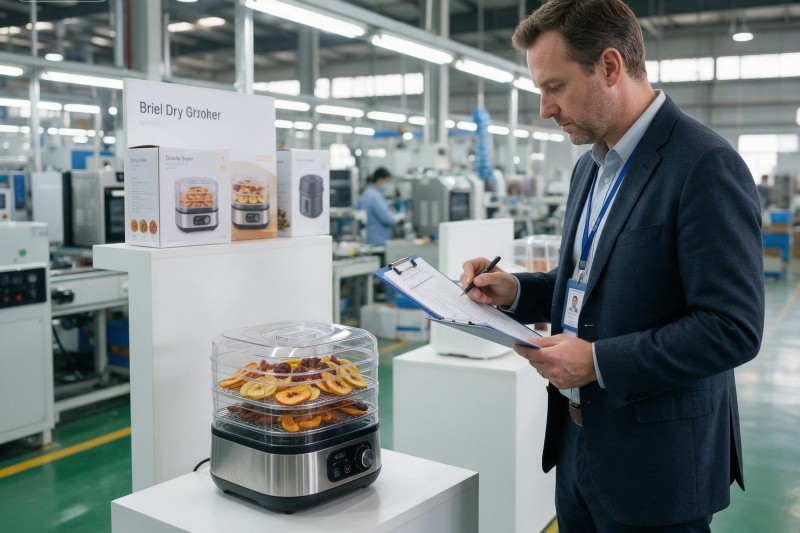
A production line during an audit walkthrough: buyers verify real equipment condition, line staffing and in-process QC stations rather than relying on showroom samples.
Production lines and utilisation. Count operational lines, observe which are actually running, and ask for current utilisation. Idle machines, empty lines and evasive answers about capacity are classic signs of a factory that may be outsourcing your order or overstating capability.
Equipment condition and age. Verify key machines exist, note brands and ages, and check for preventive-maintenance and calibration records. Rust, dust accumulation, tarps over machines and missing safety guards signal neglect.
Workflow and material flow. Map how material moves from receiving to warehousing to assembly to packing. Look for bottlenecks, unsegregated batches and whether storage follows first-in-first-out (FIFO) discipline.
In-house testing capability. A factory that claims strict quality but has no testing room — or testing equipment without current calibration stickers — will not catch defects before shipment. Check whether hi-pot, leakage current, insulation resistance, thermal and life testing can be performed in-house.
Warehouse and traceability. Inspect raw-material storage, label and lot tracking, and packaging standards. Mixing old and new batches, unlabelled chemicals or poor organisation signal that traceability — and therefore recall response — will fail.
Subcontracting disclosure. Ask which processes are outsourced (injection moulding, PCB assembly, coating) and whether subcontractors are audited. Hidden subcontracting is one of the most common reasons a "factory" audit misses the real production site.
The visual walkthrough is where the "golden sample" trap lives. Many factories keep a showroom-perfect sample with premium internals, then substitute lower-cost components during mass production to protect margin. The audit countermeasure is a teardown audit on a randomly selected unit from the actual assembly line — not from the sample room — checking that internal wiring, capacitors, insulation and materials match the approved bill of materials. This is also why our article on the OEM appliance manufacturing process keeps returning to documented process discipline: it is the only reliable defense against silent component substitution.
Step 5: Quality System Deep-Dive — IQC, IPQC, OQC and Traceability
Beyond the floor tour, a quality-system audit checks whether the documented procedures in the quality manual are followed in practice. The four inspection gates matter most for appliances:
Gate
What the Auditor Checks
Common Failure Found in Small Factories
IQC — Incoming quality control
Raw materials, components and certified parts inspected on receipt against specifications; material certificates (MTRs) kept on file
No incoming inspection; critical electronic parts accepted on trust; no supplier file for key components
IPQC — In-process quality control
In-line QC stations, defect recording, SPC-style trend data and first-article inspection before a run continues
No in-process checks; defects only found at final test; no first-article sign-off for tooling changes
OQC / FQC — Final quality control
Finished-goods inspection against AQL sampling plans, function tests, and documented pass/fail records
100% visual "inspection" with no AQL discipline; samples cherry-picked for buyers
Calibration & life testing
Calibrated instruments with current stickers; life-test rooms running units 24/7; documented cycle counts
Uncalibrated meters; no life test evidence; hinge/button/thermal cycle data absent
For appliances specifically, request evidence of the tests that predict your return rate: door-hinge and latch cycling, button life-cycle counts, thermal-stress and over-temperature testing, hi-pot and leakage-current records from the production line, and standby-power measurements where energy regulations apply. A factory that cannot produce defect-rate or test records for these is, in practice, running quality on hope — the certificate on the wall matters less than whether these records exist, are current and match the volumes claimed.
Step 6: Social Compliance and Workforce Checks
If your buyer — a retailer, marketplace or large brand — requires supply-chain due diligence, a social compliance audit is usually non-negotiable. Major US and EU retailers now routinely require BSCI, SMETA or equivalent audits from suppliers as a condition of doing business, so confirming your factory can pass one protects your channel access, not just your ethics. The audit examines working hours and overtime records for the past 12 months, wage payments and social insurance contributions, age verification to exclude child labour, health and safety conditions, and freedom of association. Crucially, the auditor conducts private worker interviews without management present, cross-checking what documents claim against what workers actually report.
Reading a BSCI or SMETA report correctly matters as much as having one. BSCI results are letter-graded (A through E), not a simple pass/fail, and the report should be reviewed in full. SMETA audits come in 2-pillar (labour and health & safety) and 4-pillar (adding environment and business ethics) versions — know which depth your customer requires. And remember that social compliance verifies how workers are treated; it says nothing about whether the product meets IEC 60335 or works reliably. Run it alongside, not instead of, a technical audit.
Step 7: Electrical Safety Verification — Hi-Pot, Leakage and Insulation
For mains-powered appliances, the electrical safety checks are the highest-stakes part of any audit or inspection, and they are where component substitution is most dangerous and most common. Three core tests should be verified — either as production-line records or performed directly by the inspector during a pre-shipment visit:
Hi-Pot (dielectric withstand) test: applies high voltage across insulation to confirm it will not break down under operating conditions. Hi-pot breakdown is a critical defect — one failing unit holds the entire lot, because it usually indicates systematic insulation substitution rather than a random fault.
Leakage current measurement: confirms current leaking to ground or enclosure stays below the standard's limit. A unit above the limit is a critical defect; the lot is held until root cause is addressed and a third-party re-inspection confirms zero critical defects.
Insulation resistance: values below roughly 0.5 MΩ indicate failed insulation (classified as critical); 0.5–1 MΩ is treated as a major defect requiring investigation.
Grounding continuity: for Class I products with an earth connection, grounding resistance must be verified — a missing earth in a Class I product is a critical, zero-tolerance defect.
The label itself proves little: a CE or UL mark confirms someone applied the mark, not that the production unit matches the tested model or that the certificate is current. Inspectors must cross-reference the model number on the unit against the actual test certificate and its validity date. For the market-by-market voltage, plug and standard matrix — 120V/60Hz for North America, 220–240V/50Hz for Europe and Asia, and the certification implications of each — our understanding electrical ratings guide is the companion reading.
Step 8: Pre-Shipment Inspection and AQL — Closing the Loop on Every Order
An audit qualifies a supplier; an inspection verifies a shipment. For repeat orders from a proven supplier, the pre-shipment inspection (PSI) is the workhorse quality gate, running on AQL — the Acceptable Quality Limit — defined by ISO 2859-1 and the ANSI/ASQ Z1.4 tables. The inspector draws a statistically valid random sample and compares defects found against agreed limits. The industry-standard defect classification for consumer appliances is:
Defect Class
AQL Limit
Examples for a Kitchen Appliance
Critical
0 (zero tolerance)
Hi-pot breakdown, leakage current above limit, exposed live wiring, missing earth in a Class I product, insulation resistance below 0.5 MΩ
Major
2.5
Function failure, wrong voltage/model, missing or mismatched certification mark, damaged cord insulation, label wattage incorrect
Minor
4.0
Cosmetic scratches, small surface finish inconsistencies, minor label alignment, packaging print quality
AQL sampling is driven by lot size. To give a concrete example from the standard tables: a lot of 5,000 units inspected at General Inspection Level II draws a sample of 200 units; at AQL 2.5 for major defects, the lot fails if 15 or more major defects are found (14 or fewer passes). Buyers also make three procedural demands that matter more than the table itself: draw cartons from at least three pallet positions (top, middle and bottom); take the sample before any testing begins; and record both cartons opened and units inspected — the ratio between them reveals whether defects are systematic or random. A PSI is not a substitute for an audit, and an audit is not a substitute for a PSI: strong sourcing programs use both.
What a Factory Audit Costs — and What It Does Not Prove
Independent third-party audits from firms such as SGS, Bureau Veritas, TÜV Rheinland and Intertek typically run from roughly US$500 to US$2,000 per audit in China depending on scope, factory size and whether technical and social audits are combined (combined audits usually cost less than two separate visits). A one-day audit suits most facilities; complex or combined audits take two days. By comparison, discovering a systemic quality problem after the container sails — rework, rejected goods, expedited replacement, retailer penalties and lost trust — costs almost always an order of magnitude more, which is why sourcing professionals frame the audit as insurance rather than expense.
Be equally clear about what an audit cannot prove. A factory audit assesses systems and capability at a point in time; it does not guarantee that every future shipment will match. A report with zero non-conformances from a complex factory is itself statistically suspicious. When reading non-conformances, weigh them by severity and relevance: a critical NC (child labour, falsified documents, imminent safety hazard) means stop; major NCs in areas that directly affect your product require a corrective action plan (CAP) with deadlines and a verified re-audit; minor NCs should be tracked but need not block a first order. The factory's response to findings — a credible CAP with timelines versus denial and no follow-up — is one of the most informative signals about whether it will be a reliable long-term partner.
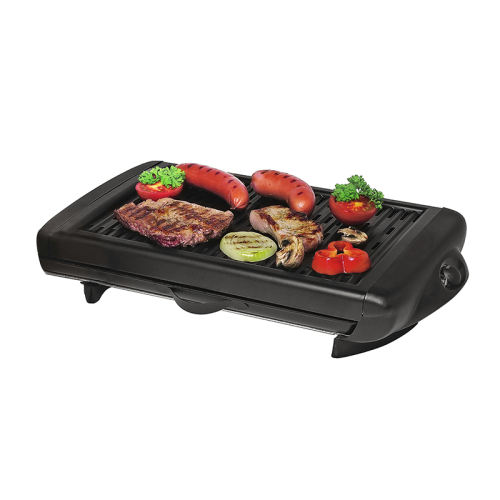
Featured Product: Kangye KYS-868 Smokeless Indoor Electric BBQ Grill
Featured Product: KYS-868 1350W Smokeless Indoor Electric BBQ Grill
The KYS-868 is a compact smokeless indoor electric BBQ grill built for family and casual dining — and a representative example of the kind of appliance a buyer would audit a factory for. It combines a 5-level mechanical temperature control, a premium food-grade non-stick coated die-cast aluminium plate and a fully detachable drip tray that collects excess oil for healthier meals. The heating element preheats in about 3 minutes, and the grill runs on 220–240V (1200–1400W) or 120V (1120W) configurations for dual-market programs.
5-level mechanical temperature control; fast 3-minute preheat
KYS-868 is produced in the same Guangdong facility that audits assess, under the same quality gates described in this checklist. If you are evaluating us as a supplier, we encourage exactly this kind of scrutiny: ask for our certification package, request the in-house test evidence, and visit the floor. For the manufacturer's view of the same discipline, see our articles on how AI is reshaping appliance sourcing and manufacturing and the 2026–2027 US kitchen appliance market.
FAQ: Appliance Factory Audits, Answered
How much does an appliance factory audit cost?
Third-party audits by firms such as SGS, Bureau Veritas, TÜV Rheinland or Intertek typically run from roughly US$500 to US$2,000 per audit in China, depending on scope, factory size and whether the technical and social audits are combined. A combined audit usually costs less than two separate visits. Compare this with the 4–10× cost multiplier of fixing a quality problem after shipment.
What is the difference between an audit and a pre-shipment inspection?
An audit assesses a supplier's systems, capability and compliance at a point in time — whether the factory can make your product and runs disciplined quality, social and safety processes. A pre-shipment inspection (PSI) checks whether one specific finished batch matches the approved sample, using AQL sampling per ISO 2859-1. Run the audit before qualifying a supplier; run a PSI on every order.
Does ISO 9001 mean a factory treats workers well?
No. ISO 9001 certifies a quality management system — documented, consistent processes for controlling quality. It says nothing about wages, working hours, child labour or worker welfare. Social compliance is verified by separate audits such as amfori BSCI, Sedex SMETA or SA8000.
What AQL levels should I use for kitchen appliances?
The industry-standard classification is AQL 0 for critical defects (zero tolerance — safety hazards or regulatory violations), AQL 2.5 for major defects (functional issues and compliance mismatches) and AQL 4.0 for minor defects (cosmetic imperfections). Sampling follows ISO 2859-1 / ANSI Z1.4 General Inspection Level II; a 5,000-unit lot, for example, draws 200 units and fails at 15 or more major defects.
How do I verify a factory's certificate is genuine?
Check three things: validity and expiry date; the certifying body and report number (confirmable with the lab or scheme owner); and that the model on the certificate matches the model you are sourcing — certificates are model-specific, not plant-wide. For CE marking, remember the manufacturer self-declares conformity, so the test reports behind the declaration must be verified rather than assumed to exist.
Is it better to audit myself, use an agent, or hire a third party?
Each has trade-offs. A third-party firm (SGS, BV, TÜV, Intertek) gives an independent, standardized, globally recognized report that retailers accept. A local sourcing agent adds context and can chase anomalies, but the report carries less weight externally. Auditing yourself gives first-hand insight but costs travel time and risks bias. Most serious buyers use a third party for qualification and combine it with their own visit for the first order.
Summary: Turn the Appliance Factory Audit Checklist into a Repeatable Program
Summary: auditing an appliance factory is a staged, repeatable program matched to risk, not a single event. Start with desk-based entity verification to filter out trading companies, review certificates critically, run a structured on-site audit covering production, quality systems and social compliance before your first order, and close the loop with an AQL-based pre-shipment inspection on every shipment. Around 73% of supply-chain disruptions trace to supplier quality issues, and fixing defects after shipping costs 4–10× more than catching them at the factory.
Sequence the checks: entity verification → capability/QMS audit → social compliance → AQL pre-shipment inspection on every order.
Distinguish the acronyms: ISO 9001 (quality system) ≠ BSCI/SMETA (social compliance) — run both where your channel requires it.
Audit the actual line, not the showroom: teardown a random production unit; request hi-pot, leakage, insulation and life-test records.
Use AQL 0 / 2.5 / 4.0 for critical / major / minor defects under ISO 2859-1, and draw samples from multiple pallet positions.
Treat findings as management inputs: critical NCs stop; major NCs need a CAP and verified re-audit; a zero-NC report from a complex factory is itself suspicious.
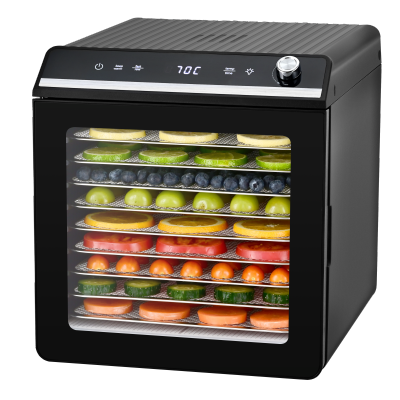
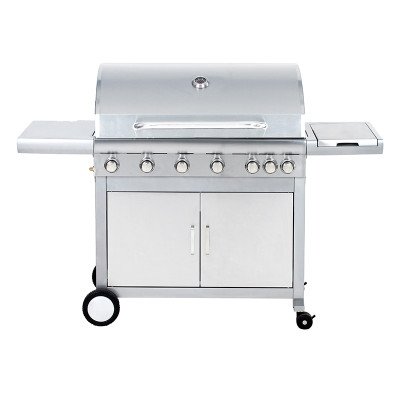
Planning to audit appliance suppliers in China, or looking for a manufacturer that will open its production floor and quality records to your scrutiny? Kangye is an OEM/ODM manufacturer based in Guangdong, China, with 35+ years of manufacturing experience and exports to 100+ countries. Our product line covers food dehydrators, electric grills, gas BBQ grills, pizza ovens, air fryer ovens, steamers, vacuum sealers and pet feeders and fountains — with certification packages (CE, GS, ETL, CB, RoHS, REACH, LFGB, FDA, SAA), dual-voltage options, private label programs and full documentation files. Contact our team to arrange a factory tour or request our audit documentation, or browse the full product range .
Since its establishment in 1989, Kangye Electric Appliances has always focused on the research and development and manufacturing of kitchen appliances and outdoor cooking utensils.